


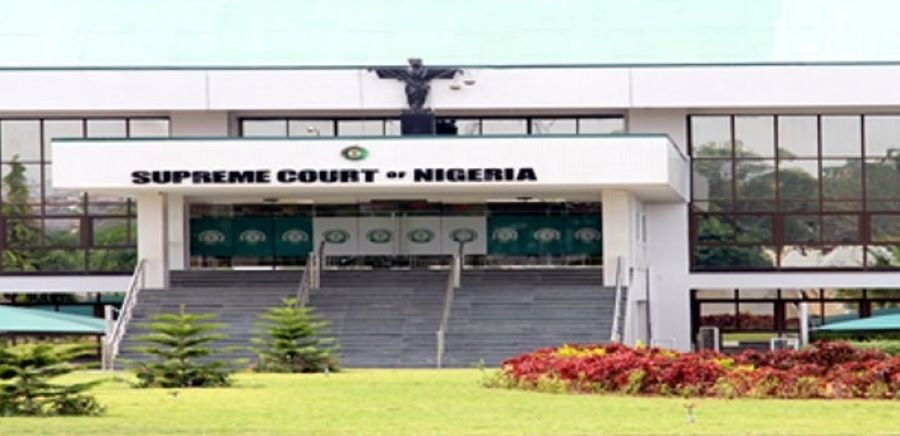
The Supreme Court has affirmed the constitutional authority of the president to proclaim a state of emergency in any part of the country to prevent a breakdown of law and order, including the power to suspend elected officials for a limited period.
The decision followed a legal challenge brought by Adamawa State alongside 10 other PDP-governed states against the emergency rule imposed by President Bola Tinubu in Rivers State in March. As part of that declaration, the president suspended Governor Siminalayi Fubara, his deputy, and members of the Rivers State House of Assembly for an initial six-month period.
Delivering the lead judgment, Justice Mohammed Idris held that Section 305 of the 1999 Constitution (as amended) grants the president wide discretion to determine appropriate measures during a state of emergency. In a six-to-one majority ruling, the apex court further agreed that such discretion extends to the temporary suspension of elected office holders.
The court consequently struck out and dismissed the suit, ruling that the plaintiffs failed to establish grounds that would confer jurisdiction on the Supreme Court. The emergency rule in Rivers State was later lifted in September.
Background to the suit
The PDP-led states had questioned the legality of the president’s actions, arguing that the suspension of a sitting governor, deputy governor, and state lawmakers as well as the appointment of a sole administrator breached constitutional provisions governing state autonomy and the functions of elected officials.
They maintained that the measures taken during the Rivers emergency exceeded presidential powers and undermined democratic structures at the state level.
Justice Obande Ogbuinya dissented from the majority view, holding that while the president is empowered to declare a state of emergency, such authority does not extend to suspending elected representatives. He ruled that the suit succeeded in part.
Earlier in the proceedings, the court upheld preliminary objections raised by the National Assembly and the Attorney-General of the Federation, who argued that the plaintiffs had not disclosed a reasonable cause of action. Although the suit was dismissed for lack of jurisdiction, the court nonetheless proceeded to address the substantive issues raised.

