


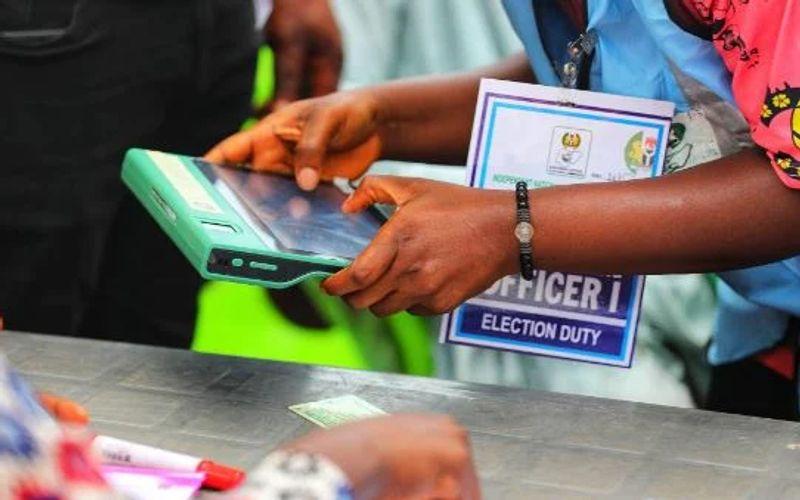
The Senate has fixed an emergency plenary session for Tuesday as pressure mounts over its recent passage of the Electoral Act (Amendment) Bill, especially the rejection of a provision mandating real-time electronic transmission of election results.
The decision was announced on Sunday in a statement signed by the Clerk of the Senate, Emmanuel Odo, directing all senators to reconvene.
“The President of the Senate, Godswill Akpabio, has directed the reconvening of plenary for an emergency sitting on Tuesday, February 10th, 2026,” the statement said, adding that the session would begin at 12 noon.
The announcement comes against the backdrop of rising public anger, with the Nigeria Labour Congress (NLC) and civil society groups warning of protests and possible election boycotts over what they described as contradictions and lack of clarity in the Senate’s handling of the amendment.
The NLC accused lawmakers of weakening confidence in the electoral process by failing to clearly state whether electronic transmission of results would be compulsory.
“The Nigeria Labour Congress expresses deep concern over the confusion and contradictory narratives emerging from the Senate regarding the amendment to the 2022 Electoral Act, particularly on electronic transmission of results,” NLC President Joe Ajaero said in a statement.
According to the labour body, the uncertainty threatens electoral integrity, stressing that “Nigerians deserve a transparent system where votes are not only counted but seen to be counted.”
“Public records suggest the proposed amendment to mandate the Independent National Electoral Commission to transmit results electronically in real time was not adopted, with the existing discretionary provision retained. This has generated nationwide apprehension, and subsequent explanations have only added to the confusion,” the statement added.
The controversy follows the Senate’s passage of the amendment bill on February 4, during which lawmakers voted down Clause 60(3). The clause sought to compel presiding officers to electronically transmit polling unit results directly to INEC’s Result Viewing portal in real time.
Instead, the Senate retained the existing discretionary arrangement that allows electronic transmission only after votes are counted and publicly announced at polling units.
The decision has drawn widespread criticism from civil society organisations, election observers and opposition figures, who described it as a reversal of hard-won electoral reforms and a threat to transparency.
Adding to the pressure, a coalition of political activists under the banner of the Movement for Credible Elections (MCE) condemned the Senate’s action as a “deliberate act of democratic sabotage” and announced plans for a mass protest tagged “Occupy NASS” in Abuja.
In a statement signed by James Ezema, the coalition said the move amounted to an “assault on the right of Nigerians to freely choose their leaders” and warned it could worsen electoral fraud ahead of the 2027 general elections.
“By rejecting the mandatory electronic transmission of election results from polling units, the National Assembly has chosen opacity over transparency, manipulation over credibility, and elite conspiracy over the sovereign will of the Nigerian people,” the group declared.
It added, “Mandatory electronic transmission of results is a minimum protection against result tampering, ballot rewriting and post-election fraud. Any legislature that blocks it is openly defending a system that thrives on stolen mandates and manufactured elections.”
The coalition called on Nigerians and the international community to speak out, urging “students, workers, traders, professionals, women, youth, community leaders, the media and the global community” to take a stand.
Meanwhile, the House of Representatives’ bipartisan Conference Committee on the Electoral Act Amendment Bill is expected to meet its Senate counterpart this week to harmonise differences between the versions passed by both chambers.
A member of the committee, Saidu Abdullahi, who represents Bida/Gbako/Katcha Federal Constituency of Niger State, confirmed the planned engagement.
“We will meet within the week and discuss,” he said.
The committee, chaired by Lagos lawmaker Adebayo Balogun, was constituted to reconcile disputed provisions ahead of the final consideration of the bill by the National Assembly.
Despite the backlash, Senate President Godswill Akpabio has defended the chamber’s position, insisting that the Senate did not reject electronic transmission outright and vowing that lawmakers would not be intimidated.
However, the NLC warned that failure to clearly mandate real-time electronic transmission could provoke mass resistance.
“Failure to add electronic transmission in real time will lead to mass action before, during and after the election, or total boycott of the election,” the Congress said.
“Nigerian workers and citizens are watching closely. Our nation must choose the path of clarity and integrity. The time for honest, people-focused legislation is now.”
As agitation continues, the outcome of Tuesday’s emergency sitting is expected to shape the next phase of the electoral reform debate and determine whether lawmakers bow to public pressure or maintain their controversial position.

