


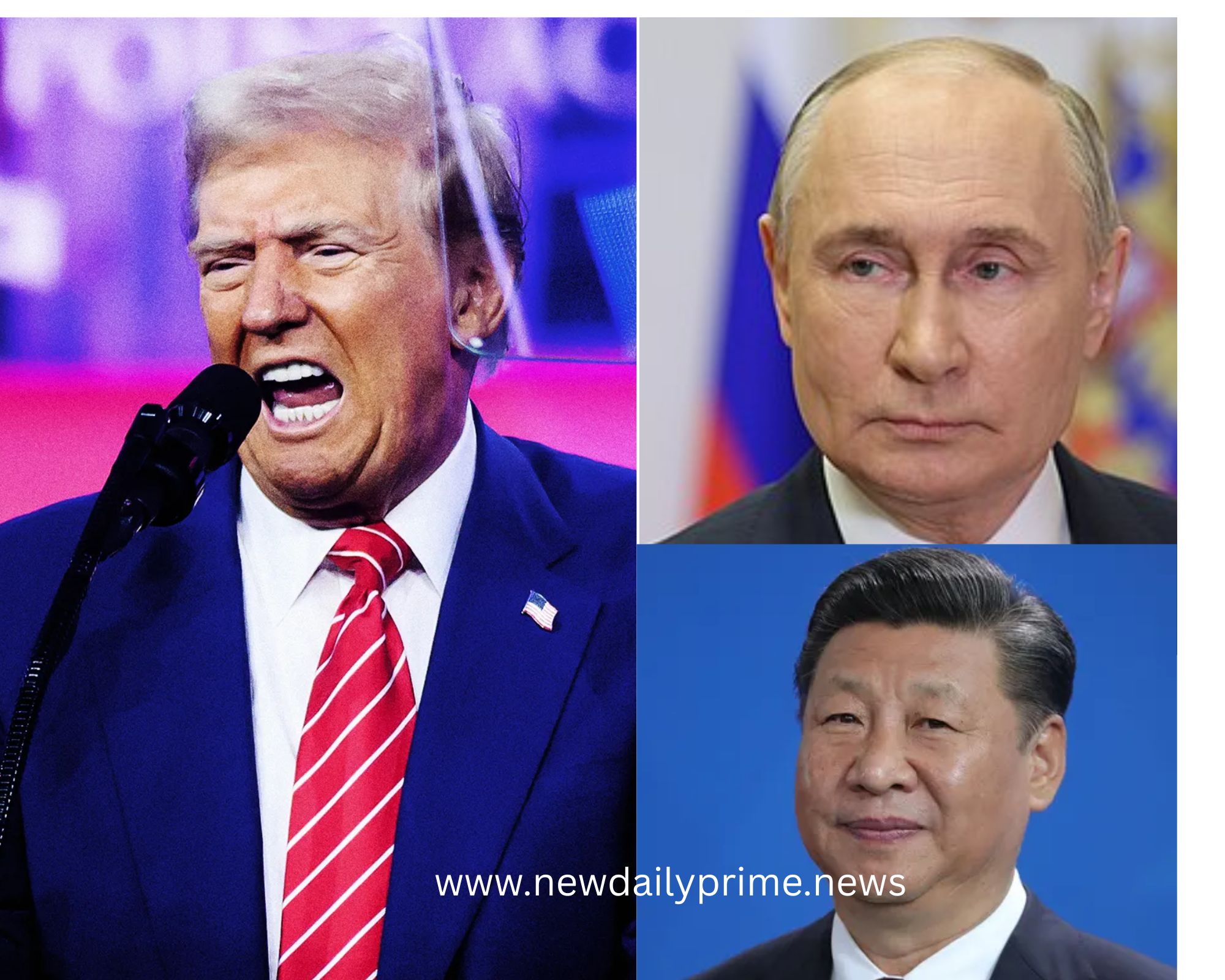
Russia has pledged strong support for Iran’s newly appointed supreme leader Mojtaba Khamenei, while China has warned outside powers not to interfere in the country’s leadership transition.
Russian President Vladimir Putin congratulated Khamenei on Monday after he was chosen by Iran’s Assembly of Experts to replace his father, Ayatollah Ali Khamenei, who was killed during the opening stages of the current conflict.
In a message released by the Kremlin, Putin offered what he described as “unwavering support” for Tehran and expressed confidence that the new leader would guide the country through a difficult period.
The Russian leader said Mojtaba Khamenei would continue his father’s work “with honour” and unite the Iranian people “in the face of severe trials”. He also reaffirmed Russia’s solidarity with Iran, describing the country as a close partner.
Read related news from New Daily Prime:
Trump invites Putin to join Gaza ‘Board of Peace’ for likely $1bn
Putin demands Ukrainian territory in any peace deal
Russia urges Putin to expand beyond Ukraine as Trump weighs Greenland action
The strong backing from Moscow comes as tensions in the Middle East continue to rise following military strikes by the United States and Israel on Iranian targets.
China has also responded to the leadership change but adopted a more cautious diplomatic tone. Beijing said the appointment of Iran’s new leader is an internal matter that should be respected by other countries.
A spokesperson for China’s Foreign Ministry said Mojtaba Khamenei’s appointment followed Iran’s constitutional and political process.
Chinese officials warned against any attempt to target the new leader during the ongoing military campaign and called for restraint from all sides.
Beijing repeated its long-standing policy of non-interference in the domestic affairs of other nations and urged the international community to respect Iran’s sovereignty, security and territorial integrity.
Officials in Beijing also warned that attempts to influence Iran’s leadership or pursue regime change could further destabilise the region.
China has repeatedly urged countries involved in the conflict, including the United States and Israel, to reduce tensions and resolve their differences through dialogue and diplomacy.
The differing responses from Moscow and Beijing highlight the complex international divide surrounding Iran’s leadership transition.
China remains one of Iran’s largest trading partners and has maintained close diplomatic ties with Tehran for years. Analysts say Beijing is trying to balance those relations while protecting its wider economic interests in the Gulf, where it also has strong partnerships with several Arab states.
Meanwhile, Britain has called for calm as tensions continue to escalate.
Prime Minister Sir Keir Starmer said on Monday that the UK was working with international partners to help de-escalate the situation.
In contrast, US Defence Secretary Pete Hegseth signalled that military operations could intensify, saying overnight that the current campaign was “only just the beginning”.
The contrasting reactions from major world powers underline the growing geopolitical stakes surrounding Iran’s leadership change and the widening conflict across the Middle East.

