


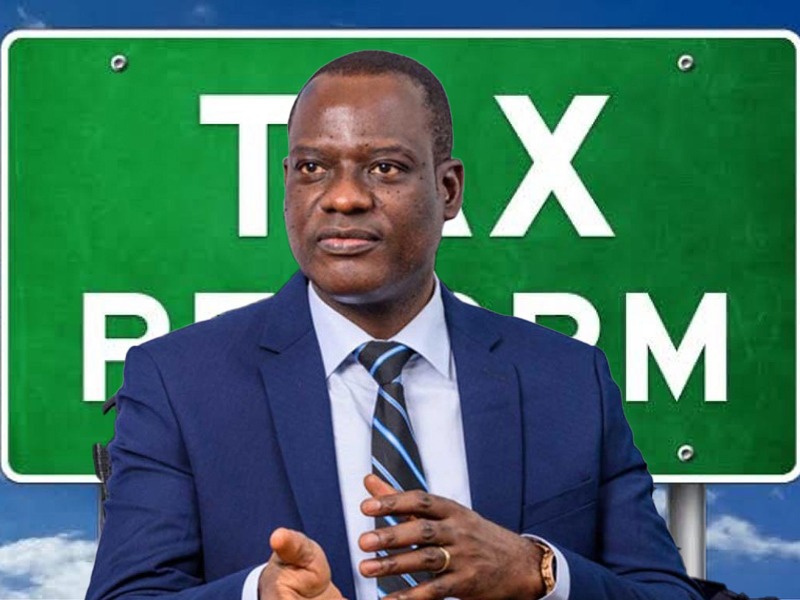
The Chairman of the Presidential Committee on Fiscal Policy and Tax Reforms, Mr Taiwo Oyedele, has disclosed that he has received threats to his life as a result of his role in driving Nigeria’s far-reaching tax reforms, underscoring the high personal and political stakes involved in restructuring the country’s fiscal system.
Oyedele made the revelation in Abuja on Tuesday while speaking at a governance colloquium organised to mark the 50th birthday of the Special Adviser to the President on Policy and Coordination, Hajiya Hadiza Bala-Usman. According to him, attempts to overhaul Nigeria’s tax architecture inevitably attract resistance from powerful interests that benefit from the status quo.
“Reforms are hard, and tax reforms are even harder. You need courage,” Oyedele said. “I receive threats simply for trying to fix a broken system.”
He explained that Nigeria’s tax reforms are confronting deep-rooted structural challenges, including widespread mistrust of government, weak tax compliance, and limited public understanding of the relationship between taxation and public service delivery. These factors, he said, have complicated efforts to build public support for the reforms.
Oyedele noted that Nigeria’s tax revenue remains significantly lower than that of comparable economies, making comprehensive reform unavoidable. He stressed that without expanding and rationalising the tax base, the country would struggle to meet its development and governance obligations.
A significant challenge, according to him, is misinformation surrounding the reforms. He said many Nigerians believe the government is introducing new taxes, whereas the reforms are primarily aimed at reducing, streamlining, and harmonising existing levies.
“There is suddenly a national awareness, and people say the government has brought taxes all over the place,” he said. “When in fact what we are doing is reducing the taxes they have been paying and harmonising them.”
Oyedele urged Nigerians who understand and support the reforms to be more vocal, warning that public silence has allowed critics to dominate the narrative and fuel mistrust. He described trust as the most critical obstacle to successful implementation.
The committee chairman also acknowledged the significant political, economic, and reputational risks associated with the reforms, noting that resistance was expected. Despite facing online abuse and personal threats, he defended the reform strategy, likening past approaches to temporary fixes that failed to address fundamental weaknesses in the tax system.
“What we have been doing all my adult life with the tax system was a pain reliever,” he said. “Now we’re doing the surgery. It will come with pain, but it is the only right thing to do.”
Despite the challenges, Oyedele expressed optimism about Nigeria’s reform trajectory, describing the current momentum as unprecedented. He urged citizens to remain committed to the long-term goal of fiscal stability and economic sustainability.
The Federal Government officially began enforcement of the new tax regime on 1 January 2026, following the enactment of four major laws: the Nigeria Tax Act 2025, the Nigeria Tax Administration Act 2025, the Nigeria Revenue Service Establishment Act 2025, and the Joint Revenue Board Establishment Act 2025.

