


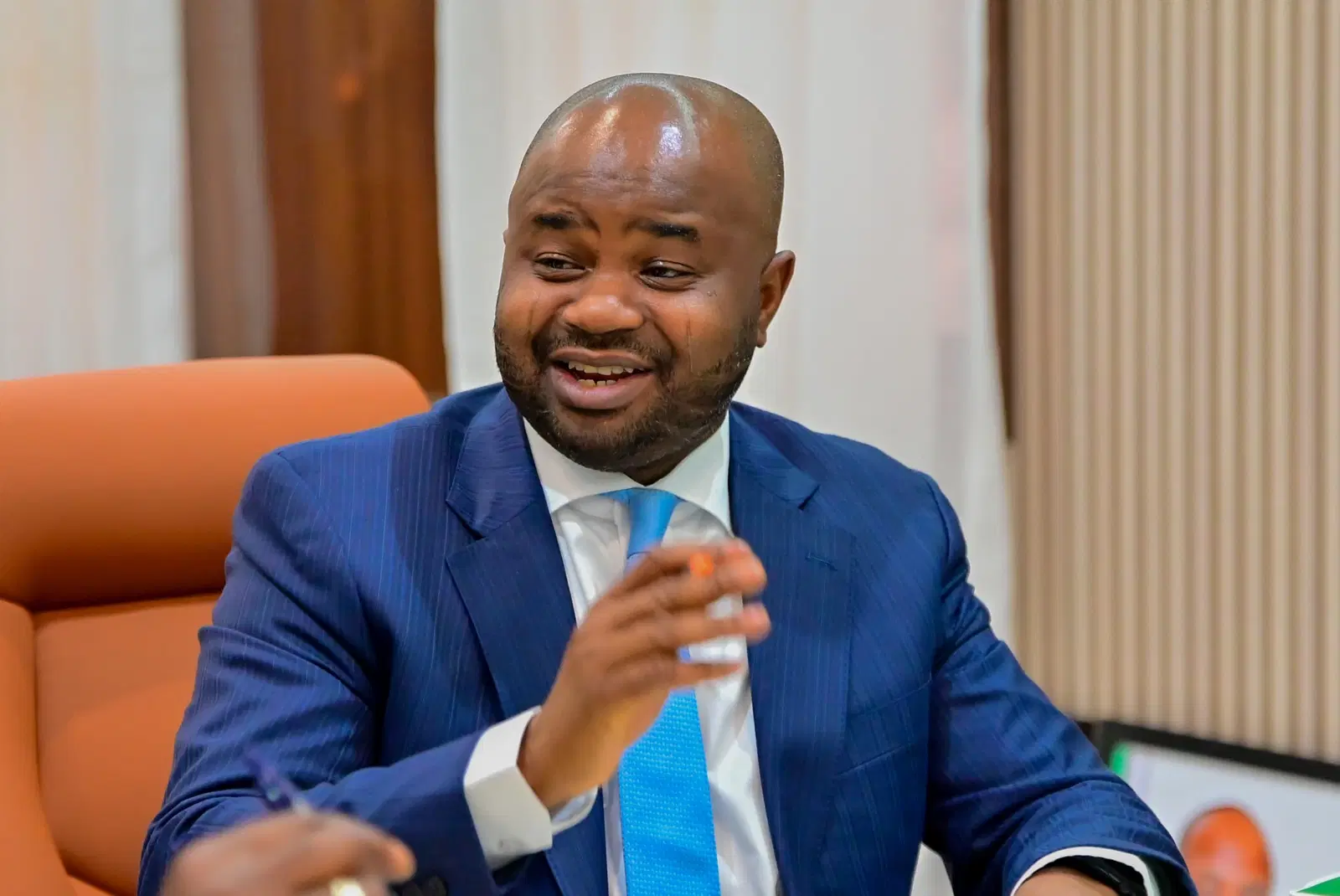
The Executive Chairman of the Nigeria Revenue Service (NRS), Dr Zacch Adedeji, has sought to allay widespread public fears surrounding Nigeria’s newly implemented tax laws, insisting that neither the old tax regime nor the new one empowers any authority to tax money sitting in Nigerians’ bank accounts.
Adedeji clarified on Tuesday during a programme on Journalists’ Hangout, aired on TVC, amid growing anxiety and rumours that the tax reforms, which took effect on 1 January 2026, would allow automatic deductions from personal or corporate bank accounts based on transfers, savings balances, or transaction narratives.
“Whether old tax law or new tax law has nothing to do with your personal bank account, whether you’re a company or you are an individual,” Adedeji said. “Don’t forget that tax is a percentage of your profits. So if you have an asset, the asset is not to be taxed. We only tax the profits. We only tax the return.”
His comments followed weeks of speculation suggesting that funds held in bank accounts, inter-account transfers, or transaction descriptions could trigger tax assessments or debits by revenue authorities. Adedeji dismissed such claims as a result of misinformation and miscommunication, stressing that no existing tax law permits such actions.
“There is no law that allows anybody to go into your bank account and tax you because you transfer money or you keep money,” he said. “If you transfer money from your account to your brother, that is a personal transaction between both of you. It has nothing to do with the tax authority, whether at the state level or at the federal level.”
He further rejected suggestions that banks could be instructed to debit customers’ accounts simply because funds exist or because of how a transaction is described. According to him, neither the repealed nor the newly enacted tax laws provide such powers.
Adedeji used the interview to explain that the transition from the Federal Inland Revenue Service (FIRS) to the Nigeria Revenue Service was not merely a change of name, but part of a broader institutional reform aimed at simplifying tax compliance, modernising collection systems, and improving efficiency. He noted that transition provisions were built into the law signed in June 2025, with a January 2026 commencement date, in line with national tax policy principles that allow time for adjustment.
Addressing one of the most controversial elements of the reform, Adedeji explained that the development levy introduced under the new framework was not a fresh tax. Instead, he said it was a consolidation of several existing earmarked taxes, such as the education tax and the police trust fund levy, into a single charge to make planning and compliance easier for businesses.
He also argued that the reforms were designed to ease the burden on low-income earners, noting that essential expenditure items such as food and transportation, which account for a large share of poor households’ spending, are exempt from transactional taxes. According to him, workers on lower salary scales would begin to see reduced deductions in their January pay slips.
Adedeji rejected calls to suspend the new tax laws, saying such action had no place in a democratic system and would create a legal vacuum, as previous tax laws had already been repealed.
He urged Nigerians to judge the reforms on facts rather than rumours, noting that no reported cases of unlawful deductions had emerged since the laws took effect. He added that the government remained open to feedback and engagement to improve implementation as the reforms mature.

