


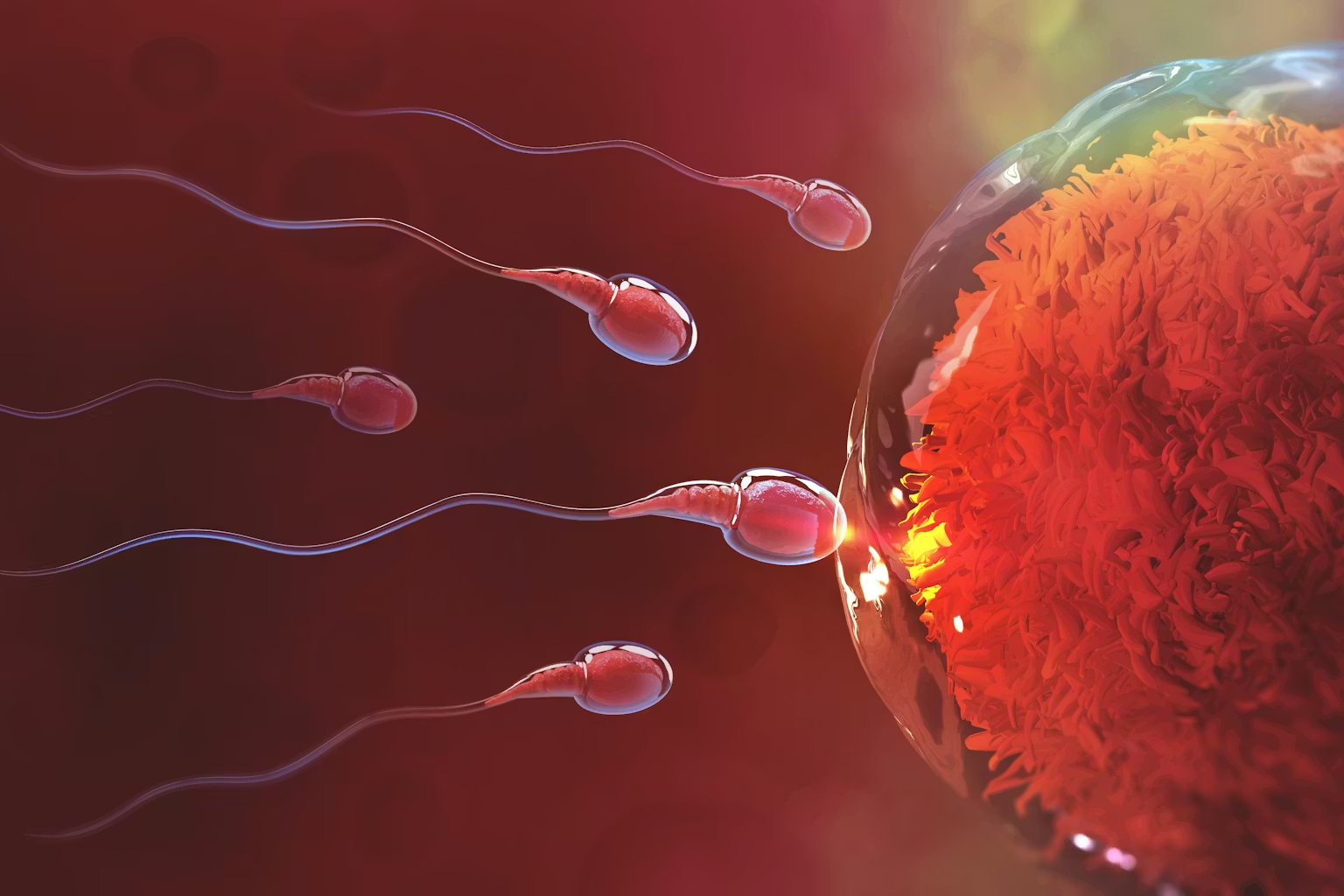
A new international study has found that sperm move faster during the summer months and slow down in winter, shedding fresh light on how seasons may influence male fertility.
The research, carried out by scientists from the United Kingdom, Canada and Denmark, analysed semen samples from 15,581 men aged between 18 and 45. The samples were collected in Denmark and the US state of Florida, two locations with very different climates.
Despite the contrast in weather conditions, researchers found a strikingly similar pattern. Sperm motility — the ability of sperm to swim effectively, peaked consistently in June and July in both regions. The lowest levels were recorded in December and January.
Sperm motility plays a crucial role in fertility, as sperm must be able to swim efficiently to reach and fertilise an egg. The findings suggest that men may have a higher chance of successful conception during the summer months, even in places where temperatures remain warm throughout the year.
Read related news from New Daily Prime:
Why more couples are turning to IVF: Reasons and reality
Experts urge men to speak up on sexual health: 5 key urologist insights
UK lagging behind in global fight against microplastics, scientists warn
Seven dead as severe winter storm batters US
The study, published in the journal Reproductive Biology and Endocrinology, shows that sperm quality appears to follow a seasonal rhythm rather than being driven solely by temperature. In Florida, where winter temperatures remain relatively high, sperm motility still dipped during the colder months, mirroring the pattern observed in Denmark.
Researchers found no seasonal changes in total sperm concentration — the number of sperm present in semen, or in ejaculate volume. This indicates that while the quantity of sperm produced remains stable throughout the year, the quality, particularly the ability to move effectively, fluctuates with the seasons.
Scientists believe these patterns could have important implications for fertility treatment and testing. Understanding when sperm motility is naturally higher may help doctors better time fertility assessments and treatments, providing clearer guidance to couples trying to conceive.
The study also points to factors beyond ambient temperature influencing male reproductive health. Sperm is stored in the testes, which function best at temperatures two to four degrees lower than the body’s normal temperature of 37 degrees Celsius. Deviations from this range — whether higher or lower — can reduce sperm motility and affect fertility.
Professor Allan Pacey of the University of Manchester, a co-author of the study, said the consistency of the findings across different climates was unexpected.
“We were struck by how similar the seasonal pattern was in two completely different climates,” he said. “Even in Florida, where temperatures stay warm, sperm motility still peaked in summer and dipped in winter, which tells us that ambient temperature alone is unlikely to explain these changes.”
He added that the findings underline the need to consider the time of year when evaluating semen quality.
“Our study highlights the importance of seasonality in male reproductive health,” Pacey said. “These seasonal changes in sperm motility occur even in warm climates and may help improve fertility outcomes if taken into account.”
As fertility challenges affect millions of couples worldwide, researchers say insights like these could play a role in improving success rates and understanding the subtle biological factors that influence reproduction.

