


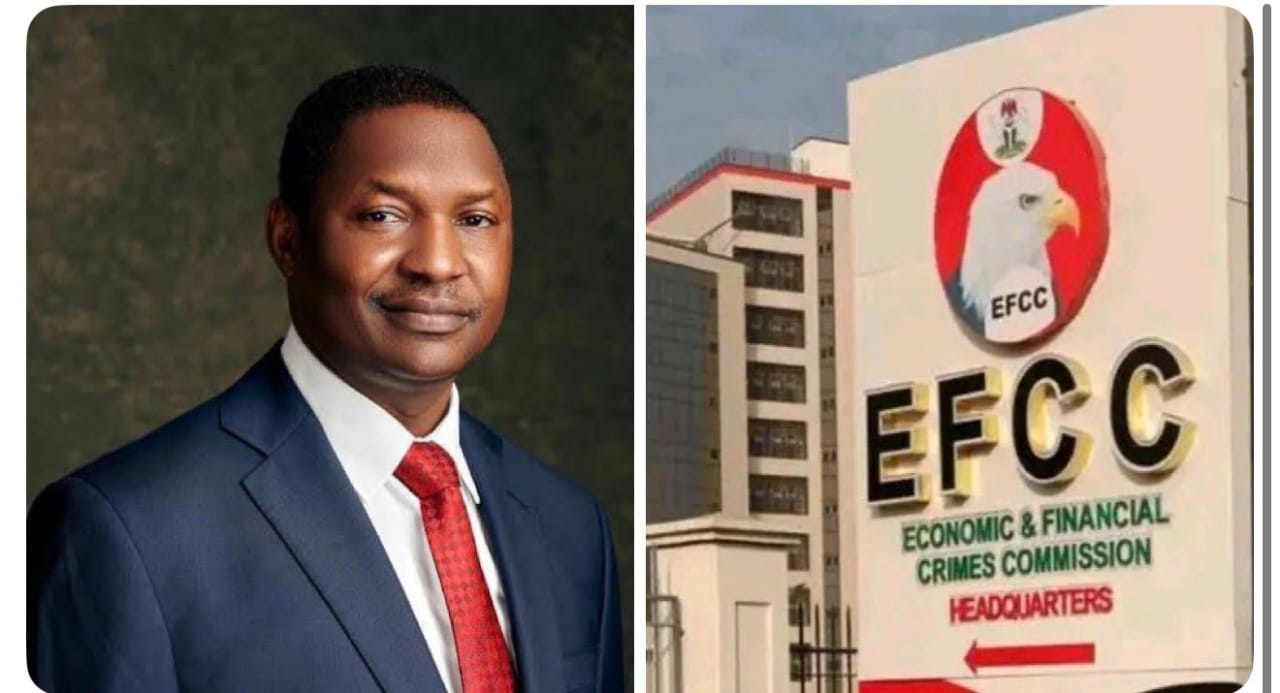
Former Attorney-General of the Federation, Abubakar Malami (SAN), has approached the Federal High Court in Abuja, seeking to set aside an interim forfeiture order placed on dozens of properties allegedly linked to him and members of his family by the Economic and Financial Crimes Commission (EFCC).
The application follows a ruling delivered on January 6 by Justice Emeka Nwite, who ordered the interim forfeiture of 57 properties suspected to be proceeds of unlawful activities. The assets, according to the EFCC, are valued at about N213.2 billion and are allegedly connected to Malami and his two sons, Abdulaziz Malami and Abiru Rahman Malami.
Court documents show that the order was granted after the anti-graft agency filed an ex parte motion, asking the court to temporarily seize the properties pending the conclusion of investigations and possible prosecution. Justice Nwite also directed the EFCC to publish the forfeiture order in a national newspaper, inviting interested third parties to come forward with claims before the court decides on final forfeiture.
Read related news from New Daily Prime:
Malami denies arms discovery, terrorism links following DSS detention
Court grants Malami, wife, son N1.5bn bail, fixes Feb 17 for trial
Malami, son face 16 count charge of corruption
The seized assets cut across several states, including Abuja, Kebbi, Kano and Kaduna, and consist of luxury residences, hotels, commercial plazas, schools, factories, mosques, petrol stations and large expanses of land. Investigators say many of the properties were acquired between 2016 and 2024, a period that coincides with Malami’s tenure as Nigeria’s chief law officer.
Among the high-profile properties listed are a luxury duplex in Maitama, Abuja, reportedly purchased for N500 million in 2022 and later upgraded to a value of nearly N6 billion, as well as multiple hotels in Maitama, Jabi and Kano valued in the tens of billions of naira. Also included are assets linked to Rayhaan University in Kebbi State, agro-allied factories, media outfits, schools, filling stations and large residential estates allegedly owned by Malami and his sons.
In his fresh application, Malami is asking the court to overturn the interim forfeiture order, arguing that the EFCC acted improperly and that the properties were lawfully acquired. He is also expected to challenge the agency’s valuation of the assets and dispute claims that they are proceeds of criminal activity.
Although details of his legal arguments have not been made public, sources familiar with the case say Malami is insisting that the order was granted without giving him the opportunity to respond, and that the forfeiture violates his constitutional rights. He is reportedly urging the court to allow him present evidence showing legitimate sources of income used to acquire the properties.
The EFCC, however, maintains that the assets are reasonably suspected to be linked to money laundering and abuse of office. The commission said investigations revealed extensive property acquisitions and major capital investments that could not be reconciled with known legitimate earnings.
The case has attracted significant public attention, given Malami’s former role as attorney-general and minister of justice under the previous administration. Analysts say the outcome could test the resolve of the anti-corruption agency and signal how far ongoing asset recovery efforts will go against politically exposed persons.
For now, the interim forfeiture remains in force, pending the court’s decision on Malami’s application. The matter is expected to come up for hearing in the coming weeks, as the legal battle over one of the largest asset seizures in recent years unfolds.

