


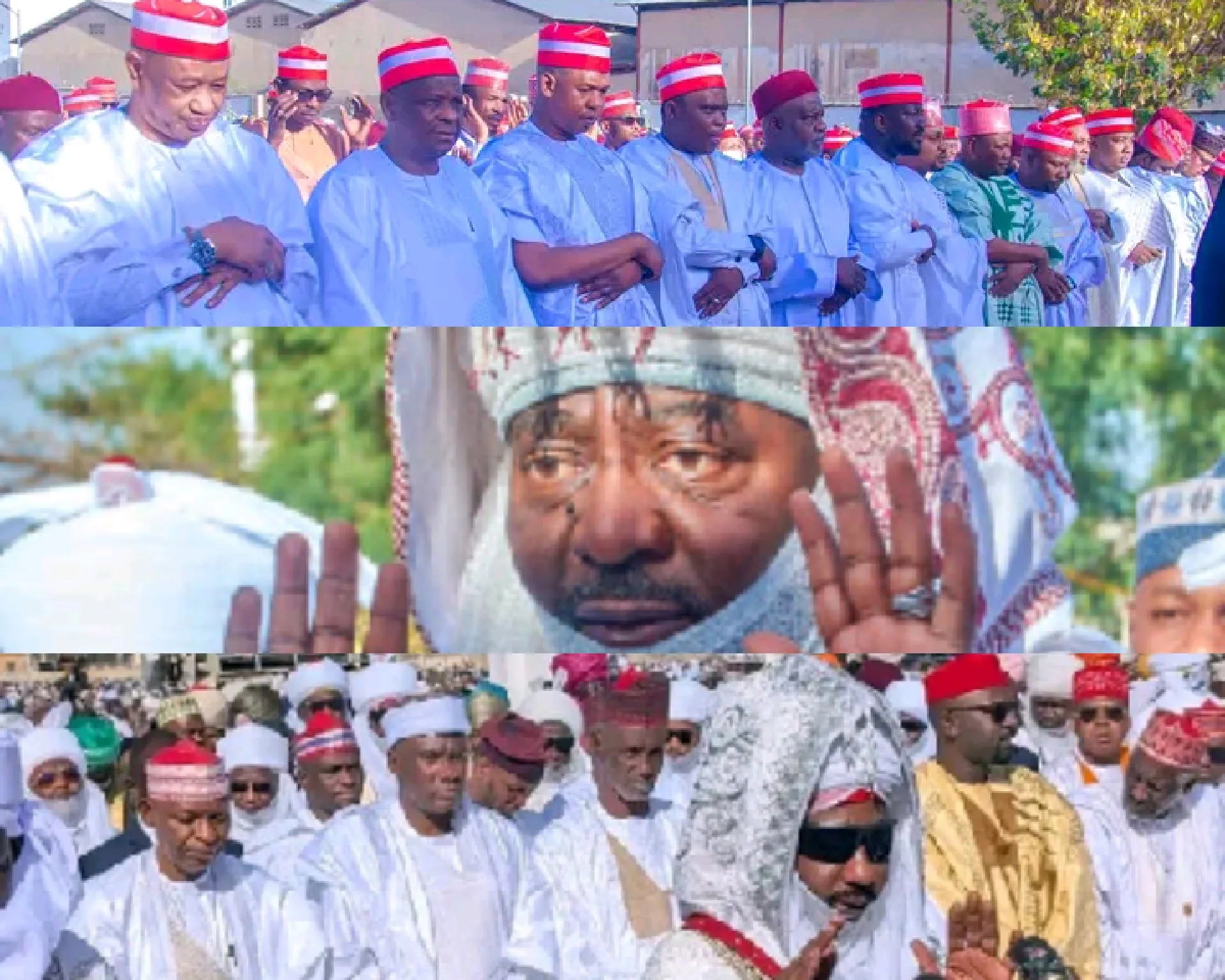
For the first time in recent years, Kano State witnessed three separate Eid al-Fitr prayers, underscoring widening divisions within the state’s traditional institutions and political landscape.
The 16th Emir of Kano, Muhammadu Sanusi II, led the first prayer at the historic Kofar Mata Eid Ground at approximately 8:00 a.m. The gathering attracted senior government officials, including Governor Abba Yusuf, Secretary to the State Government Umar Faruq, and Commissioner of Police Ibrahim Adamu Bakori. According to close associate Muhammad Dallatu, the Emir’s sermon focused on unity, peaceful coexistence, and the need for harmony among residents.
At roughly the same time, the 15th Emir of Kano, Aminu Ado Bayero, held a parallel Eid prayer at the Nasarawa Palace. The prayer was led by Sheikh Kamaluddeen Albasa and similarly emphasised peace, unity, and stability within the state. His spokesperson, Abubakar Balarabe Kofar Na’isa, confirmed the presence of notable figures such as Baffa Babba Dan Agundi and former Secretary to the State Government Usman Alhaji.
In a third development, the National Leader of the Kwankwasiyya Movement, Rabiu Kwankwaso, conducted a separate Eid prayer at his private mosque along Miller Road. He was joined by Deputy Governor Aminu Gwarzo, former Commissioner Yusuf Kofar Mata, and loyal supporters. His aide, Saifullahi Hassan, described the gathering as peaceful, reflective, and centred on gratitude and unity.
The unprecedented development highlights lingering tensions rooted in Kano’s prolonged emirate crisis. The dispute began with the 2020 dethronement of Sanusi II and the installation of Bayero, followed by the controversial reinstatement of Sanusi II in 2024, which created parallel royal authorities in the state.
Political shifts have further complicated the situation, particularly Governor Yusuf’s reported defection from the New Nigeria Peoples Party to the All Progressives Congress, intensifying alignments and rivalries.
Historically, Eid prayers in Kano have served as a unifying event, bringing together the Emir, political leaders, and citizens at Kofar Mata. The emergence of three separate congregations marks a significant departure from this tradition, reflecting deepening fractures within both the traditional institution and the political framework of the state.
Observers warn that unless reconciliatory efforts are prioritised, the divisions could further erode social cohesion in one of northern Nigeria’s most influential cultural and political centres.

