


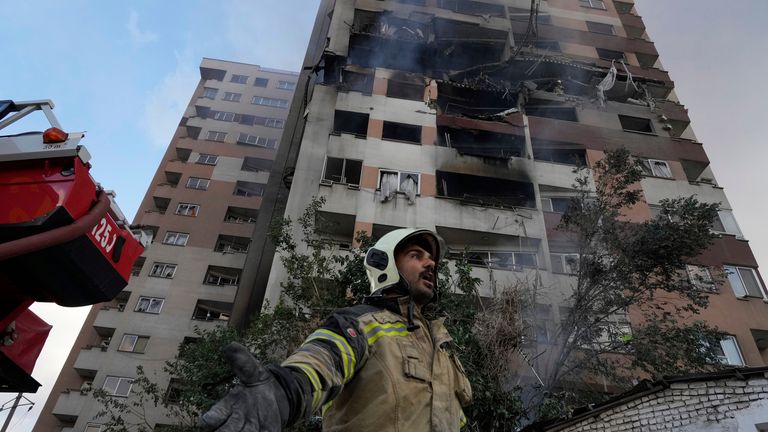
Iran has launched cluster munitions toward Israel, with several explosive bomblets falling near communities outside Tel Aviv in the latest escalation of a widening Middle East conflict.
Israeli officials say ballistic missiles fired from Iran overnight on Thursday carried smaller submunitions designed to spread destruction across a wide area. One of the devices crashed through the roof of an empty workshop in Bareket, a village about 12 miles east of Tel Aviv.
The explosion sparked a large fire that destroyed the building and sent flames rising into the night sky. The impact site was only about 30 feet from homes where families had taken shelter during the missile attack.
Residents said it was a stroke of luck that no one was killed.
“We heard a big boom. The second we went outside, we saw everything up in smoke with fire all around,” said Rafael Steansky, 26, who lives next to the blast site.
“Everything was in flames. Everyone lives so close. It’s a miracle the bomb didn’t kill anyone.”
Read related news:
Trump denies Israel forced US hand in Iran strikes
US urges citizens to leave Israel, Gulf States immediately as Iran conflict intensifies
US, Israel launch major assault on Iran as Middle East war fears surge
Another resident, Yehoshafat Hilel, 59, said he was protected by a wall after shrapnel from the explosion peppered the surrounding area with scorch marks. His caravan sits only metres from where the device landed.
“I was very lucky,” he said. “It is amazing nobody was hurt.”
Other bomblets reportedly landed in the nearby community of El’ad, which is known as Israel’s only officially designated religious municipality. Authorities said there were no reports of injuries.
Locals believe the missiles were aimed at Ben Gurion Airport, Israel’s main international gateway, located less than a mile from Bareket. The Israel Defense Forces has not confirmed whether the airport was the intended target.
Cluster weapons are widely condemned because of their impact on civilians. The munitions release multiple small explosives over a large area, increasing the risk to nearby communities.
International conventions prohibit their use because many of the bomblets fail to explode on impact. Experts estimate that up to 40 per cent of submunitions can remain unexploded, posing a long-term danger to civilians who may encounter them later.
Reports suggest Iran has launched at least six missiles carrying cluster munitions since the start of the latest phase of fighting between Iran, Israel and the United States.
The intensity of missile attacks from Tehran has slowed in recent days as Israeli and American forces target Iranian launch sites and military infrastructure across the country.
Meanwhile, Iran’s president Masoud Pezeshkian said diplomatic efforts to end the conflict were beginning. He stated that Iran was committed to “lasting peace” but insisted the country would continue defending itself.
Despite those remarks, the fighting shows little sign of easing. Israeli warplanes have launched fresh strikes on Tehran and other Iranian cities, marking what Israeli officials describe as a new phase of the war.
US Defence Secretary Pete Hegseth warned that the bombardment of Iranian military targets could intensify sharply in the coming days.
American Northrop B-2 Spirit aircraft have already dropped specialised “bunker-buster” bombs on deeply buried missile facilities inside Iran, according to US officials.
The human cost of the conflict is rising rapidly. The UNICEF reported that more than 1,300 Iranians, including at least 181 children, have been killed since the strikes began.
With missile attacks continuing and air raids expanding across the region, diplomats fear the conflict could grow into a broader war that threatens stability across the Middle East.

