


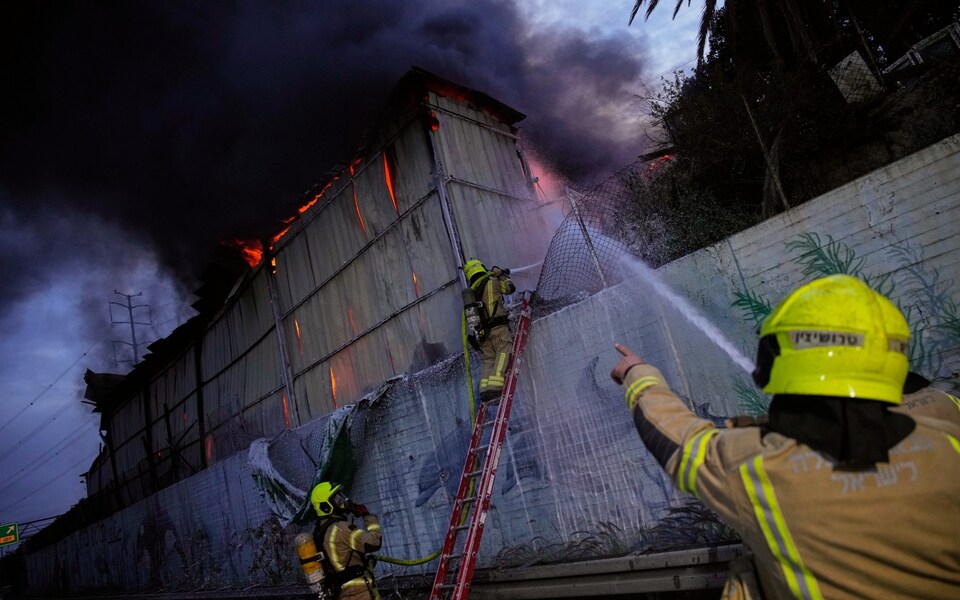
In one of the most significant escalations since the start of the US-Israel war on Iran, Iranian ballistic missiles struck the southern Israeli cities of Dimona and Arad on Saturday night. The strikes, which left over 100 people wounded, targeted the immediate vicinity of Israel’s primary school.
The city of Arad bore the brunt of the assault, with emergency services reporting at least 88 injuries, including 10 people in serious condition. In nearby Dimona, located just 13km from the Shimon Peres Negev Nuclear Research Center, 39 people were wounded. Among them is a 10-year-old boy in critical condition following the destruction of several residential buildings.
Video footage from the scene showed massive explosions and fires lighting up the northern Negev desert. Prime Minister Benjamin Netanyahu described the evening as “difficult” for the nation but remained defiant, vowing to continue retaliatory strikes against Iranian targets.
Failure of Air Defenses
The attacks have raised urgent questions regarding the efficacy of Israel’s vaunted air defense systems. Despite the activation of interceptors, the IDF confirmed they failed to neutralize the incoming threats.
“In both Dimona and Arad, interceptors were launched that failed to hit the threats, resulting in two direct hits by ballistic missiles with warheads weighing hundreds of kilograms,” authorities reported. The military has launched a thorough investigation into why the systems failed to protect such a high-security zone.
The International Atomic Energy Agency (IAEA) stated that while they are monitoring the situation closely, there is currently no indication of damage to the Dimona nuclear facility itself. Director General Rafael Grossi called for “maximum military restraint,” noting that no abnormal radiation levels have been detected.
Historically, the Dimona site has been a focal point of regional tension, having been targeted by rocket fire in 2012 and 2014. However, the accuracy and payload of this latest ballistic missile strike represent a “stark new phase” of the conflict.
Tehran framed the strikes as a direct response to a US military raid on Iran’s Natanz nuclear enrichment complex on Friday night. US forces reportedly used “bunker-buster” bombs to target the underground facility, which sits up to 100 meters deep.
While the Iranian atomic agency claimed no radioactive leaks occurred at Natanz, Russia condemned the US strike, warning it risked a Middle Eastern “catastrophe.”
In Washington, President Donald Trump stated the US is “very close” to achieving its war aims, specifically preventing Iran from obtaining nuclear capability. The White House has confirmed that “retrieving stockpiles of enriched uranium” remains an option on the table—a mission that retired Admiral James Stavridis warned would be “the largest special forces operation in history.”
Furthermore, the Pentagon is doubling its Marine presence in the region. 2,500 marines from the 11th Marine Expeditionary Unit are currently en route, joining a similar force deployed last week. Reports suggest the administration is also weighing the seizure of Iranian ports and Kharg Island to secure the Strait of Hormuz for commercial shipping.
As the conflict enters its fourth week, the humanitarian toll continues to mount. Iranian state media reports that US-Israeli attacks since February 28 have killed over 1,500 people, including more than 200 children. With both sides now targeting nuclear-related infrastructure, the risk of a regional disaster has never been higher.

