


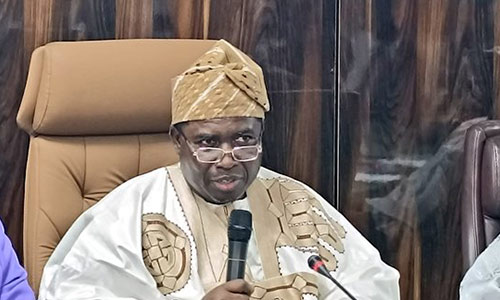
The Chairman of the Independent National Electoral Commission (INEC), Prof. Joash Amupitan, has assured Nigerians that the commission has the capacity to electronically transmit election results in the 2027 general elections, while cautioning that it cannot promise a “100 per cent perfect election”.
Amupitan gave the assurance on Sunday during the Citizens’ Town Hall programme, aired live on major television networks and themed, ‘Electoral Act 2026: What it means for your votes and the 2027 elections.’ The live debate was anchored by Seun Okinbaloye alongside the Executive Director of Yiaga Africa, Samson Itodo.
Among those present were the National Chairman of the All Progressives Congress, Nentawe Yilwatda; the Interim National Chairman of the Labour Party, Nenadi Usman; former Minister of Education, Oby Ezekwesili; and Senator Ireti Kingibe, among others.
Appealing to Nigerians to manage their expectations, Amupitan said the commission would strive to deliver credible elections but could not guarantee absolute perfection.
“Let me just appeal to Nigerians, because I have noticed now that what Nigerians desire is a perfect election. And INEC will strive as much as possible to give this country the best election. However, we may not be able to achieve a 100 per cent perfect election for now,” he said.
On electronic transmission, a contentious issue since the 2023 general elections, the INEC chairman insisted that the commission has both the capacity and the commitment to transmit results.
“As far as electronic transmission of results is concerned, we have the capacity to transmit the results, and we’re going to transmit the results. The only concern was real time,” he explained.
He cited the recent Federal Capital Territory Area Council elections as an example of operational challenges, particularly in remote areas. According to him, while results were transmitted promptly in five of the six area councils, delays occurred in Kabi ward of Kuje due to poor terrain and network limitations, making real-time transmission impossible until the following day.
Amupitan emphasised that elections are the lifeblood of democracy, echoing Abraham Lincoln’s assertion that the ballot is more powerful than the bullet. He stressed the importance of voter education and institutional transparency in strengthening democratic governance.
Reflecting on the Electoral Act 2026, he disclosed that INEC played an active role in shaping the legislation through a joint committee involving the National Assembly and civil society organisations.
While acknowledging logistical and human errors in recent polls, he expressed optimism that the 2027 elections would mark a significant improvement, citing increased voter awareness and growing public demand for accountability.
According to him, greater transparency in the electoral process would boost public trust in both INEC and elected leaders, ultimately advancing national development.

