


Weekly Love Story Column by Olayinka Owolabi-Ajayi
 Why Conflict Should Not Automatically Scare You
 Why Conflict Should Not Automatically Scare You
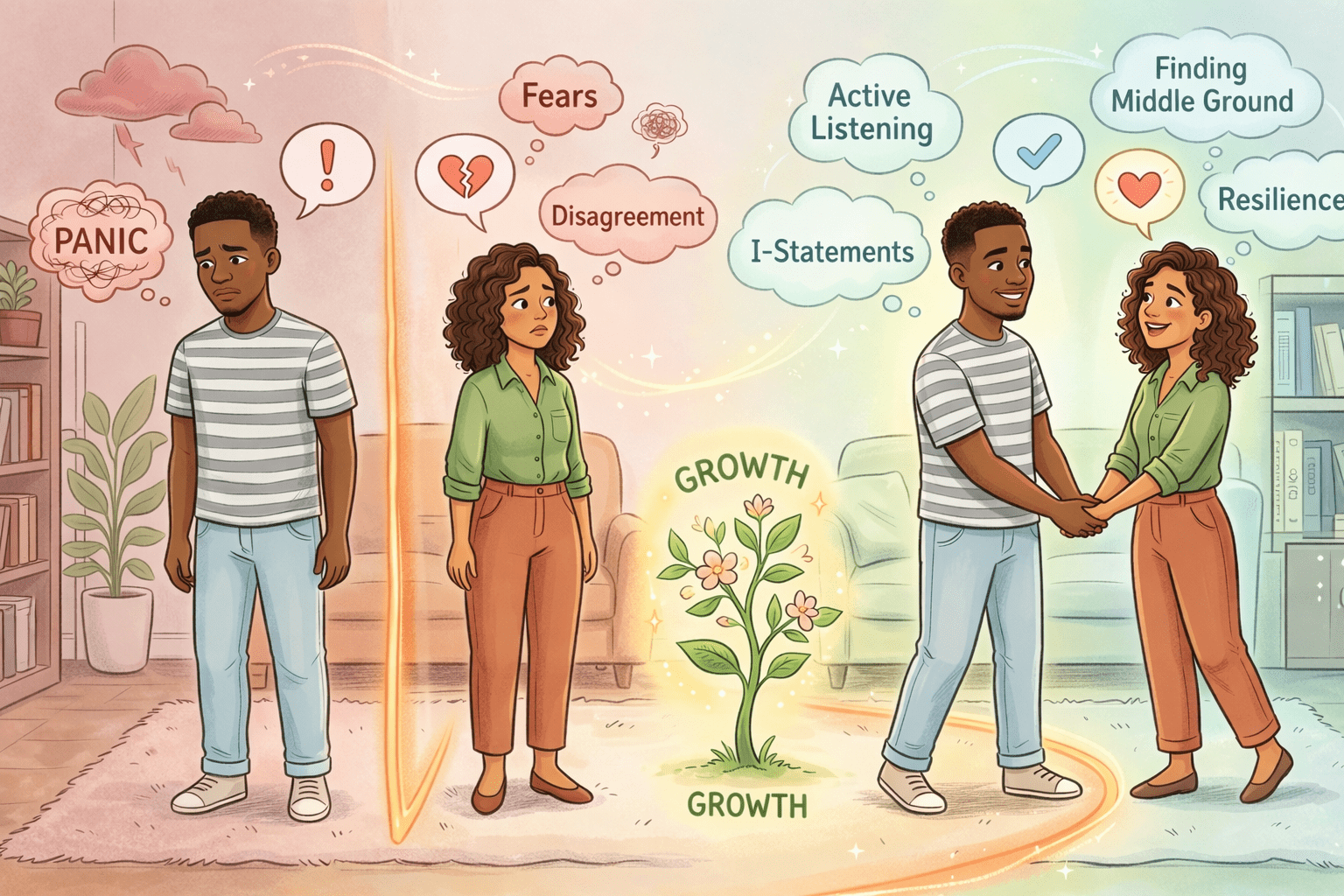
One of the most common misunderstandings in relationships/marriage is the belief that constant peace is proof of health, while disagreement is proof of failure. So once conflict shows up, people begin to panic. They assume something is wrong, or worse, that they are with the wrong person.
But healthy relationship conflict, by itself, is not a warning sign.
In many cases, it is simply a stage of closeness. When two people are truly involved, differences will eventually surface. This is not dysfunction. It is reality. Conflict, by itself, is not a warning sign. In many cases, it is simply a stage of closeness. When two people are truly involved, differences will eventually surface. This is not dysfunction. It is reality.
Why Conflict Happens in the First Place
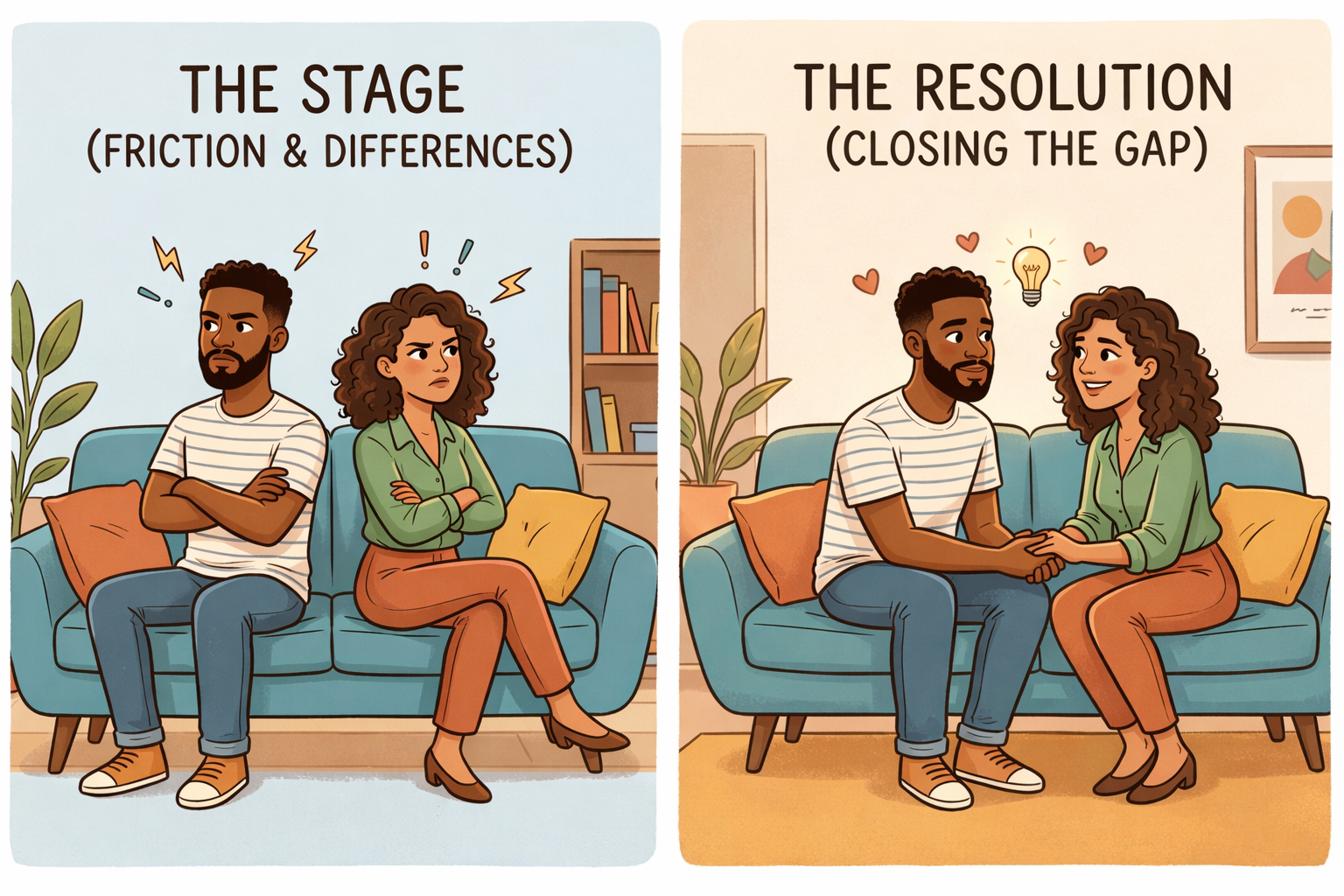
Relationships bring two different people into one shared space. Two backgrounds. Two temperaments. Two emotional habits. Two ways of handling disappointment, stress, communication, affection, and expectations.
Even though two people really love themselves, friction can still happen. Not because the relationship is weak, but because no two people move through life in exactly the same way. Healthy relationship conflict is often the meeting point of those differences. If you’re in a relationship and there’s is friction once in a while, there’s no reason to panic.
Read related story:
When romance fades in a relationship: Choosing reality over fantasy
Govt to pay failed asylum seekers up to £40k to leave UK
Pope Francis dies at 88: Vatican enters mourning, funeral to take place Saturday
Healthy Conflict vs Unhealthy Conflict
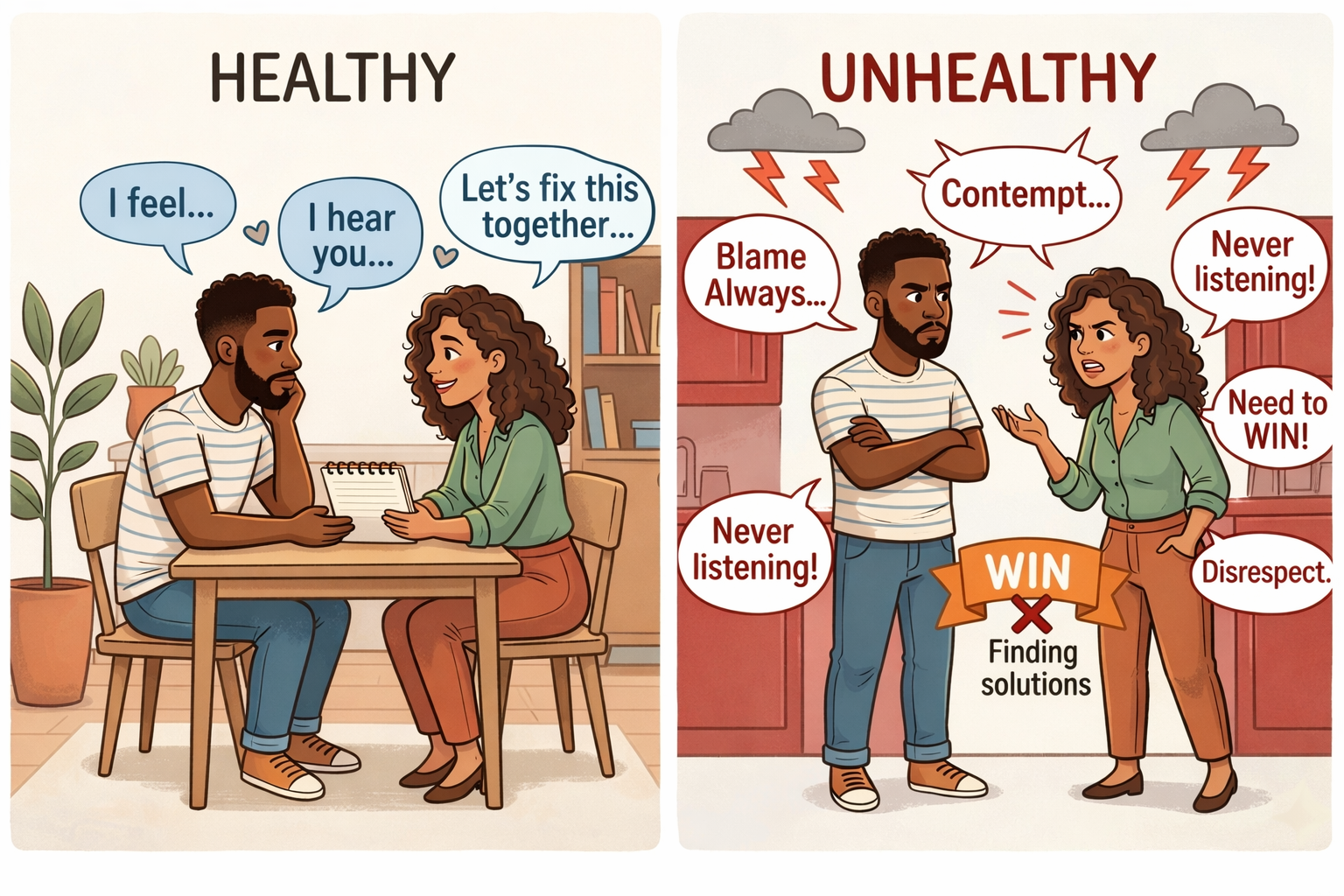
Not all conflict means the same thing. Some conflict is productive, even when it is uncomfortable. Other conflicts are damaging, even when it looks small from the outside.
-
Healthy conflict
Healthy conflict makes room for honesty without cruelty. It allows disagreement without humiliation. It gives both people space to explain themselves, listen, clarify, and work toward repair. The focus stays on the issue, not on tearing each other down.
-
Unhealthy conflict
Unhealthy conflict is not just about raised voices. It is marked by contempt, manipulation, mockery, repeated disrespect, emotional withdrawal, intimidation, or the need to win at all costs. At that point, the conflict stops being about finding solutions and starts becoming about power, punishment, or control.
What Recurring Fights Are Really About
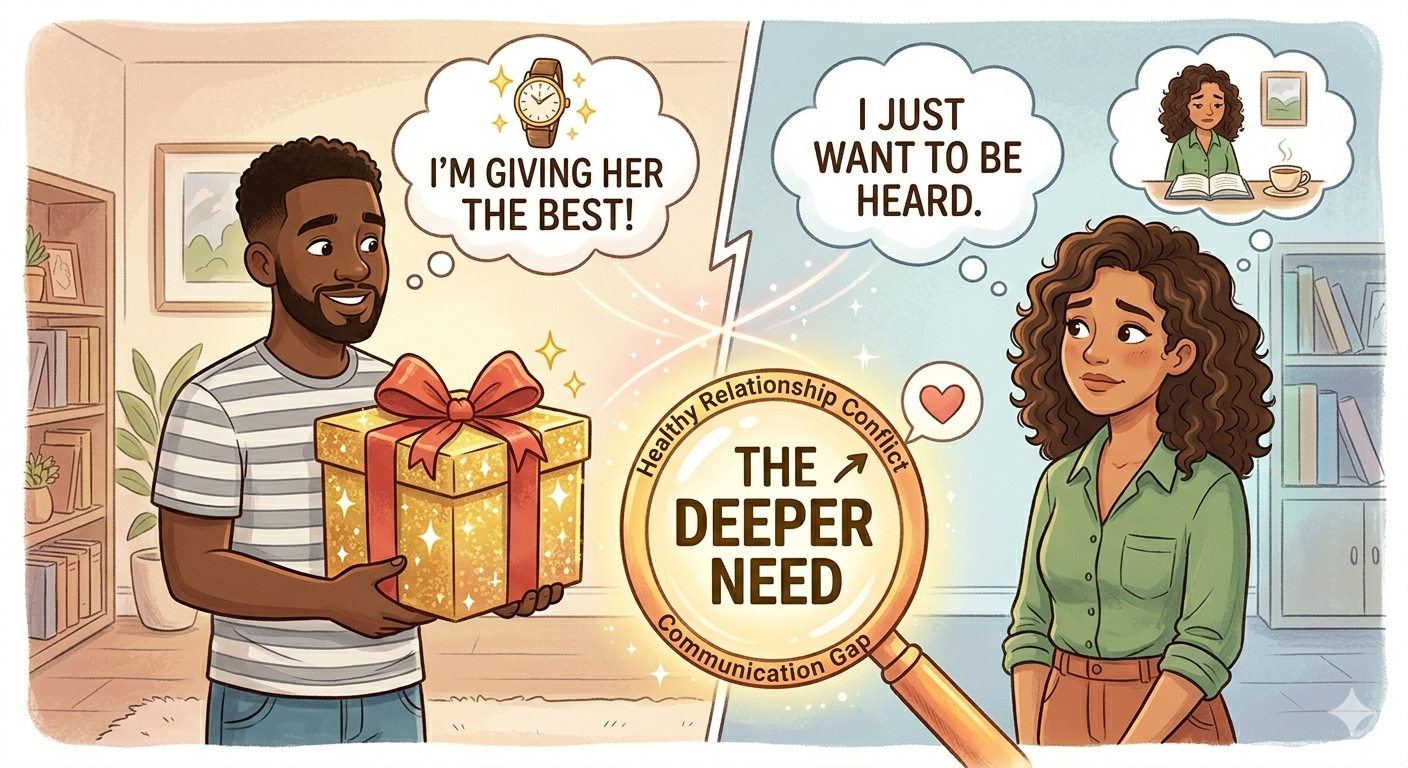
Many recurring arguments are not really about the issue on the surface. A couple may keep arguing about lateness, but what is actually hurting them is the feeling of being unimportant. Another couple may argue about tone, when the deeper issue is resentment. Some fight over chores, but underneath it is the pain of carrying too much alone.
I remember telling my husband severally the kind of birthday gifts that I like. But he kept getting me what he thought was befitting. Remember, it’s a gift and I should just take it right? And that’s the problem. I should be able to communicate my likes clearly to my spouse. So every time he gets me things that I don’t like, there is always a little rift.
Recurring healthy relationship conflict usually points to something deeper that has not yet been properly named. That is why repeated fights should not only be managed, It should be talked about and not swept under the carpet.
Conflict Can Reveal What Needs Attention
Conflict is often revealing. It shows where understanding is weak, where expectations were never properly discussed, where hurt has been ignored, and where personal habits are affecting the relationship/marriage.
This does not make conflict pleasant, but it does make it useful. Sometimes what looks like disruption is actually exposure. It brings hidden tensions to the surface and gives the relationship a chance to deal with what has been left unaddressed.
Also read: When romance fades in a relationship: Choosing reality over fantasy
The Real Goal of Conflict
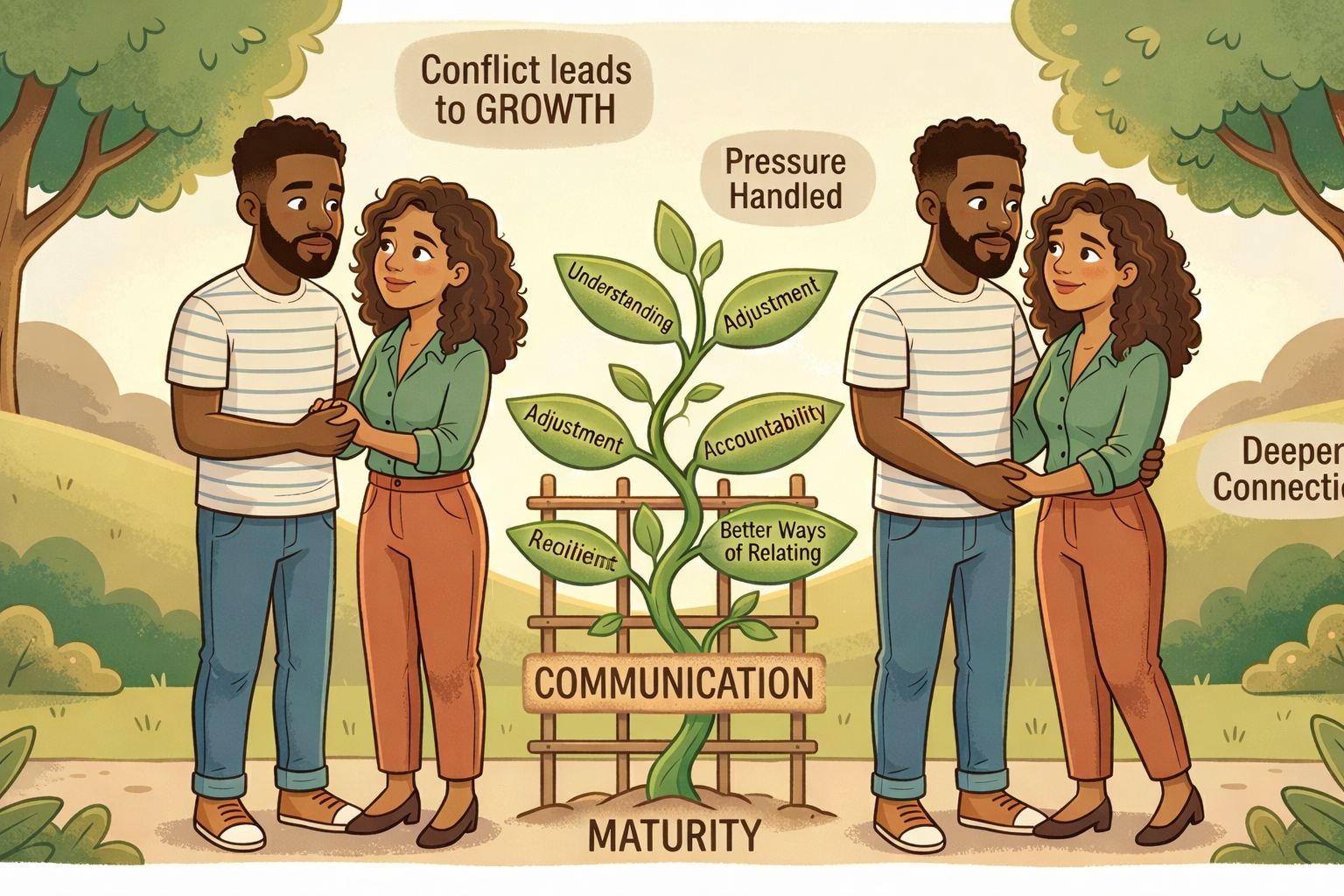
The goal in a healthy relationship is not to avoid conflict completely. That is unrealistic. The goal is to learn how to move through through healthy relat ionship conflict without letting it become destruction. Growth happens when disagreement leads to understanding, adjustment, accountability, and better ways of relating. A strong relationship is not one without pressure or stress. It is one where pressure is handled with maturity.
For further enquiries, send an email to book a clarity call at: [email protected]

