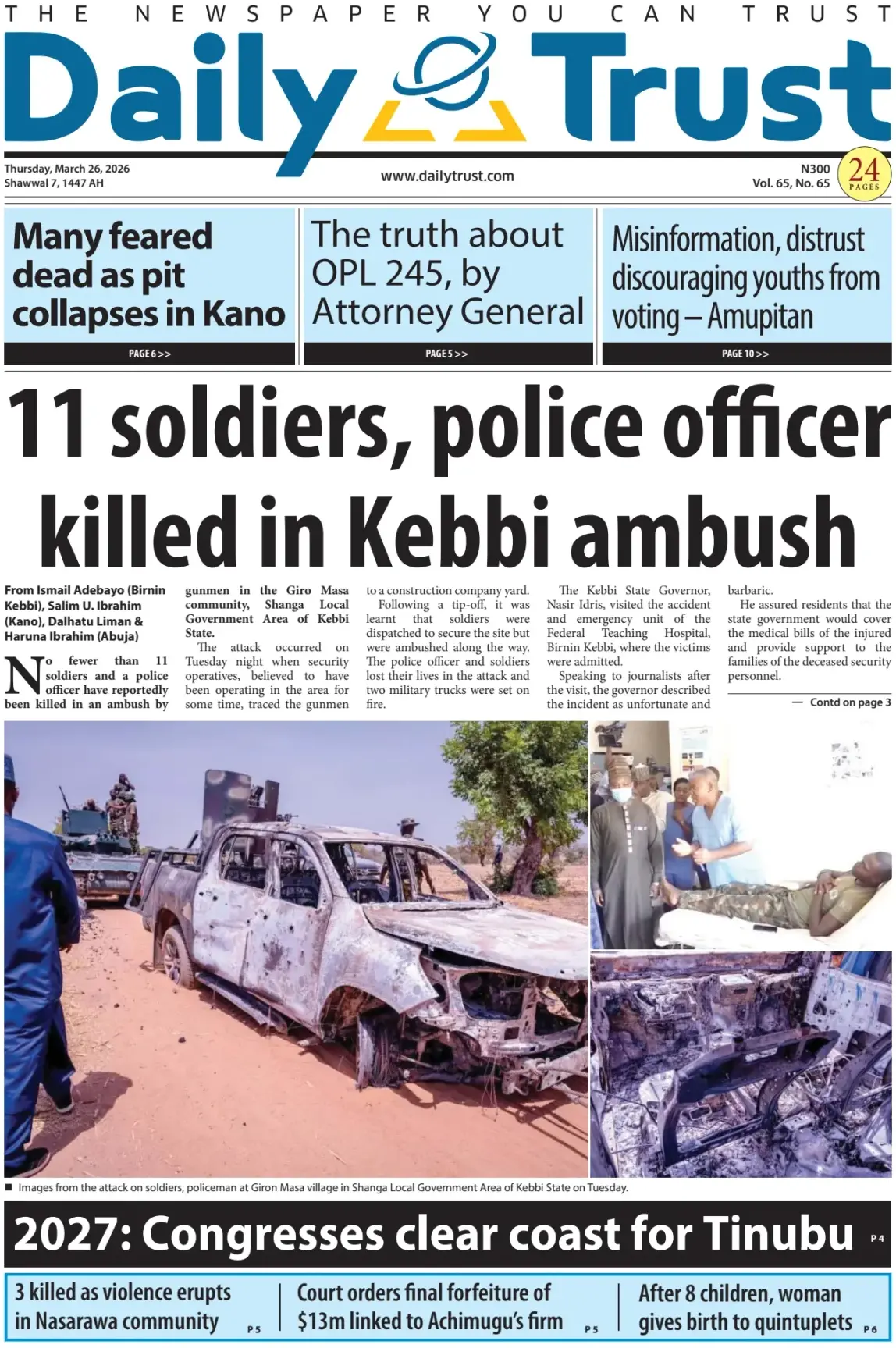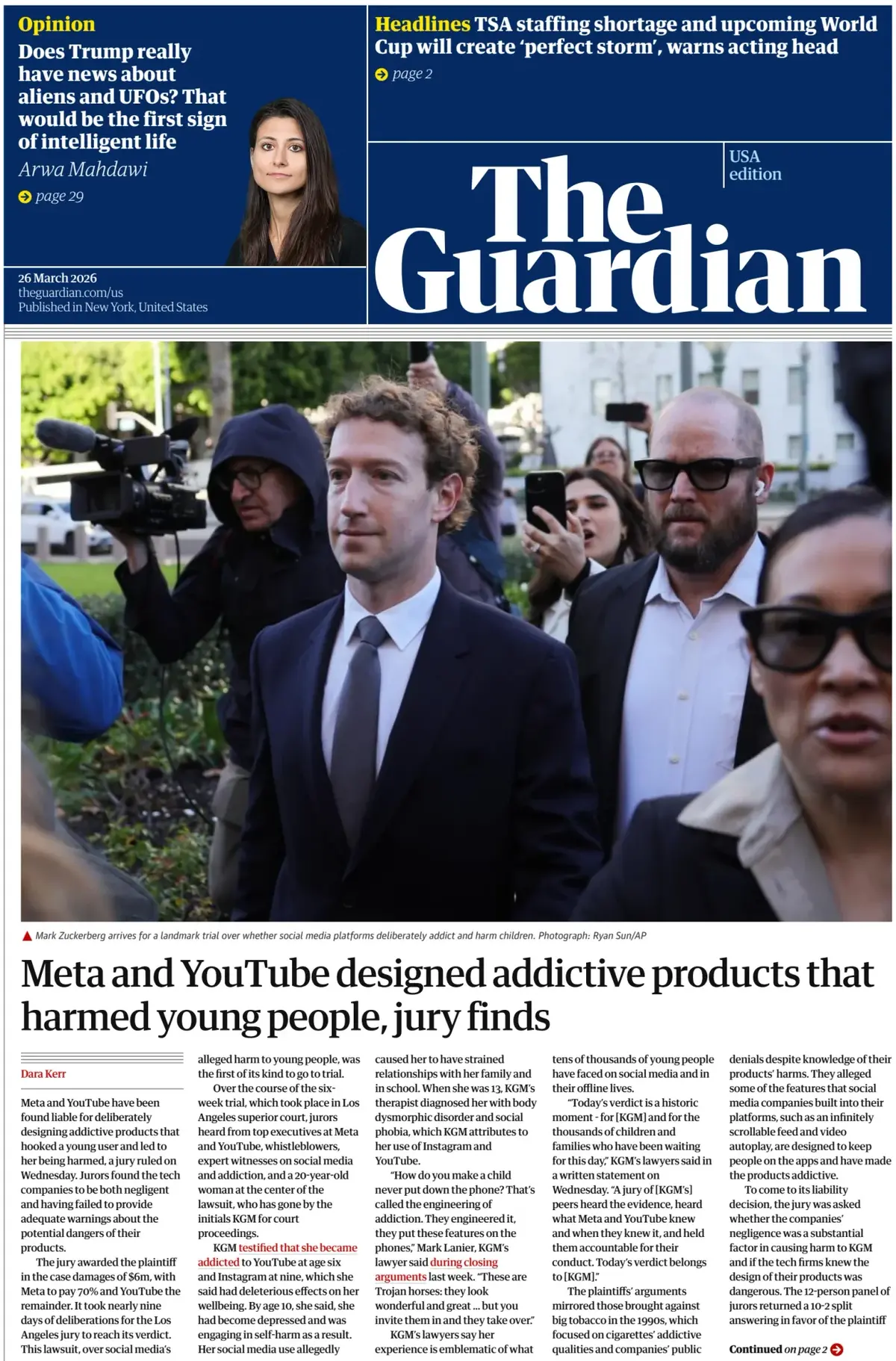
From Washington to Beijing, London to Lagos, today’s front pages reflect a world under pressure. Security threats, political divisions and economic uncertainty dominate coverage across major newspapers, while Big Tech faces growing legal scrutiny over its impact on society. In the Middle East, diplomatic efforts remain fragile as tensions persist between global powers. Across Africa and Asia, governments grapple with internal politics, security crises and development challenges. Meanwhile, shifting markets and policy decisions continue to shape economic outlooks worldwide. Together, these front pages offer a snapshot of a fast-moving global landscape where conflict, accountability and reform remain at the centre of the news agenda.
United Kingdom
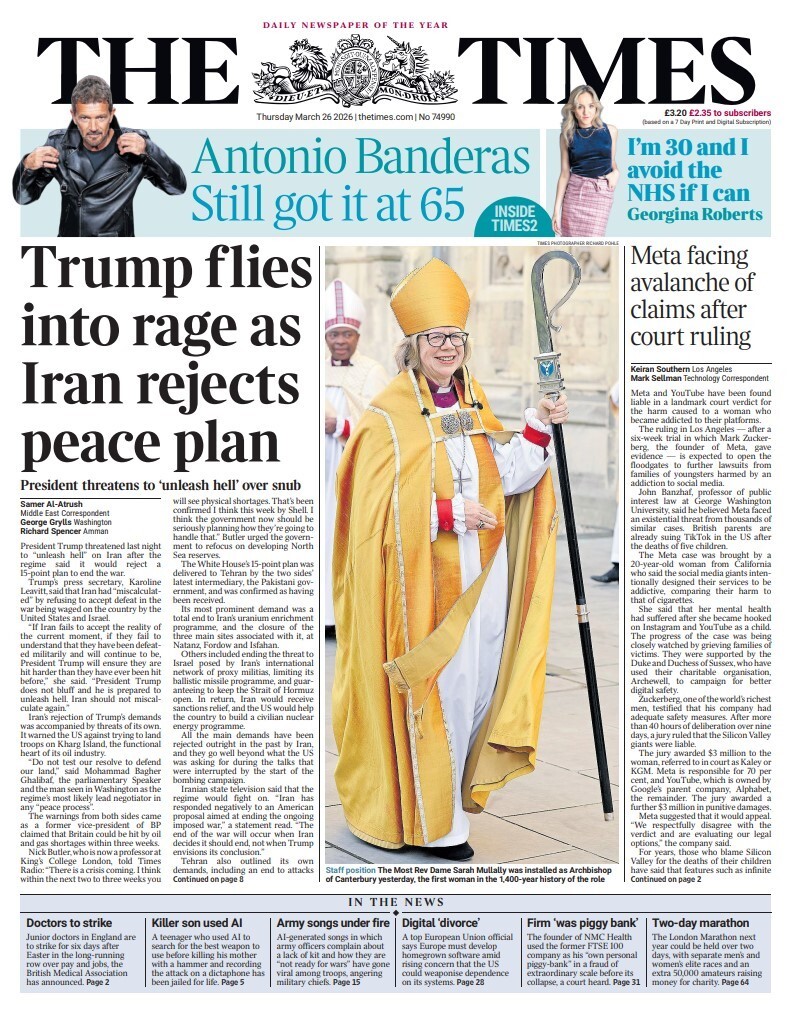
The front page is dominated by escalating international tension, with the lead story reporting that Donald Trump reacted angrily after Iran rejected a proposed peace plan, raising fears of further conflict. Alongside this, a major legal development in the United States sees Meta facing a surge of claims following a court ruling that could open the door to widespread litigation linked to harm caused by its platforms. The paper balances hard news with lighter features, including a profile celebrating Antonio Banderas at 65, and a personal opinion piece questioning reliance on the NHS. Additional headlines point to domestic and global concerns, from planned strikes by doctors and controversies over artificial intelligence in crime, to criticism within the military and corporate misconduct cases. Together, the stories present a mix of geopolitical strain, legal challenges for big tech, and social issues affecting everyday life.
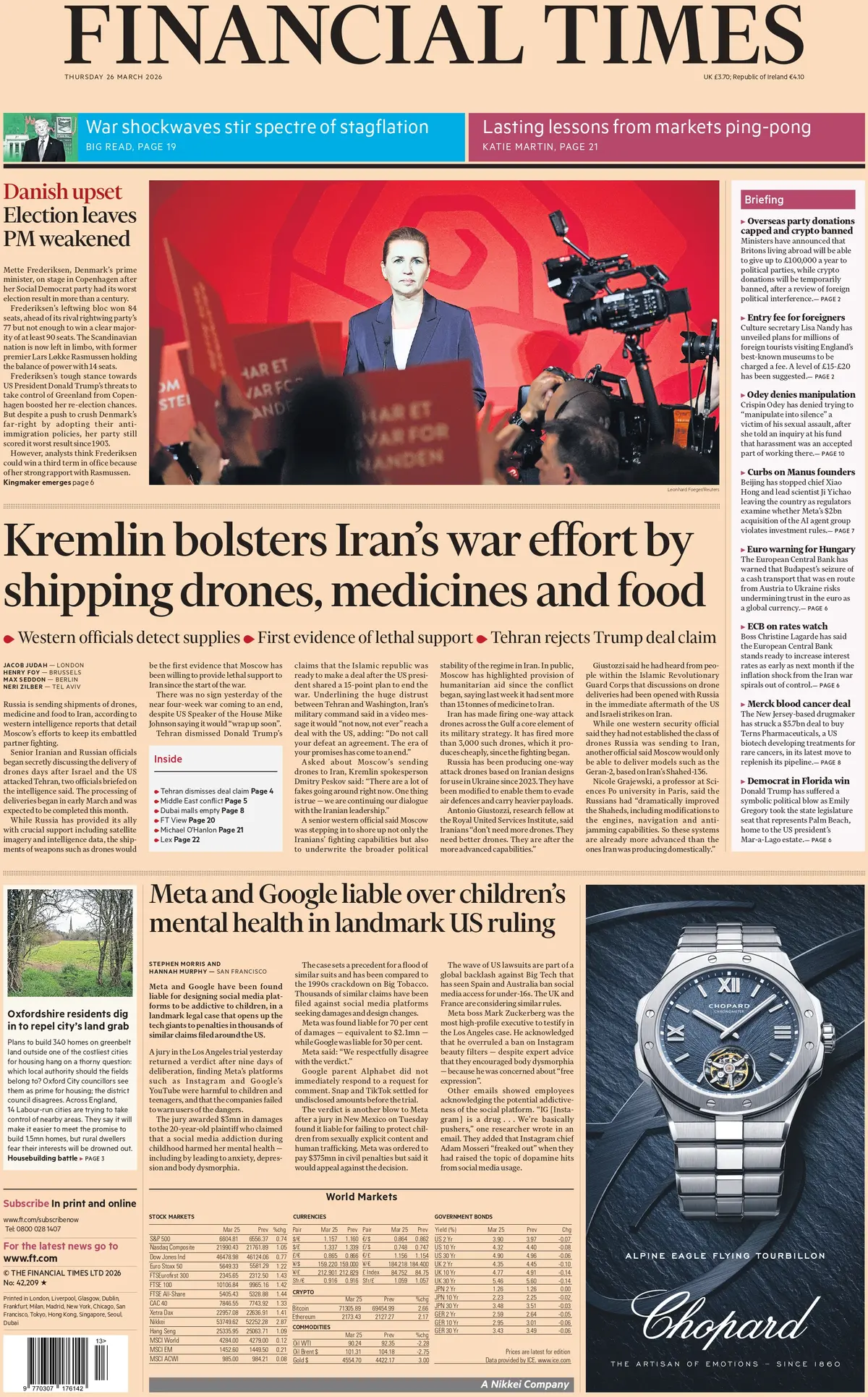
Financial Times front page is dominated by geopolitical and economic tensions, with reports that Russia is strengthening Iran’s war effort through supplies of drones and essential goods, signalling deeper alliances that could reshape global security dynamics. At the same time, a landmark US court ruling holds Meta and Google accountable for harm to children’s mental health, marking a significant shift in regulatory pressure on Big Tech. In Europe, political uncertainty emerges as Denmark’s prime minister is weakened following an election setback, raising questions about leadership stability. Broader economic concerns also feature prominently, with warnings that ongoing conflicts could trigger stagflation, while market volatility continues to test investors. Together, the coverage highlights a world facing intertwined political, legal and economic challenges.
United State
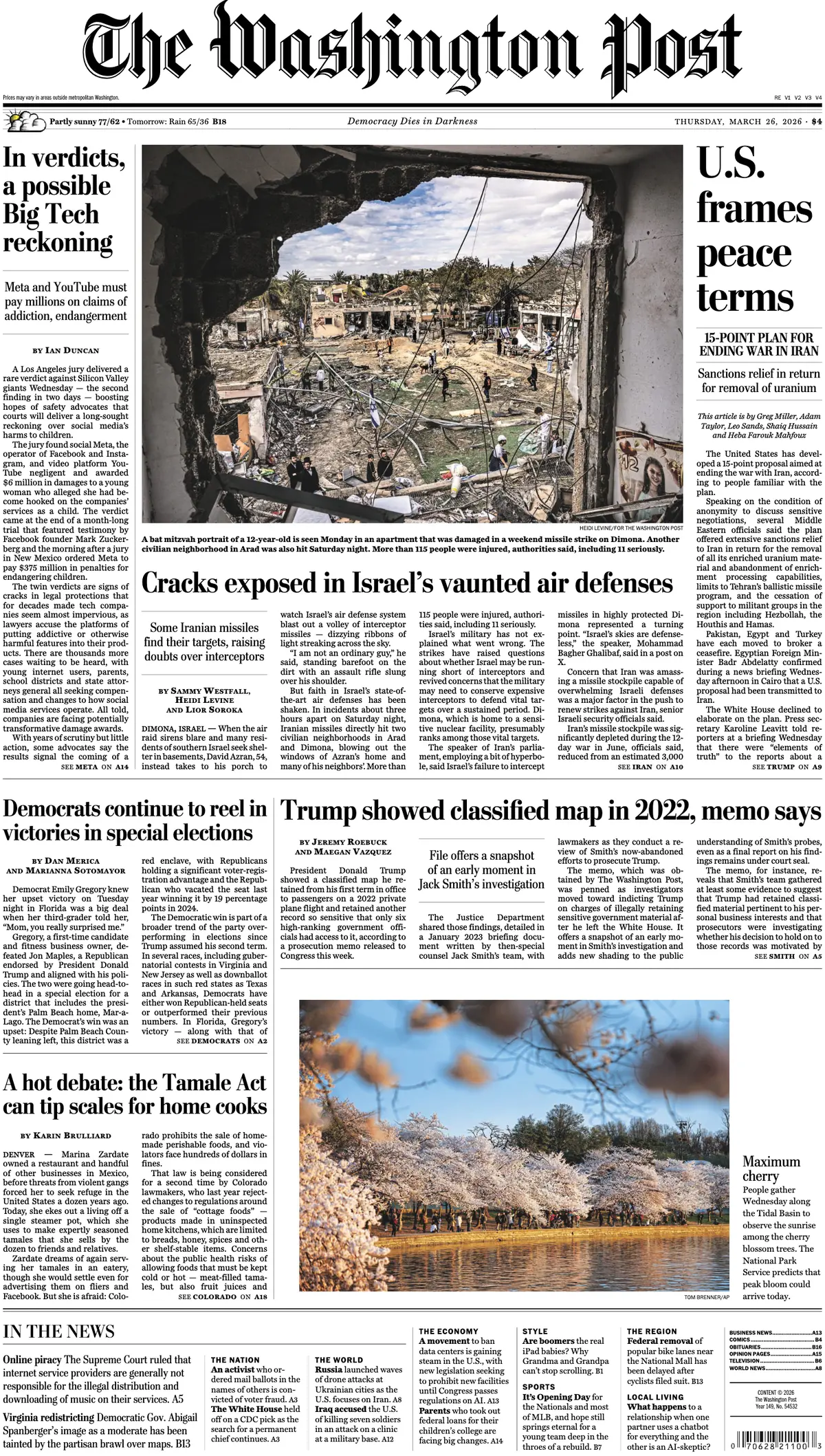
The Washington Post front page presents a mix of global conflict, domestic politics, and legal accountability. A major development in the technology sector suggests a turning point for Big Tech, as court verdicts open the door to significant financial and legal consequences. Internationally, the United States is pushing forward with a proposed peace framework aimed at resolving tensions with Iran, while ongoing conflict in the Middle East raises concerns about vulnerabilities in Israel’s air defence systems. On the domestic front, Democrats are gaining momentum through victories in special elections, signalling shifting political dynamics, while fresh revelations about Donald Trump’s handling of classified information add to ongoing scrutiny. The paper also highlights policy debates affecting everyday Americans, including new legislation that could impact home-based food businesses. Overall, the coverage reflects a world shaped by geopolitical uncertainty, political competition, and increasing pressure on powerful institutions.
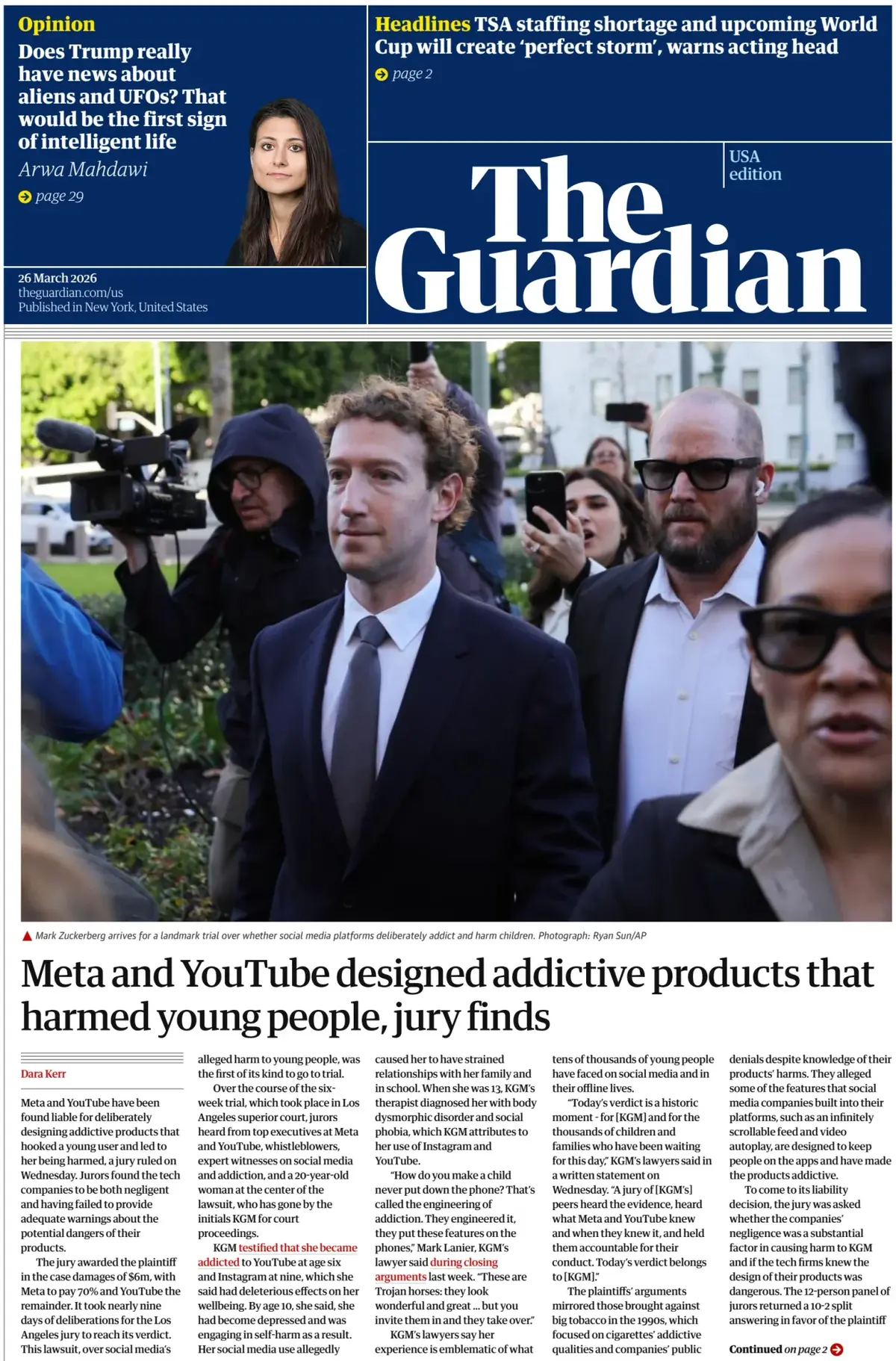
The Guardian front page is led by a landmark legal ruling against major technology companies, with a jury finding that Meta and YouTube created addictive products that harmed young people, a decision that could reshape regulation and accountability in the social media industry. Alongside this, concerns are raised over travel disruption in the United States, where staffing shortages combined with the upcoming World Cup are expected to strain airport security systems. The paper also features a lighter but provocative opinion piece questioning claims about UFOs linked to Donald Trump, reflecting ongoing public fascination with the subject. Overall, the coverage highlights growing scrutiny of Big Tech, infrastructure pressures, and the mix of serious and speculative issues shaping public debate.
Australia
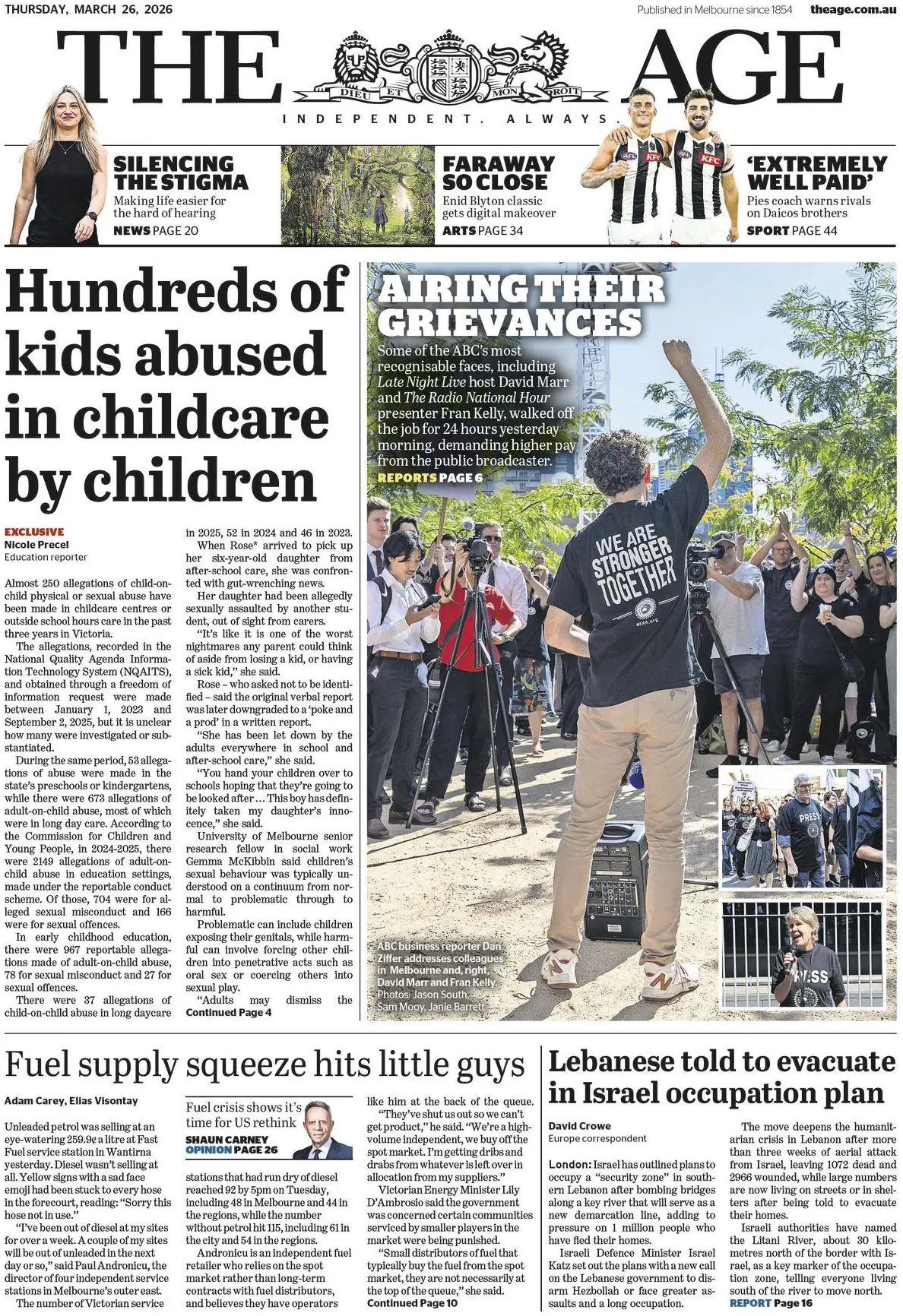
The Age leads with a disturbing investigation into widespread abuse within childcare centres, where hundreds of children were reportedly harmed by other children, exposing serious gaps in supervision and safeguarding systems. The paper also highlights growing workplace tensions, with high-profile staff at the national broadcaster staging a protest over pay and conditions, reflecting wider unrest in the media sector. Economic challenges are evident as smaller fuel retailers struggle under supply shortages, raising concerns about market imbalance and the pressure on independent businesses. Internationally, the situation in the Middle East adds to global uncertainty, as Israel signals plans affecting southern Lebanon, prompting evacuation warnings and fears of escalation. Together, the coverage presents a picture of institutional failure, labour disputes, economic strain, and rising geopolitical risk.
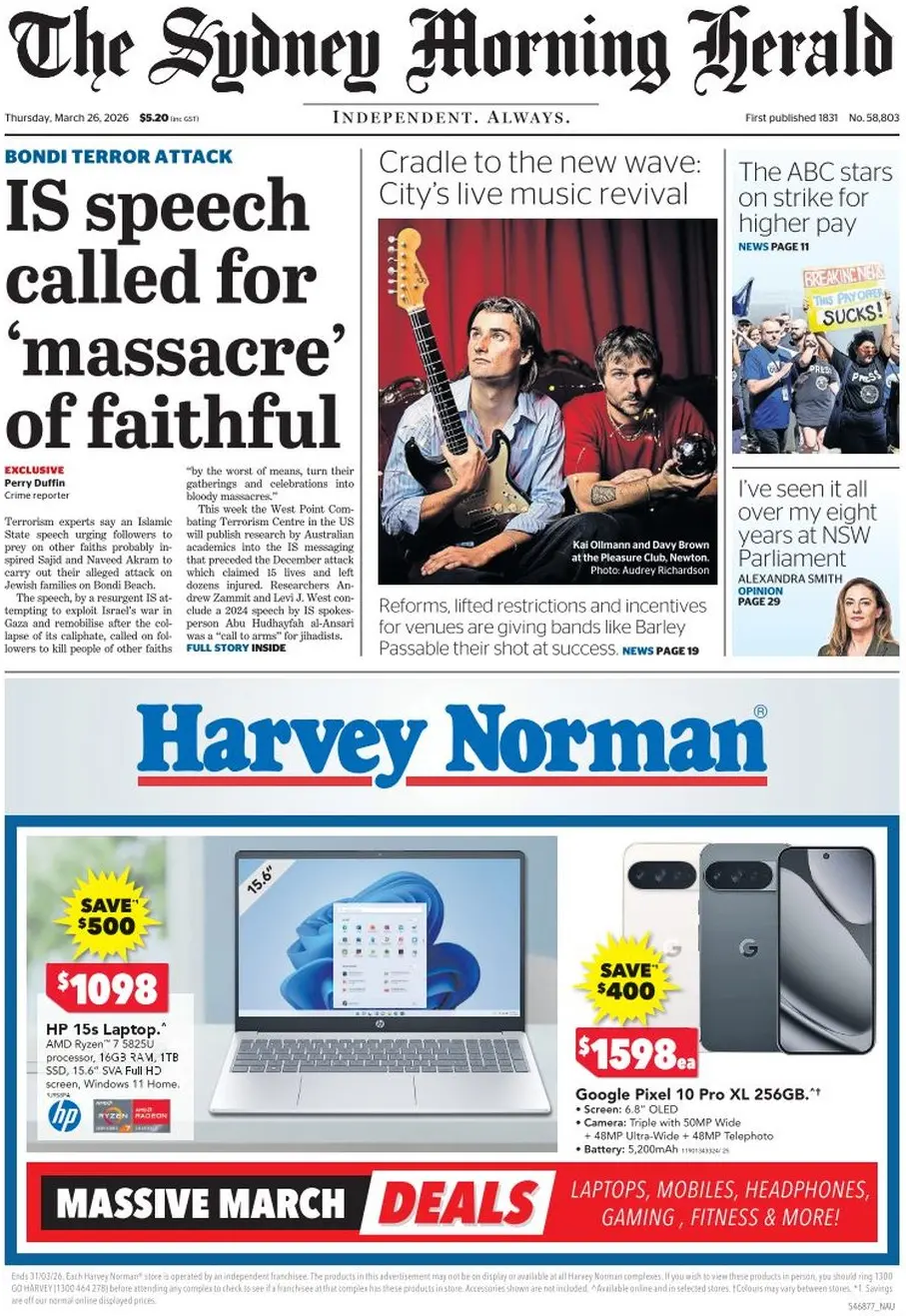
The Sydney Morning Herald leads with a major security concern, reporting that extremist Islamic State rhetoric has called for attacks on people of faith, raising fears of renewed threats and highlighting ongoing counterterrorism challenges. Alongside this, the paper shifts focus to culture and recovery, with a feature on the revival of the city’s live music scene, suggesting a rebound for the creative industry after years of disruption. Industrial tensions are also prominent, as high-profile ABC figures join a strike over pay, reflecting broader labour disputes within Australia’s media sector. An opinion piece adds a political dimension, offering insight into experiences within New South Wales Parliament. Together, the front page presents a mix of security risks, cultural renewal, workplace unrest, and political reflection shaping the national conversation.
China
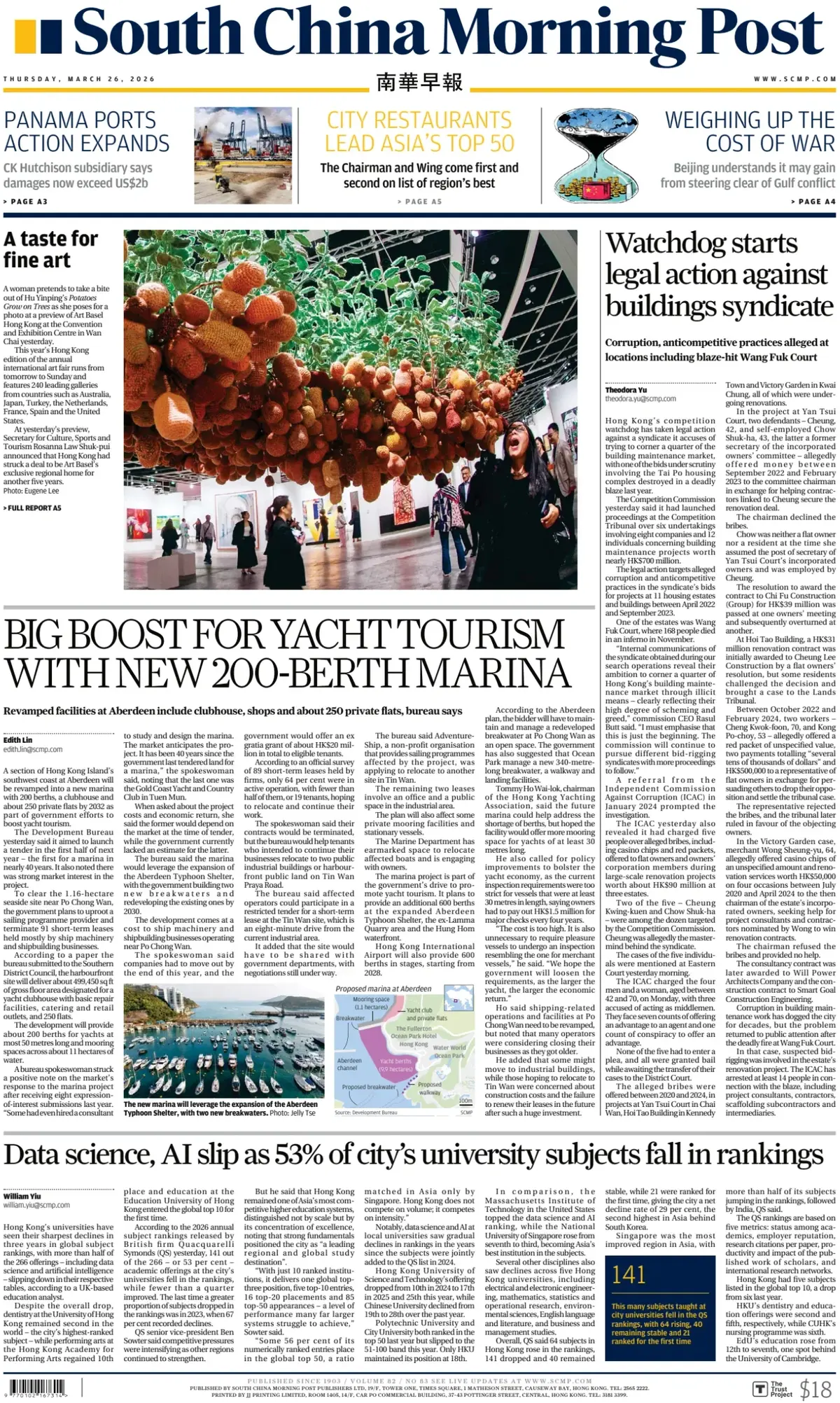
South China Morning Post front page highlights economic development, governance issues and education concerns in Hong Kong and beyond. The lead story focuses on a major investment in yacht tourism, with a new marina expected to boost the city’s appeal and support local business activity. At the same time, authorities are tightening oversight, launching legal action against a buildings syndicate over alleged corruption and misconduct, signalling a push for stronger accountability in the property sector. Concerns about the education system are also evident, as a significant drop in university subject rankings—particularly in data science and artificial intelligence—raises questions about competitiveness in key future industries. Regional and global developments are also covered, including expanding port operations in Panama, recognition of top-performing restaurants in Asia, and analysis of the economic impact of war. Together, the stories reflect a mix of growth ambitions, regulatory challenges and pressure to maintain global standing.
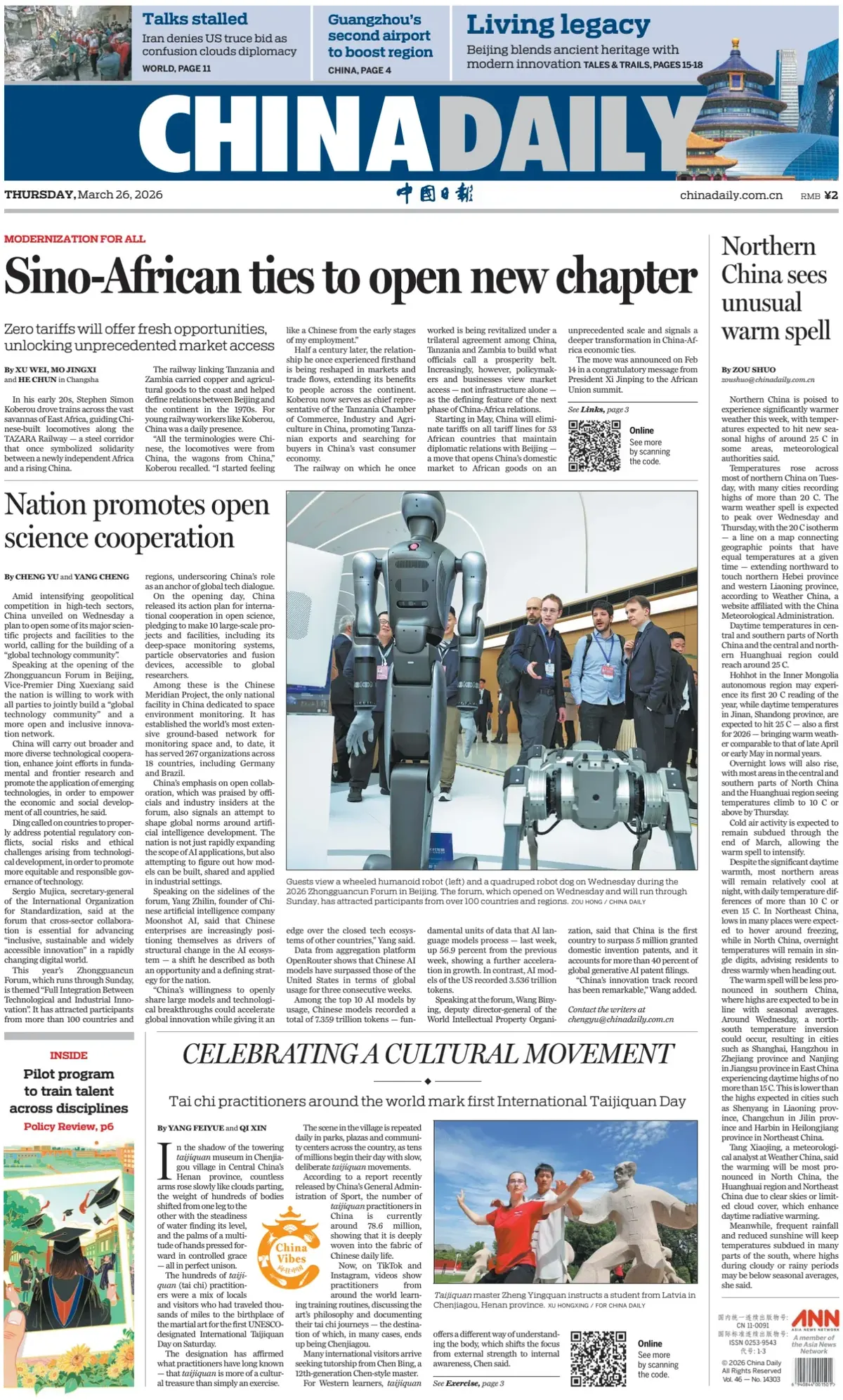
China Daily front page focuses on international cooperation, technological progress and domestic development. The lead story highlights strengthening relations between China and Africa, with new trade opportunities expected to expand economic ties and market access. Scientific advancement is also a key theme, as China promotes global collaboration in research and innovation, aiming to position itself as a leader in emerging technologies. Domestically, infrastructure growth is evident with plans for a second airport in Guangzhou to support regional development, while cultural heritage remains important through efforts to blend tradition with modern innovation in Beijing. On the global stage, diplomatic tensions persist as talks involving Iran and the United States stall, adding uncertainty to international relations. Environmental conditions also feature, with reports of unusually warm weather in northern China. Overall, the coverage presents a narrative of economic expansion, global engagement and technological ambition.
India
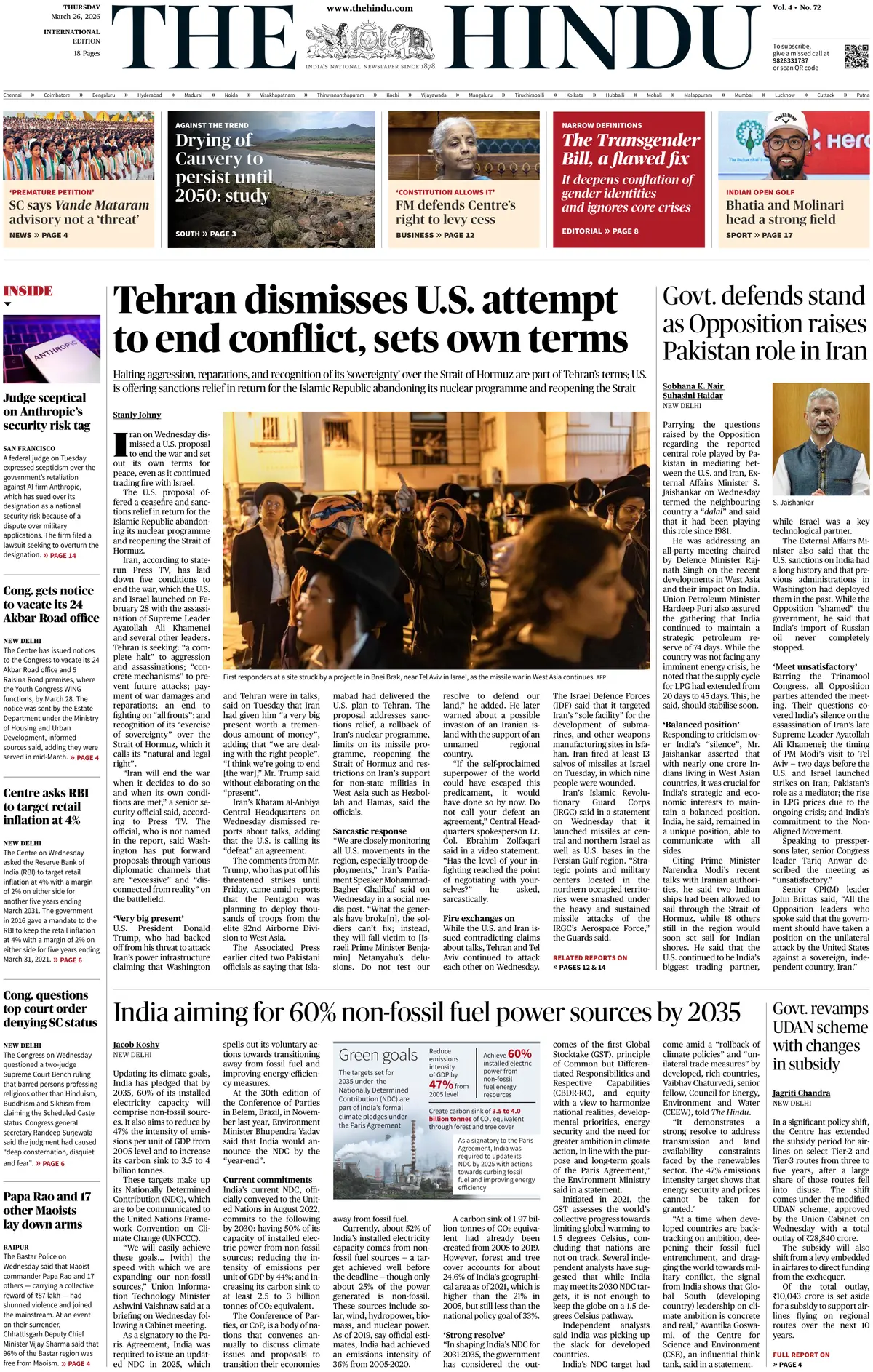
The Hindu front page is led by international tensions, with Iran rejecting a United States proposal to end the conflict and instead setting its own conditions, signalling a continued diplomatic standoff. Domestically, political debate intensifies as the government defends its position amid opposition criticism over Pakistan’s role in regional developments. The paper also highlights India’s long-term energy strategy, with a target to generate 60% of its power from non-fossil fuel sources by 2035, reflecting a push toward sustainability and energy transition. Additional stories touch on judicial observations, environmental concerns such as the drying of the Cauvery river, economic policy decisions, and social debates around legislation. Together, the coverage presents a blend of geopolitical strain, domestic political scrutiny, and forward-looking economic and environmental planning.
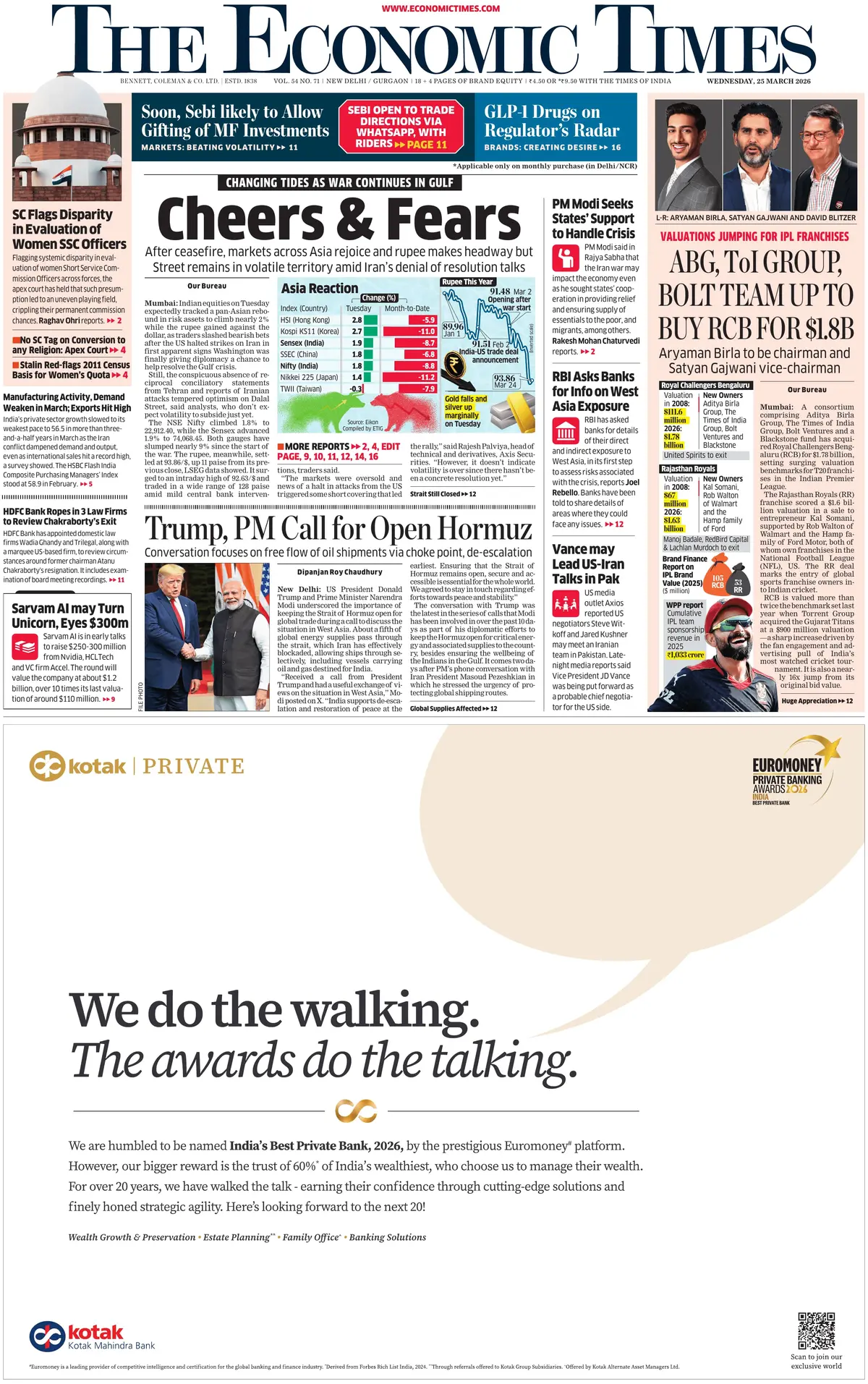
The Economic Times front page reflects a mix of global geopolitical tension and market uncertainty, with investors reacting cautiously despite a temporary ceasefire in the Gulf region. The lead story captures the volatility in financial markets, where optimism is tempered by concerns over unresolved conflicts and their impact on oil supply and global trade. Diplomatic efforts are underway, as leaders call for keeping the Strait of Hormuz open to ensure uninterrupted energy flows, while discussions involving the United States and Iran hint at possible negotiations. Domestically, the Indian government is seeking support from states to manage emerging economic challenges, while regulators and the central bank monitor exposure to risks stemming from West Asia. Corporate activity remains strong, highlighted by a major consortium bid to acquire an IPL franchise, signalling continued investor interest despite uncertainty. Overall, the coverage underscores the tight link between geopolitics and market stability, alongside ongoing domestic policy responses.
Nigeria
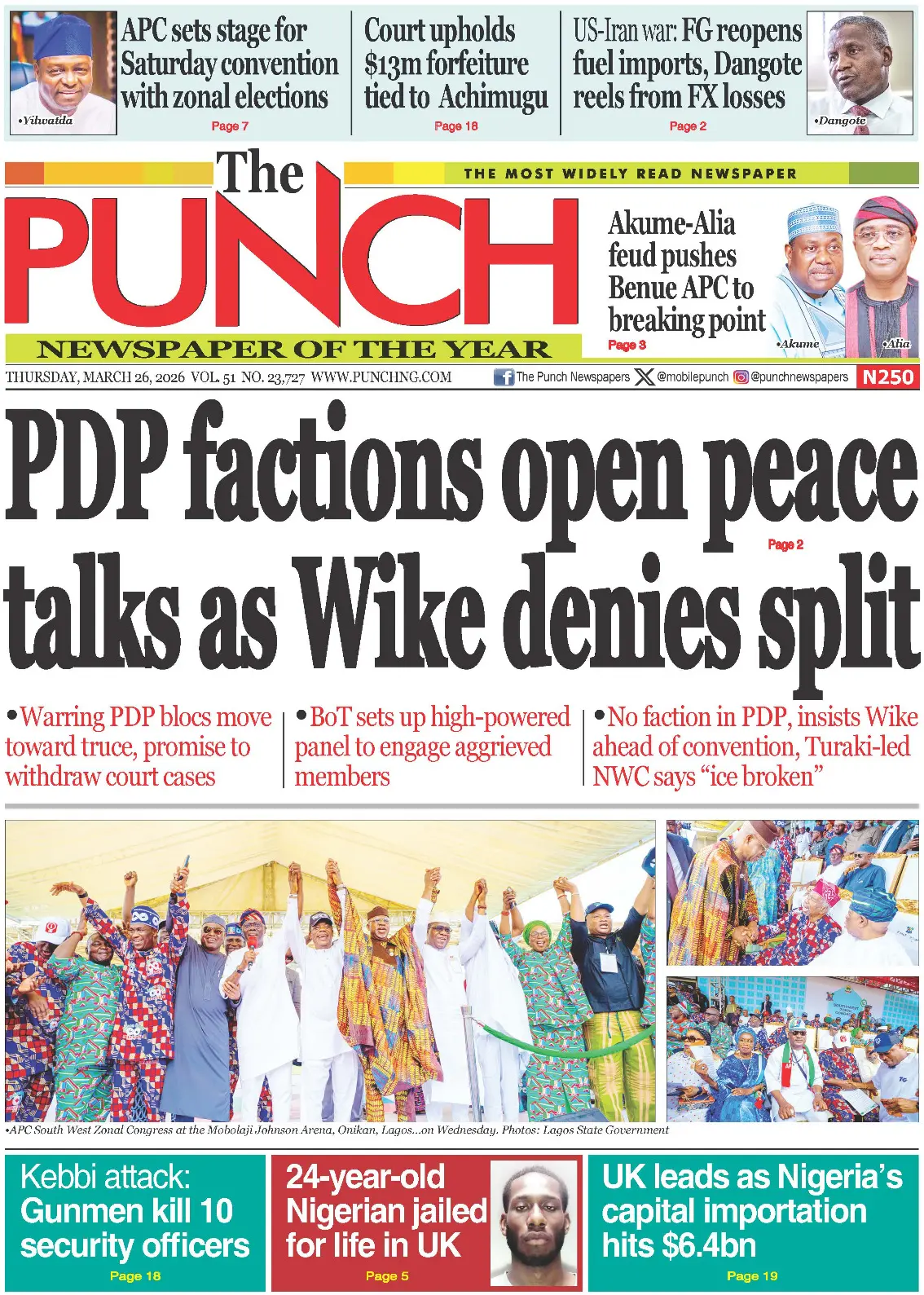
The Punch front page is dominated by political developments within Nigeria, with factions of the Peoples Democratic Party moving towards reconciliation talks even as Nyesom Wike rejects claims of a division, signalling ongoing tensions within the opposition. The ruling APC also faces internal strain, particularly in Benue State, where a leadership dispute threatens party unity ahead of key political activities, including an upcoming convention. Security concerns remain prominent, with a deadly attack in Kebbi resulting in the killing of security personnel, highlighting persistent challenges in tackling violence. On the economic front, global tensions are impacting Nigeria, as the government reopens fuel imports amid disruptions linked to the US-Iran situation, while major business interests feel the pressure of foreign exchange losses. Additional stories reflect legal accountability, international crime cases involving Nigerians, and signs of economic activity through rising capital importation. Together, the coverage paints a picture of political negotiation, security risks, and economic adjustment in a complex national landscape.