


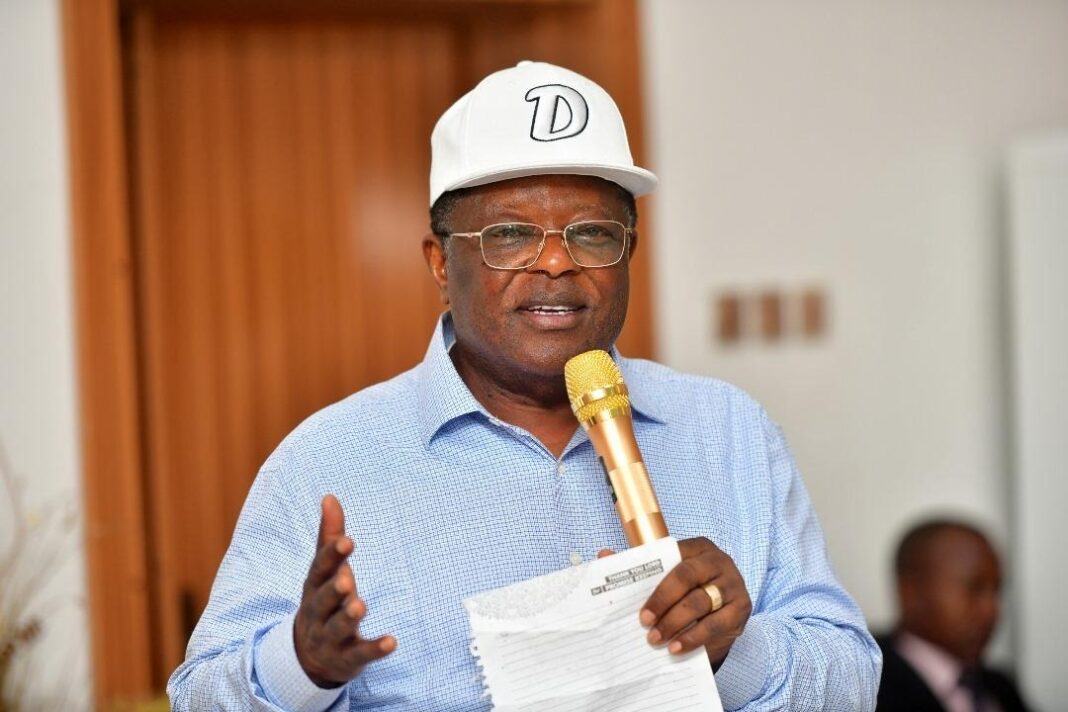
The Federal Government has announced a ban on sand mining within a 10-kilometre radius of the River Niger, citing the need to protect the structural integrity of the First and Second Niger bridges.
The Minister of Works, David Umahi, disclosed this on Friday in Asaba, Delta State, during the inauguration of the Closed-Circuit Television (CCTV) monitoring centre for the Second Niger Bridge. He said the decision was approved by the Federal Executive Council (FEC) as part of broader measures to safeguard critical federal infrastructure across the country.
According to the minister, unregulated sand mining activities around the River Niger pose serious risks to the stability and longevity of the bridges, which are of strategic economic and national importance. He stressed that the ban was not merely advisory but would be strictly enforced.
Umahi directed the Delta State Police Command to ensure full enforcement of the directive, warning that anyone found violating the ban would be arrested and prosecuted in accordance with the law.
“The Federal Executive Council has approved the banning of sand mining within a 10-kilometre radius of the River Niger to protect the First and Second Niger bridges,” the minister said. “The police are to enforce this decision and arrest offenders.”
The minister also addressed concerns surrounding tolling on the Second Niger Bridge, clarifying that toll collection would not commence until all access and bypass roads linking the bridge on both the Anambra and Delta sides are fully completed.
“The tollgate is ready, but we won’t start tolling on the road until we complete the access roads and bypass roads that lead to the bridge,” Umahi said.
He explained that the security architecture for the bridge would rely heavily on technology rather than physical checkpoints. According to him, there would be no routine security checkpoints along the bridge, as police and other security agencies would instead operate from the CCTV monitoring centre, enabling rapid response to incidents within five minutes.
Traditional rulers at the event commended the Federal Government for the completion of the Second Niger Bridge and associated security infrastructure. The Asagba of Asaba, Prof. Epiphany Azinge, described the bridge as a landmark project with far-reaching socio-economic benefits for the South-East, South-South and the country at large.
Similarly, the Chairman of the Anambra State Council of Traditional Rulers and the Igwe of Obosi, Chidubem Iweka, said the opening of the bridge had significantly reduced traffic congestion on the old Niger Bridge, particularly during peak travel periods such as the yuletide.
He expressed optimism that the installation of CCTV cameras would further enhance the safety of commuters and urged the Federal Government to expedite work on the remaining access roads to enable full utilisation of the bridge.

