


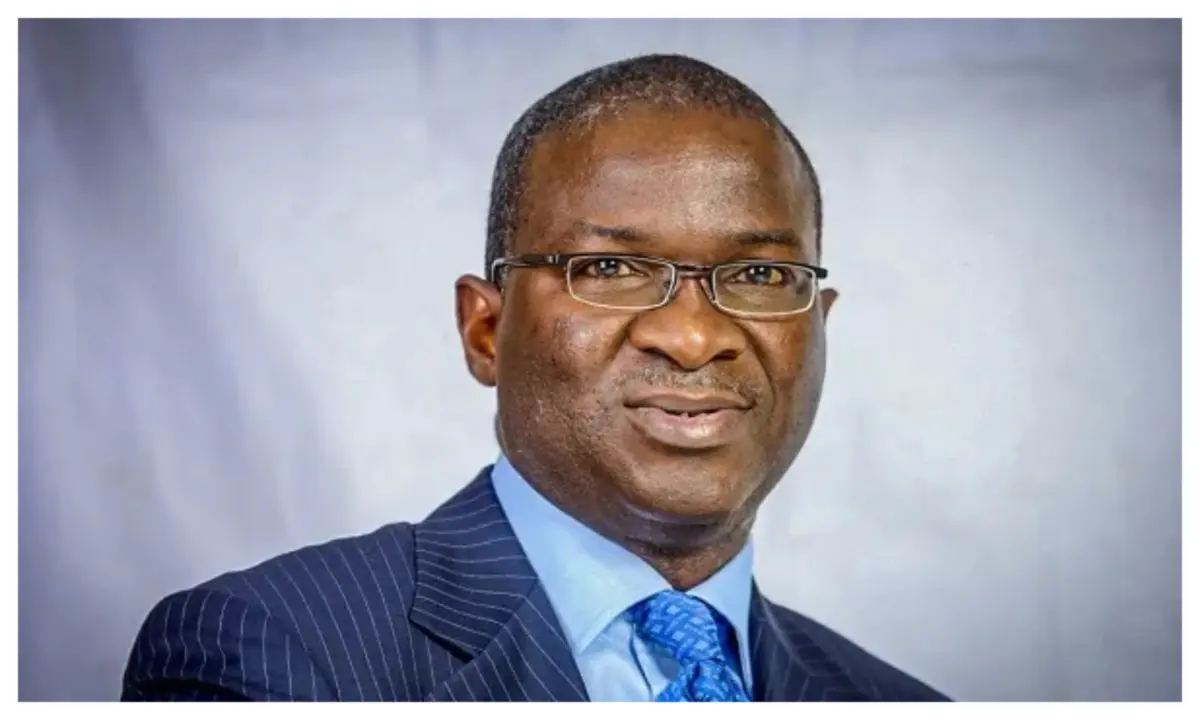
Former Lagos State Governor and immediate past Minister of Works, Babatunde Fashola, has called for newly appointed Nigerian ambassadors to be comprehensively briefed on the country’s policies, economic priorities and investment framework before assuming their foreign postings.
Fashola made the call on Tuesday in Abuja while delivering the keynote address at the Nigeria Reputation Summit 2026, organised by the Nigerian Institute of Public Relations (NIPR). He stressed that Nigeria’s diplomatic effectiveness depends largely on how well its envoys understand and articulate the nation’s positions to foreign governments, investors and international partners.
His remarks come barely one month after the Senate confirmed 65 ambassadorial nominees following the adoption of a report by the Senate Committee on Foreign Affairs. Those confirmed include former Minister of Aviation, Femi Fani-Kayode; former presidential aide, Reno Omokri; ex-Minister of Interior, Abdulrahman Dambazau; former INEC Chairman, Mahmood Yakubu; former Enugu State Governor, Ifeanyi Ugwuanyi; and former Abia State Governor, Okezie Ikpeazu, among others. In total, the list comprises 34 career ambassadors and high commissioners and 31 non-career appointees.
Drawing from his experience in government, Fashola recounted an encounter during an official visit to an African country where Nigeria’s ambassador was unfamiliar with the country’s policy position on issues directly related to his ministry.
“That experience showed me a major gap,” he said, warning that such lapses undermine Nigeria’s interests abroad. He insisted that ambassadors must be adequately equipped with up-to-date information on Nigeria’s fiscal position, tax laws, investment incentives, oil and gas policies, solid minerals framework and even basic business registration timelines.
“Before posting them, they must have ready knowledge and information to truly represent Nigeria in high-level engagements. It must be continuous engagement, not a one-off briefing,” Fashola said.
He urged immediate collaboration between relevant ministries, noting that it was not too late to address the gaps. He specifically called on the Minister of Information to liaise with the Ministry of Foreign Affairs to commence the process.
Fashola also criticised the routine practice of Nigerian ambassadors inviting ministers to visit their host countries, describing such trips as largely unproductive. He argued that Nigeria should instead position itself as a destination for investors and international partners.
“If there is a development challenge, it is here, not there. Those who want to do business with us should come and see where we live,” he said, adding that Nigeria already possesses the infrastructure to host international visitors.
He linked the strategy to the global Meetings, Incentives, Conventions and Exhibitions (MICE) framework, which he described as a major driver of modern economies. According to him, Nigeria has failed to fully leverage its cultural and entertainment exports to attract global visitors.
“When people experience Nigeria themselves, they become our ambassadors. That is how you counter negative narratives,” he said.
Meanwhile, the President of the NIPR, Dr Ike Neliaku, clarified that he did not defend the Federal Government’s controversial $9m US lobbying deal. He said his comments were misconstrued, explaining that while lobbying is a recognised public relations function, he had serious concerns about the process, value and competence of the vendors involved.
Neliaku also disclosed that Nigeria would host the Global Alliance World Public Relations Forum in November 2026, describing it as a major opportunity to reshape the country’s global image.

