


By Clement Abayomi
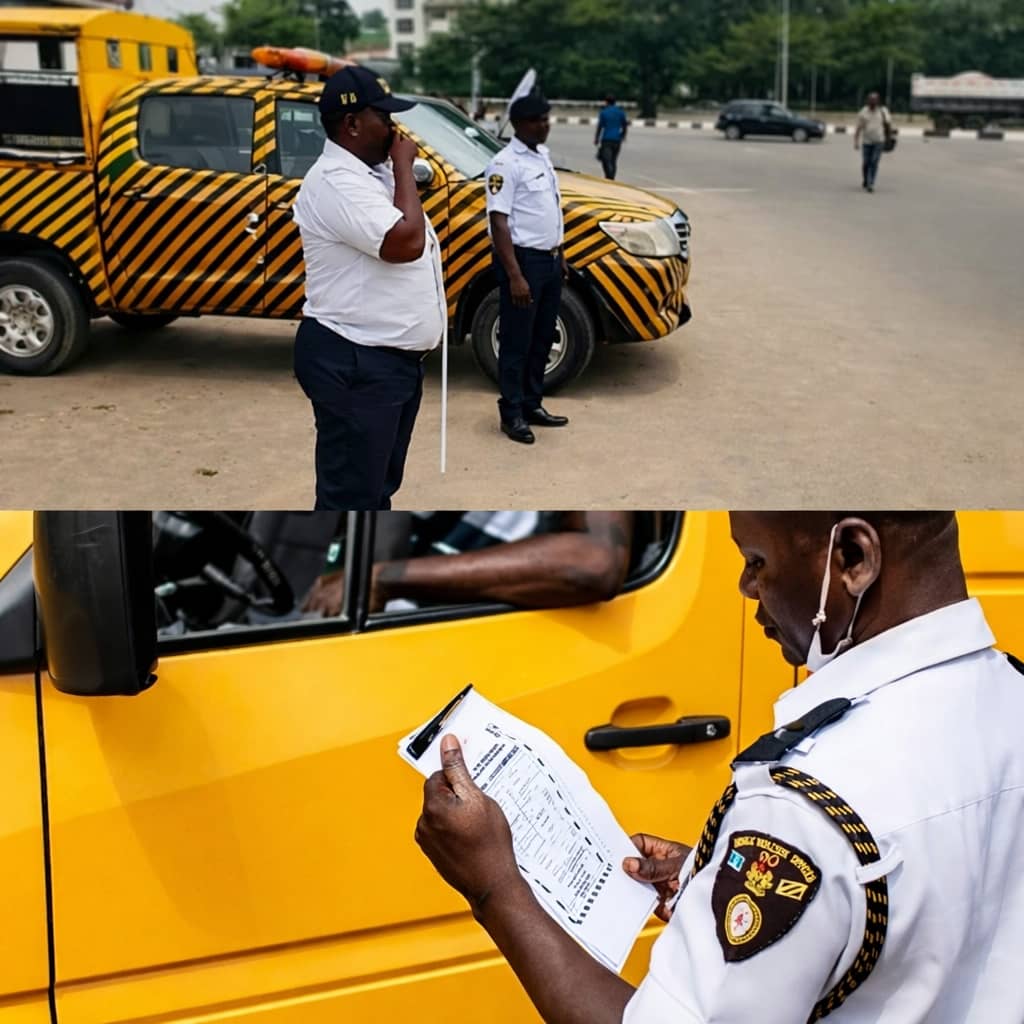
Concerns have increased over the activities of Vehicle Inspection Officers (VIO), as lawyers condemn many of their actions on Nigerian roads, claiming that they do not follow the law.
These concerns followed court rulings in Abuja and complaints from motorists who argued that they are often stopped or fined by VIO officials on highways.
The legal boundaries of the VIO have become a major issue across Nigeria. Within the confines of the Nigerian Constitution, the agency is tasked with ensuring that vehicles on the road are safe and mechanically sound. However, many argue that these officials usually step outside their legal jurisdiction.
Recent court judgements and opinions from experts suggested that the VIO’s current practice of stopping vehicles on highways, impounding cars, and imposing fines lacks legal backup, particularly within the Federal Capital Territory (FCT).
The controversy surrounding the VIO’s operations reached a turning point after a significant ruling by Justice Evelyn Maha at the Federal High Court. The court addressed the specific powers of the Directorate of Road Traffic Service (DRTS), known as the VIO. The judgement made it clear that the agency has no legal authority to stop, impound, or fine motorists on the road.
Abuja-based lawyer and public analyst, Hammad Abdulrasheed, told the New Daily Prime that the matter of vehicle inspection falls under the residual powers of state governments. He noted that the Court of Appeal has since affirmed Justice Maha’s decision, making the restriction on VIO activities legally binding.
Abdulrasheed said: “I need to make it clear that the issue of vehicle inspection and traffic management fall within the residual matters for the state government. And I’m speaking specifically based on what is happening in Abuja. I need to talk about the ruling by Justice Evelyn Maha, of the Federal High Court.
In her ruling she stated specifically that there is no legal basis for VIO officials to impound, confiscate, or impose fines on vehicles. And this is what they do . . . the VIO can no longer stop, impound or confiscate vehicles because the Federal High Court has made that particular decision and this same judgement was affirmed by the Court of Appeal.”
Read Also: Residents calls for tight security after midnight attack in Maiduguri
Abdulrasheed further stated that the Court of Appeal found no merit in the VIO’s attempt to challenge the initial ruling. The court issued a permanent injunction to stop VIO officers and agents from harassing road users or seizing documents under the guise of enforcement.
He said: “The Court of Appeal heard that the vehicle inspection office, formerly under the Directorate of Road Traffic Service, has no legal power to stop vehicles on the road, impound cars, confiscate documents or impose fine on motorists. In the court’s words, they stated that the VIO appeal contain no iota of merit . . . .
It went further to issue a perpetual injunction permanently restraining VIO, DRTS, their officers, agents from stopping vehicles on highways or roads, seizing or impounding vehicles, confiscating drivers’ documents, imposing fines or penalties on motorists or harassing road users under any enforcement. The Court of Appeal further stated that their conducts amounted to overreach oppression and unlawful interference with the rights of citizens to movement and property.”
The core of the reactions against the VIO apparently lies in the difference between their statutory duties and their daily operations. Experts pointed out that the VIO was created to be a technical and advisory body rather than a mobile enforcement unit.
Their primary responsibility is to ensure that vehicles meet safety standards before they are allowed on the road, which is typically done at designated inspection centres.
Abdulrasheed said that the VIO’s specific duties do not include roadside operations and declared that what they are currently doing is not within their jurisdiction.
“The reason the High Court and the Court of Appeal made this decision was because the VIO in Abuja are not working based on the power imposed on them. The duty of VIO is very specific: vehicle inspection at fixed centres–not beside the road, issuing roadworthiness certificates, conducting technical assessments, providing advisory safety functions, ensuring vehicle databased management. These are the functions of VIO. What they’re doing does not have any basis under the law. So, in practice, VIO does not work within their jurisdiction, especially in Abuja.”
However, the legal system varies by state. In Lagos, for instance, the State Government has established the Transport Sector Reform Law, which provides a different legal basis for their version of the VIO.
Abdulrasheed explained: “The Lagos State Government has Transport Sector Reform Law which . . . states that the State vehicle inspection service is empowered to inspect, regulate and ensure roadworthiness of motor vehicles, conduct legislation inspection, issue roadworthiness certificate and cooperate with other agencies in enforcing traffic regulations. Section 23 . . . of the law provides fines for offences, and procedures for the payment of all these fines.
The judgement that I stated earlier is specifically for Abuja. Each state has their own vehicle inspection and traffic management laws. . . for example now, in Lagos, they’re very specific, but in Abuja . . . no any laws which empower VIO officers to impound, confiscate or impose fines on vehicles. And this is why what they’re doing is illegal.”
To understand the confusion on Nigerian roads, it is necessary to look at the different agencies that manage traffic and safety. Each agency was established by specific laws to perform distinct roles, but in practice, their activities often seem to overlap.
First is the Federal Road Safety Corps (FRSC) established in Nigeria in 1988. The FRSC also has an Establishment Act of 2007; its primary focus is road safety administration on a national level, specifically on federal highways.
Abdulrasheed noted: “We have the Federal Road Safety Commission Act 2007. This particular Act states specifically the function . . . [of] the FRSC corps. Their function is very simple. One of their functions is making the highways safe for motorists and other road users. Recommending devices designed to eliminate or minimise accidents, and advise the federal government and state government including the FCT administration and other relevant government agencies on localities where such works and devices are required and educating motorists and members of the public on importance of discipline on the highway.”
Another is the Nigerian Police Force (NPF). The police have a broad mandate that includes the enforcement of all laws, including traffic regulations, through the Motor Traffic Division (MTD).
Abdulrasheed said, “. . . the police act is very specific. It states that the police shall be employed for prevention and the detection of crime, the apprehension of offenders, the preservation of law and order, the protection of land and property and due enforcement of all laws and regulations with which they’re directly charged . . . The duty of the VIO is just to inspect vehicles at the fixed centre. . . According to the court, the court decision states that VIO cannot stop motorists on the road.”
Clarifying overlapping duties, Nigerian lawyer Yusuf Eniola told the New Daily Prime about how these agencies are supposed to function according to the Constitution. He provided a detailed breakdown, explaining that road traffic matters are on the “concurrent list”, which means that both federal and state governments can make laws regarding them.
He said: “The FRSC is designed to be the lead agency in Nigeria regarding issue of road traffic management. And when it comes to issue of the FRSC, the specific role of the FRSC is . . . to take charge of road safety administration. Their roles include making the highways safe for motorists and other road users, clearing obstructions from public highways.
They also help in educating motorists with other members of the public about the importance of discipline on the highway. They’re also responsible for production of driver’s licence. It is only the FRSC that is empowered by the law to make driver’s licence.”
Eniola further clarified that the VIO’s origins can be traced to international treaties aimed at harmonising highway legislation across West Africa.
He revealed:
“The VIO came into limelight by virtue of the establishment of the directorate of motor vehicle administration in Nigeria. And this particular directorate of motor vehicle administration was created in order to conform with the international treaty of the harmonisation of highway legislation in ECOWAS state region.
The VIO, their role mainly is just to inspect vehicle documents to confirm validity and to ensure that vehicles are found road-worthy to toll Nigerian roads. The main purpose of the creation of the VIO is to ensure that cars are in good conditions on the road. The law empowers them to check for your vehicle, spare parts in your vehicle, your safety precautions.
The law empowers them to inspect your car, conduct roadworthiness test on vehicles, impound vehicles that are not roadworthy, enforce traffic regulations, and they can also recommend fines and penalties.”
Eniola noted that the MTD of the police force has the broadest reach, as it can carry out functions belonging to both the VIO and FRSC in the course of criminal prevention and prosecution.
He explained, “The MTD is focused on prosecution and enforcement of these particular laws. One of the things that the MTD does is to investigate traffic accident. They also ensure that there is crime prevention on the highways. They enforce traffic laws and vehicle regulations. They assist in management of the central motor registry so as to prevent against car theft.”
There are challenges of enforcement and professionalism. Despite the fact that these agencies have clear-cut functions described in the law, many Nigerians report that VIO and FRSC officials often act outside their mandates. Common complaints include officials checking for vehicle parts they are not authorised to inspect or focusing on document checks instead of safety.
Eniola expressed concern over how these duties are carried out in reality.
He said: “Regarding the question of whether the VIO are performing their function in conformity with the laws that established them, I’d say that in most situations as we have seen some testimonies on social media and from eye witness account . . . these things are not in conformity with what the law that established the VIO has provided.
Same as the Federal Road Safety Commission. Because the law . . . does not say that the FRSC should start checking for roadworthiness. We’ve seen situation whereby we see road safety [officer saying] ‘Go and put on your light’. This is not the function of the FRSC.”
He also pointed out instances where corruption undermines the very purpose of vehicle inspection.
“We’ve also seen situation whereby the VIO also will begin to start asking for bribe. We see cars that are not even roadworthy going on the road. And you end up wondering, Are these VIO really well abreast about what the law says about their functions? Because, most of the cars that you see, many cars will still go and do their car renewals and they still give them roadworthiness when . . . [it] is patently obvious that this car is not roadworthy.”
Road users share similar sentiments. Engineer Samuel Ajiboye told New Daily Prime that the VIO should be more focused on the quality of the vehicle before a licence is issued, rather than trying to police the roads.
He insisted, “VIO is for state, FRSC is for federal. Their work is not to be on the road. Each state has its own VIO. Lagos State VIO cannot work for Ogun State. They are supposed to check the vehicle very well before issuance of driver’s licence. To make it clear, they’re not supposed to be on the road.”
Developmental Policy Analyst Olakunle Oreofe also told New Daily Prime that the VIO’s legitimate role is centred on safety compliance through certification, not roadside stops. He stressed that the judiciary has already provided the necessary guidance to prevent the infringement of citizens’ rights.
Oreofe stated: “It is important to clarify that the core responsibility of VIO is to ensure the roadworthiness of vehicles through proper inspection and certification. Their duties primarily involve assessing vehicle safety standards such as brakes, tyres, lights, and general mechanical condition, typically at designated inspection centres and licensing facilities.
However, with respect to roadside activities, recent judicial pronouncements have provided clear guidance. The Court of Appeal, upholding the earlier decision of the Federal High Court in Abuja, ruled that VIO officers do not have the legal authority to stop motorists on the road, impound vehicles, or impose fines. The court described such actions as unlawful and a violation of the fundamental rights of citizens, and it issued a perpetual injunction restraining VIO from engaging in such enforcement practices.”
What seems to be a consensus among legal professionals is that regulatory agencies must remain within the “dictates of their establishing law”.
Eniola concluded by suggesting that better training is the only way to ensure professionalism and respect for the rule of law.
He maintained, “I’d just say that the law that establishes all these organisations is clear. There’s an interception between all of them. However, they all have their clear-cut functions as empowered by the law. And one thing I’d always say is that agencies are expected to confine themselves within the dictates of their establishing law.
Anybody that carries out activities not within the dictates of his establishing law is acting ultra vires. The regulatory agencies should always ensure that there’s this check and balance and there’s periodic training of their officers about the laws, about the establishing laws, so as to ensure that they act professional.”
For More Details, Visit New Daily Prime at www.newdailyprime.news

