


The Federal Ministry of Humanitarian Affairs has appealed to the Senate for increased funding in the 2026 fiscal year, warning that Nigeria’s deepening poverty crisis requires stronger and more sustained government intervention.
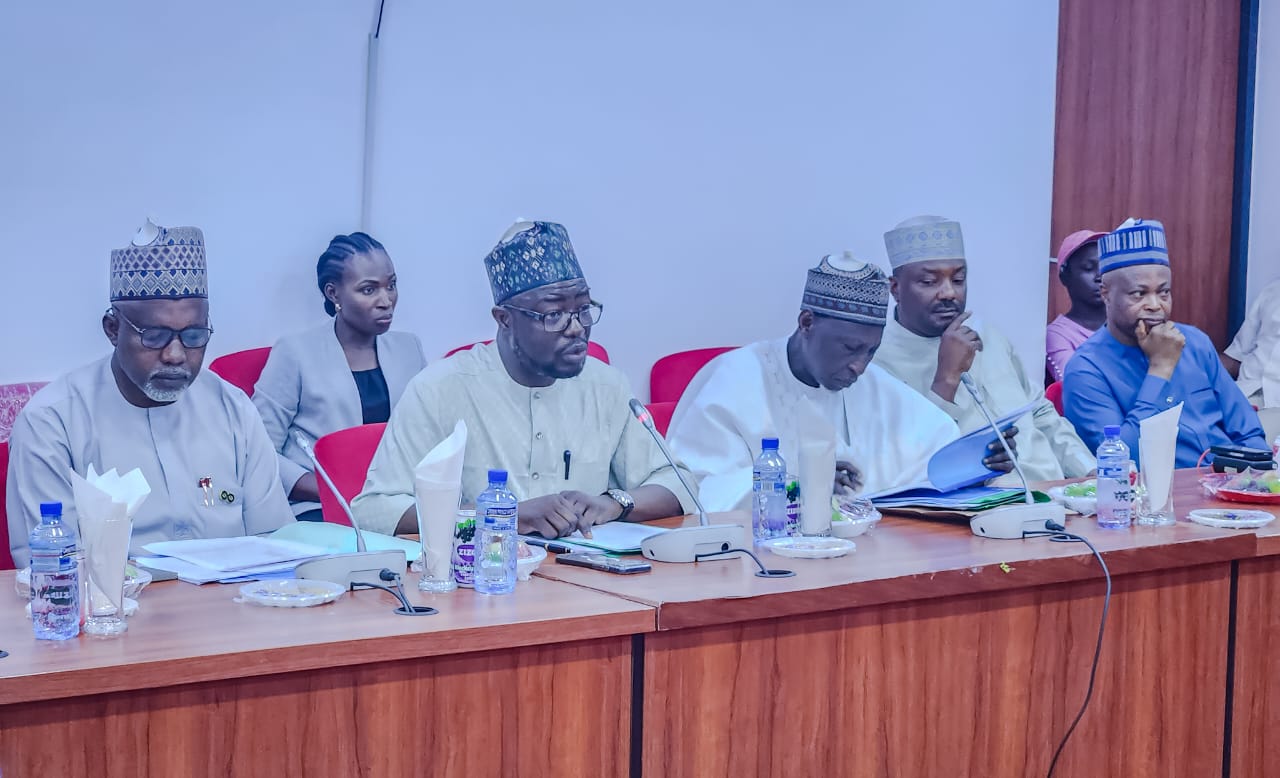
Minister of Humanitarian Affairs, Bernard Doro, made the appeal on Wednesday in Abuja while defending the ministry’s 2026 budget proposal before the Senate Committee on Poverty Alleviation and Social Investment Programme. He told lawmakers that additional resources were critical to expanding poverty reduction programmes and improving the living standards of millions of vulnerable Nigerians.
Doro’s presentation painted a picture of ambitious plans constrained by limited releases and funding gaps in previous budget cycles. Reviewing the ministry’s 2024 performance, he disclosed that ₦1.24 billion was allocated to capital projects, while ₦682 million was set aside for overhead costs. Out of ₦12.62 billion appropriated for capital expenditure that year, ₦11.23 billion was utilised, leaving a balance of ₦1.39 billion by the end of the fiscal period.
Despite these figures, the minister admitted that the ministry recorded an overall budget performance of just 19.39 per cent in 2024, attributing the low performance to funding delays and implementation challenges.
For 2025, Doro said ₦1.522 billion was allocated for personnel costs and fully released. Overhead costs stood at ₦978 million, but only ₦568 million was eventually utilised. The biggest shortfall, however, came in capital funding. According to the minister, ₦30 billion was appropriated for capital projects in 2025, yet only ₦2.265 billion was released, allowing the ministry to work on just 15 out of 60 planned projects nationwide.
He explained that the 2026 budget proposal was prepared in line with the Federal Government’s directive to roll over the 2025 budget into 2026. Under the proposal, the ministry is seeking a total allocation of ₦43.52 billion, with ₦1.399 billion earmarked specifically for capital expenditure.
Doro assured senators that the ministry remained committed to transparency, prudent spending and effective supervision of agencies implementing national social protection and poverty alleviation programmes. He said improved funding would enable the ministry to scale up interventions targeting the poorest households and address structural vulnerabilities.
Read related news from New Daily Prime:
Minister Doro concludes three-day joint mission to address Benue displacement crisis
Doro advocates for a unified poverty reduction system to harmonise Nigeria interventions
Doro, Ribadu visit Kontagora, assure parents of safe return of abducted children
The appeal comes against the backdrop of troubling poverty statistics that place Nigeria among countries with the largest absolute number of people living in poverty globally. Official data from the National Bureau of Statistics’ Multidimensional Poverty Index (MPI), based on the 2021/2022 survey, shows that 63 per cent of Nigerians, about 133 million people are multidimensionally poor.
International benchmarks paint an equally grim picture. World Bank estimates using the $3.00-per-day poverty line for lower-middle-income countries suggest that 41.8 per cent of Nigerians, roughly 93 million people, live in extreme poverty. Using the $4.20-per-day threshold, the figure rises to 64 per cent, or about 143 million people.
The data also reveal sharp disparities across geography and demographics. Poverty rates in rural areas are as high as 75.5 per cent, compared with 31 to 42 per cent in urban centres. Northern Nigeria records significantly higher poverty levels than the south, with rates reaching between 70 and 91 per cent under national and multidimensional measures. Children, women and people without formal education are the most affected.
Nigeria’s MPI value of 0.257 indicates that poor Nigerians experience more than one-quarter of all possible deprivations across health, education and living standards.
As senators deliberate on the 2026 budget, the humanitarian ministry’s request places renewed focus on whether increased funding, combined with tighter oversight, can translate into real improvements for millions living on the margins. The coming weeks will determine whether lawmakers agree that the scale of Nigeria’s poverty challenge demands a bigger fiscal response.

