


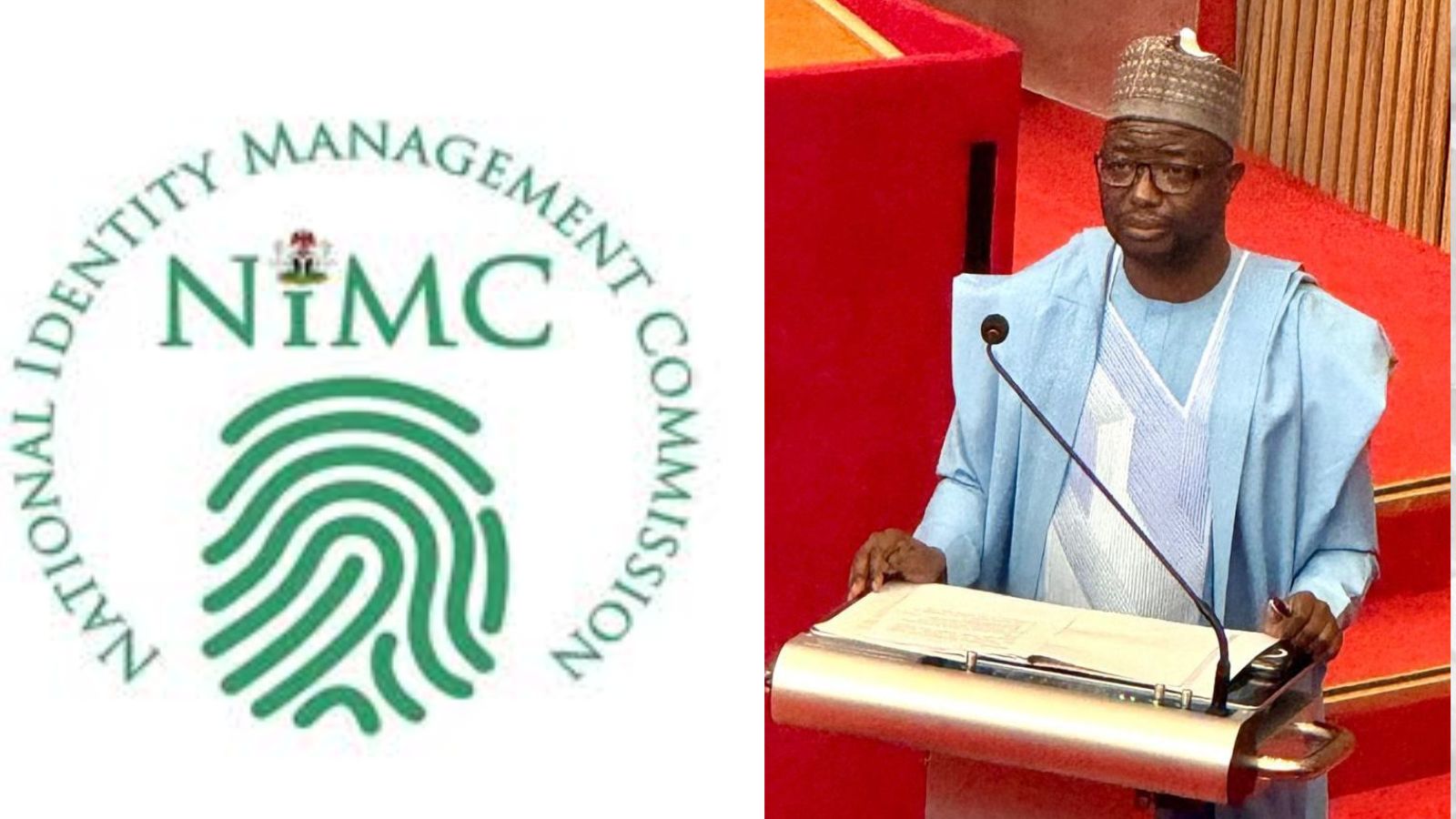
The Honourable Minister of Humanitarian Affairs and Poverty Reduction, Bernard Doro, has reiterated the Federal Government’s commitment to credible and dynamic data as the backbone of effective social protection and poverty-reduction programmes.
The Minister stated this on Tuesday while hosting the Director General and Chief Executive Officer of the National Identity Management Commission (NIMC), Abisoye Coker-Odusote, and her management team at the Ministry’s headquarters in Abuja for a strategic engagement on data collaboration and social protection
The meeting focused on NIMC’s continued support to agencies under the Ministry, including the National Social Safety Nets Coordinating Office (NASSCO), the National Commission for Refugees Migrants and Internally Displaced Persons (NCTO), and the Government Enterprise and Empowerment Programme (GEEP).

According to the Minister, the collaboration has resulted in the enrolment and verification of 11,183,871 usable National Identification Number (NIN) records, a development he described as critical to strengthening humanitarian response and improving poverty-reduction planning nationwide.
Read related story from New Daily Prime:
Doro advocates for a unified poverty reduction system to harmonise Nigeria interventions
Doro, Ribadu visit Kontagora, assure parents of safe return of abducted children
Dr. Doro explained that since assuming office, his administration has prioritised the creation of a credible, accurate, and continuously updated database of vulnerable Nigerians. He noted that vulnerability is not static, as individuals may move out of poverty, relocate, or pass away, warning that failure to update records in real time leads to outdated and misleading data.
“When inaccuracies exist at scale, they distort planning, weaken accountability, and undermine the credibility of social intervention programmes,” he said. “Data that is not dynamic becomes deceptive, and policies built on such data fail the people they are intended to serve.”
He stressed that sustained collaboration with NIMC is essential to enhancing transparency, improving targeting, and ensuring that humanitarian and poverty-reduction interventions reach those most in need at the right time.
The Minister further reaffirmed the Ministry’s resolve to deepen partnerships and strengthen systems in line with the Renewed Hope Agenda, adding that effective governance begins with truthful data and responsible planning.
Confirmed by the Senate on October 30 and sworn in on November 6, Doro has since moved to outline a clear agenda for the Ministry, modernise internal systems, and build on the achievements of his predecessor, Nentawe Goshwe Yilwatda, while working closely with international partners. His early actions come amid ongoing challenges of poverty, displacement, and insecurity across the country.
For more details, visit www.newdailyprime.news

