


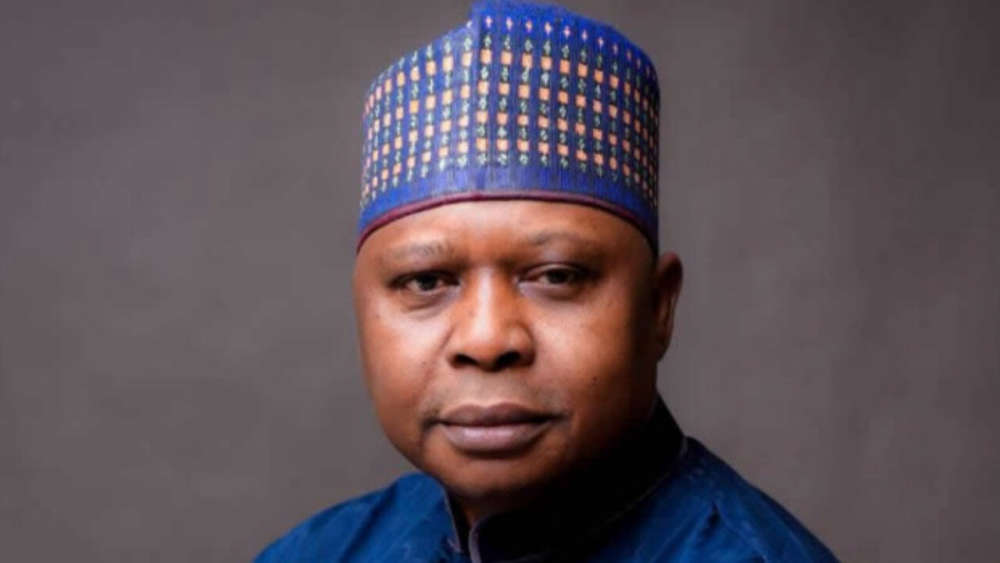
A High Court of the Federal Capital Territory (FCT) has issued a bench warrant for the arrest of a factional National Chairman of the Peoples Democratic Party (PDP), Kabiru Turaki, over his failure to appear for arraignment in a criminal case instituted by the police.
The trial judge, Justice U.P. Kekemeke, made the order on Thursday after ruling that the defendant had no valid justification for his absence in court.
Turaki, a former Minister of Special Duties and Inter-Governmental Affairs under the administration of Goodluck Jonathan, is being prosecuted by the Inspector-General of Police on a one-count charge of allegedly providing false information to law enforcement authorities in a petition dated October 2022.
Read related news:
Northern PDP unites behind Ex-Minister Kabiru Turaki for party chairmanship
Lagos PDP reaffirms loyalty to Turaki-led leadership
INEC turns down Turaki-led PDP NWC recognition
The case had previously been scheduled for arraignment on January 28 but was stalled due to Turaki’s absence, despite an earlier directive from the court mandating his appearance.
During Thursday’s proceedings, the prosecution urged the court to issue a bench warrant, citing the defendant’s continued failure to honour court summons.
In response, defence counsel argued that Turaki’s absence was due to a petition filed with the Chief Judge of the FCT High Court, requesting the reassignment of the case to another judge on grounds of alleged lack of confidence in the current court.
However, Justice Kekemeke dismissed the argument, stating that the mere filing of a petition does not automatically stay criminal proceedings unless a formal directive is issued by the Chief Judge.
“The filing of such a petition does not stop proceedings in this court,” the judge held, adding that no such directive had been communicated to justify the defendant’s absence.
Consequently, the court granted the prosecution’s application and ordered that Turaki be arrested and produced before the court for arraignment.
The matter was subsequently adjourned for further proceedings, with legal observers noting that the development underscores the judiciary’s stance on compliance with court orders and the rule of law.

