


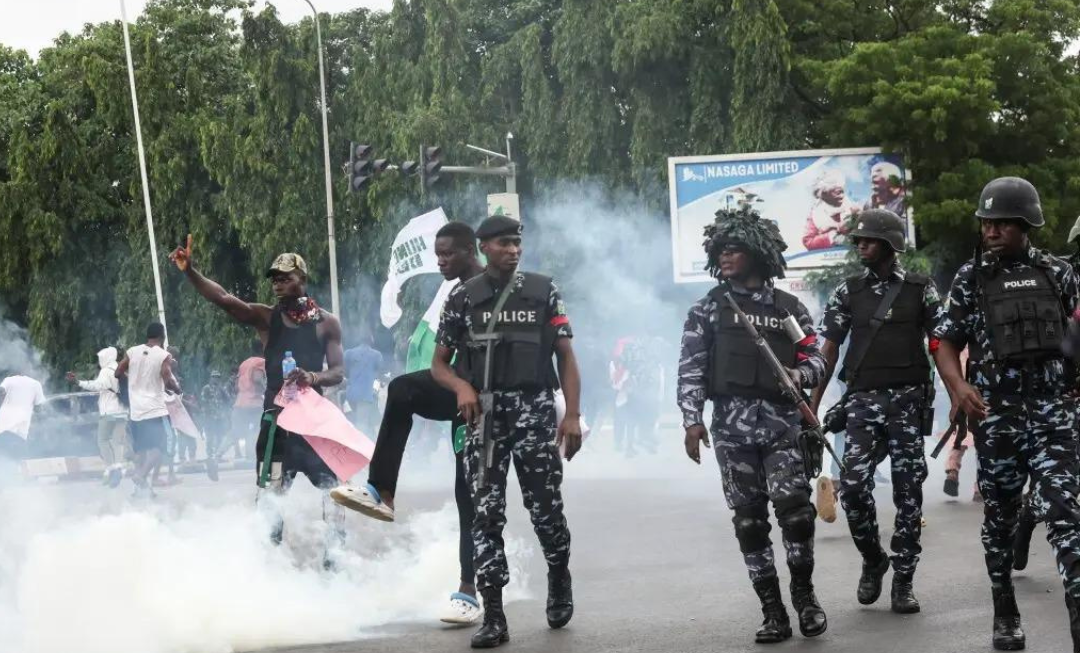
A Federal High Court sitting in Delta State has ruled that Nigerians are entitled to record police officers carrying out stop-and-search duties in public spaces.
Justice Hyeladzira Nganjiwa delivered the judgment on Tuesday while ruling on a fundamental rights enforcement suit filed by Maxwell Nosakhare Uwaifo.
The suit named the Nigeria Police Force (NPF), the Inspector-General of Police, the Police Service Commission (PSC), and the Attorney-General of the Federation as defendants.
In a statement, Uwaifo described the ruling as one containing “far-reaching pronouncements on police accountability and citizens’ constitutional rights,” adding that the court held that “anonymous policing is unconstitutional”.
The case stemmed from an encounter between the lawyer and police operatives near Sapele roundabout while travelling from Benin to Warri on May 10, 2025. Uwaifo told the court that the officers, who allegedly lacked identification and used an unmarked vehicle, acted in an intimidating manner and prevented him from recording the interaction.
“Immediately I brought out my phone, one of the men, dressed in black and appearing to be a police officer, threatened to arrest me and demanded that I put my phone away,” he said.
“They did not wear any name tags, nor did they introduce themselves. They also made no effort to disclose their identity or provide a reason for their conduct.”
In his suit, Uwaifo asked the court to affirm that Nigerians have the constitutional right under Section 39 of the Constitution of the Federal Republic of Nigeria 1999 to freely express themselves, including recording law enforcement officers performing public duties.
He also sought declarations that it is unlawful for police officers to seize devices, arrest, or threaten individuals for recording them, and that officers must display visible identification during operations.
Delivering judgment, Nganjiwa upheld the applicant’s claims, affirming that citizens have the right to record police activities in public spaces.
The court further ruled that officers must wear uniforms displaying their names and force numbers or other proper identification while on public duty.
It also held that it is illegal for police to harass, intimidate, arrest, or confiscate devices from individuals for recording them.
In addition, the court awarded N5 million in damages for the violation of Uwaifo’s fundamental rights and N2 million as the cost of litigation.

