


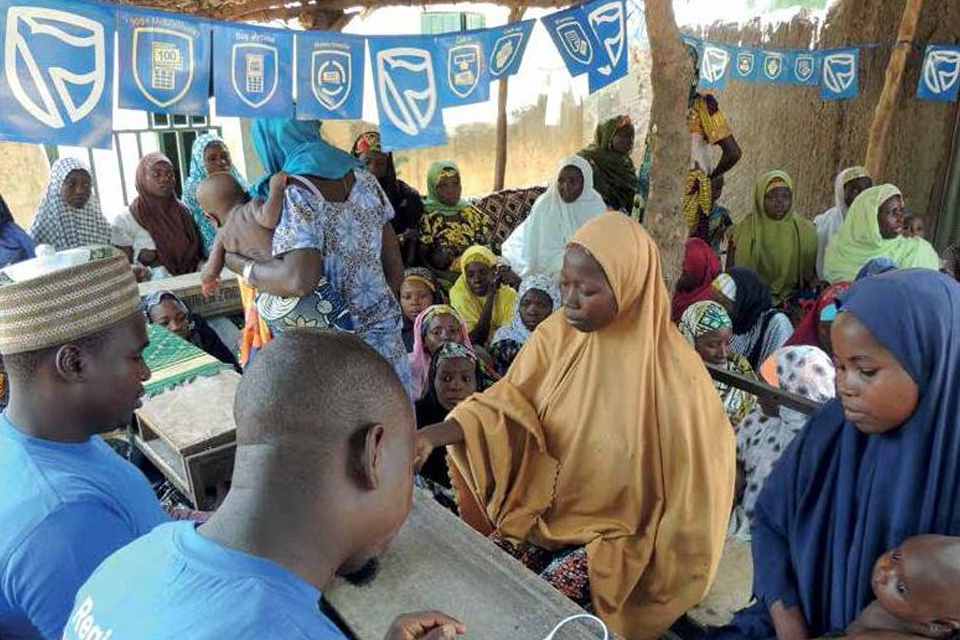
Nigeria’s flagship cash transfer scheme is reaching millions of households, offering urgent relief in a period of rising living costs — but questions remain over its long-term impact and sustainability.
The HOPE Conditional Cash Transfer (HOPE-CT) Programme, run by the National Cash Transfer Office (NCTO), is designed to support poor and vulnerable Nigerians through direct payments. Under the scheme, eligible households receive ₦75,000 over three months, aimed at covering basic needs such as food and healthcare.
According to the Minister of Humanitarian Affairs and Poverty Reduction, Dr Bernard Doro, outlined that more than 9.1 million people have already received the first round of payments, with 58.7 per cent of beneficiaries being women. Officials argue that the programme is helping to stabilise households and reduce immediate hardship.
“This intervention is about protecting the most vulnerable and giving families breathing space,” a senior official at the Ministry of Humanitarian Affairs said.
Read related news:
Tinubu orders suspension of FAAN cashless airport policy over gridlock
Kenya’s central bank warns against cash bouquets, violators risk jail term
The scheme draws its beneficiaries from the National Social Register, a database intended to identify low-income households across both rural and urban communities. Payments are made through electronic wallets, a system that also aims to bring recipients into the formal banking sector.
For many recipients, the impact is immediate.
In northern Nigeria, one beneficiary said the payment had helped her buy food and pay for basic medical care. “It is not enough for everything, but it has helped us survive,” she said.
Such accounts reflect the programme’s core aim — providing short-term relief in a country where inflation and economic pressures have pushed more families into poverty.
Questions over scale and impact
Yet analysts warn that cash transfers alone may not be enough.
Economists say that while the programme offers temporary support, the amount may fall short in the face of rising prices. Food and transport costs have climbed steadily in recent months, reducing the real value of the payments.
“There is no doubt cash transfers help,” said a Lagos-based economic analyst. “But ₦75,000 over three months is limited when inflation is high. Without broader economic reforms, the effect may not last.”
There are also concerns about coverage and targeting. While the National Social Register is central to the scheme, questions have been raised in the past about its accuracy and whether it captures all vulnerable households.
Officials insist safeguards are in place. A grievance redress system allows beneficiaries to report issues, including through a toll-free line, while digital payments are intended to reduce the risk of diversion.
However, monitoring such a large-scale programme remains a challenge.
“Any programme of this size will face issues of access and oversight,” another policy expert said. “The key question is whether the systems in place are strong enough to maintain trust.”
The HOPE-CT initiative is part of the National Social Safety-Nets Project Scale-Up (NASSP-SU), supported by the World Bank and the Federal Ministry of Humanitarian Affairs and Poverty Reduction.
Officials say it forms part of a wider effort to reduce poverty and improve financial inclusion, particularly by integrating beneficiaries into the formal banking system.
What comes next?
As the programme expands, its success may depend on what follows.
Analysts say sustained impact will require more than direct payments, including job creation, economic stability and stronger social infrastructure.
For now, the scheme is providing a lifeline to millions. But whether it becomes a lasting solution to poverty, or remains a short-term cushion, will depend on how it evolves in the months ahead.

