


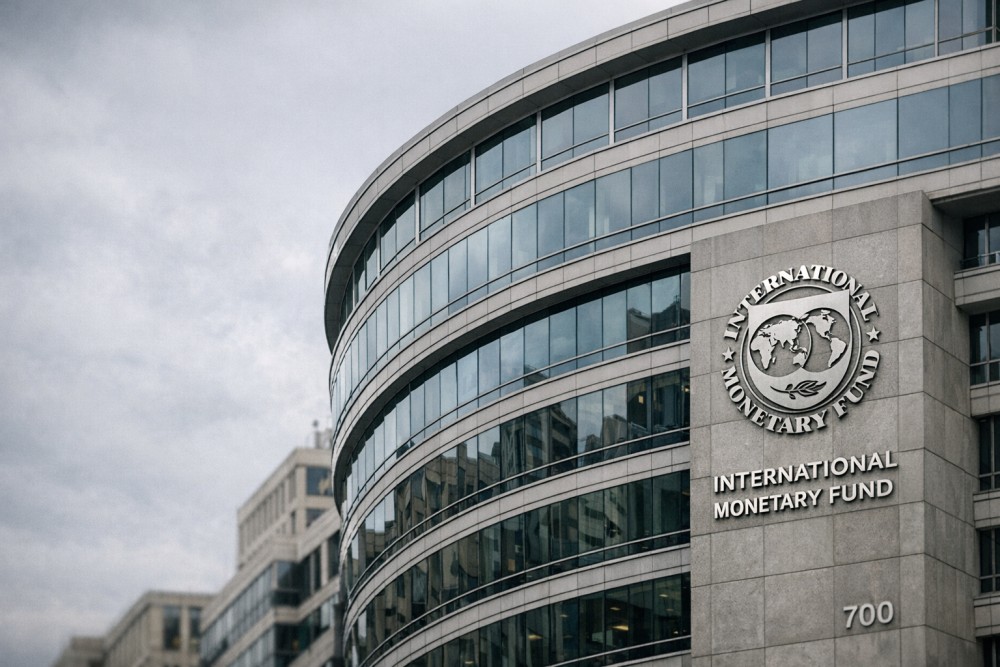
The International Monetary Fund (IMF) has urged the Federal Government to maintain fiscal discipline in 2026, warning that poverty and food insecurity remain major concerns despite recent improvements in Nigeria’s macroeconomic outlook.
In its 2026 Article IV Consultation Report released on Tuesday, the IMF acknowledged that reforms undertaken by the government over the past three years have strengthened economic stability and improved resilience. However, it noted that many Nigerians continue to grapple with difficult living conditions amid rising costs and economic uncertainty.
“Strong reforms over the past three years have yielded improved macroeconomic outcomes and built resilience. Still, conditions for many Nigerians remain difficult. Poverty reached 63 percent (national poverty line) and 27 million Nigerians are estimated to have faced food insecurity in the fall of 2025,” the IMF said.
The Washington-based lender projected that Nigeria’s economy would expand by 4.1 percent in 2026, slightly higher than the estimated 4 percent growth recorded in 2025.
Despite the positive outlook, the IMF cautioned that inflationary pressures remain a significant threat, particularly following recent increases in global food and fuel prices.
“After being on a declining trend for over a year, inflation nudged up to 15.4 percent year-on-year in March 2026 as the jump in international fuel and food prices started hitting Nigeria,” the fund stated.
Read more news
IMF says Nigeria’s debt-to-gdp ratio to rise to 33.1% by 2027
Nigeria’s inflation falls to 18% as IMF projects 4.2% growth by 2026
APC lauds Tinubu’s economic reforms as World Bank, IMF endorse Nigeria’s growth
The IMF advised the government to adopt a neutral fiscal stance in 2026, balancing macroeconomic stability with investments that support growth and protect vulnerable populations.
According to the report, authorities should continue funding critical infrastructure and social programmes while resisting spending pressures often associated with election cycles.
The institution also reiterated its support for the government’s decision to remove fuel subsidies and cautioned against any move to reverse the policy.
IMF raises concerns over proposed $5bn currency swap
The fund expressed reservations about a proposed $5 billion total return swap arrangement reportedly included in Nigeria’s draft 2026 budget framework.
According to the IMF, the deal would require the government to provide collateral worth 133 percent of the transaction value in domestic securities, potentially exposing public finances to significant risks if the naira weakens.
“The arrangement exposes the government to margin calls if the fx value of the naira securities drops (naira depreciation, higher interest rates) and could thus give rise to political constraints on monetary or exchange rate policy,” the institution said.
The IMF warned that complex financing arrangements involving large collateral commitments and potential margin calls could create additional fiscal vulnerabilities and limit policymakers’ flexibility in managing monetary and exchange-rate decisions.
“Staff cautions that complex financing instruments that involve high collateral and possible margin calls introduce additional fiscal risks and could give rise to political constraints on monetary or exchange rate policy,” it added.
The report also advised the government to ensure that capital expenditure projections remain realistic and aligned with available resources.
On monetary policy, the IMF endorsed the Central Bank of Nigeria’s current approach to managing inflation, noting that maintaining positive real interest rates remains appropriate under prevailing economic conditions.
The fund further encouraged authorities to preserve a flexible exchange-rate system, gradually eliminate remaining foreign exchange restrictions and reduce dependence on short-term portfolio investments.
It stressed the importance of attracting more long-term foreign direct investment (FDI) to strengthen economic growth and improve external stability.
Beyond fiscal and monetary measures, the IMF highlighted the need for sustained reforms in governance, security, electricity, agriculture, infrastructure and human capital development.
According to the institution, progress in these areas will be crucial to achieving stronger, more inclusive and sustainable economic growth while improving living standards for millions of Nigerians.
The report underscores the challenge facing policymakers: maintaining recent economic gains while addressing the high levels of poverty and food insecurity that continue to affect a significant portion of the population.

