


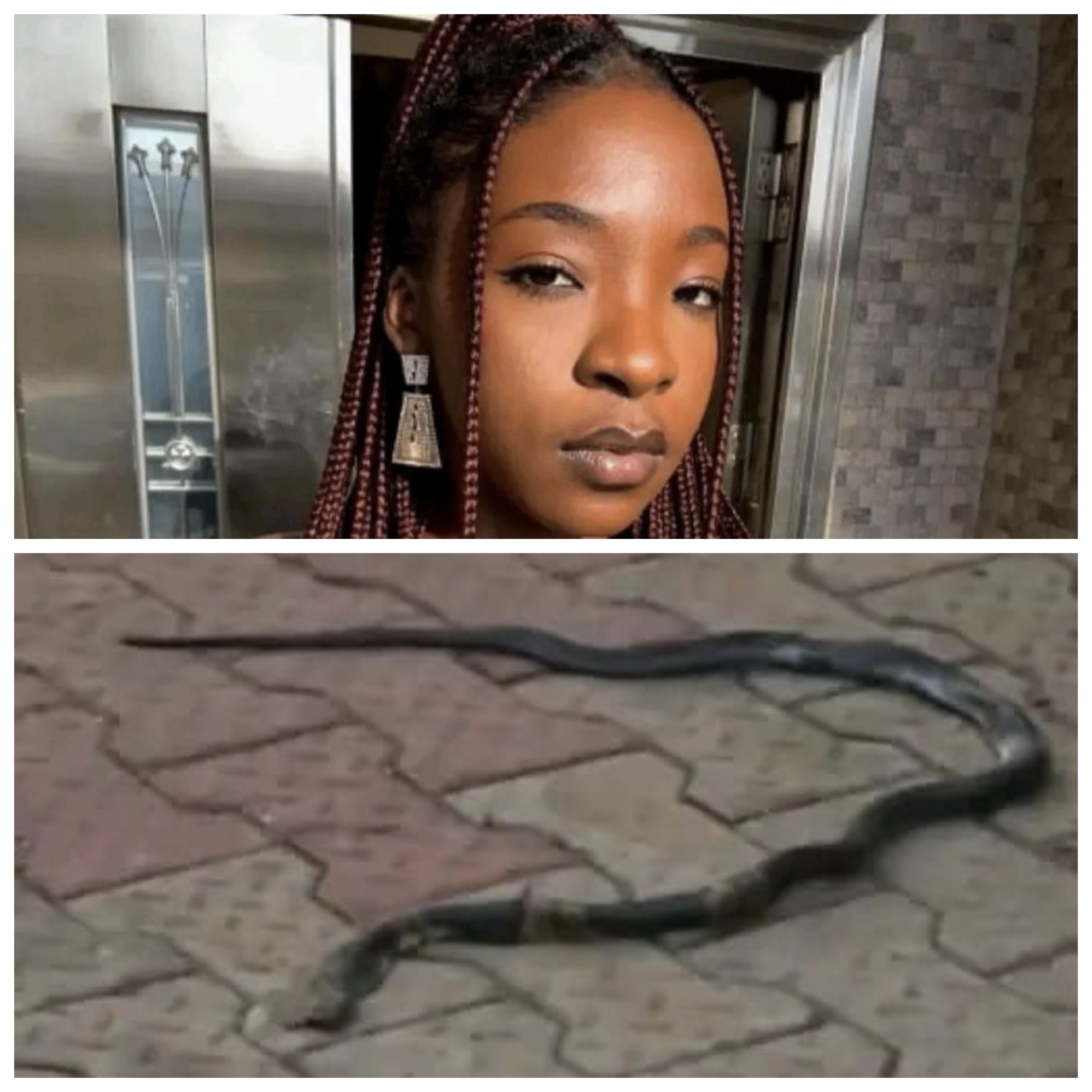
Nigerians have taken to social media to criticise the Federal Government (FG) over the alleged lack of antivenom drugs in hospitals across the country following the death of Ifunanya Nanyah, a 25-year-old fast-rising classical singer, who reportedly died from a snakebite in Abuja.
Antivenom is an antidote given to victims to subdue the circulation of venom from bites and stings of dangerous animals such as snakes and scorpions, among other dangerous animals and reptiles.
The 25-year-old R&B, soul and jazz singer, popularly known as Nanyah, was said to have been bitten by a snake at her residence in the Federal Capital Territory (FCT) during the early hours of Saturday.
According to Sahara Reporters, the singer rushed herself to two different hospitals after the incident.
However, both facilities allegedly lacked antivenom drugs required for emergency treatment. She was later confirmed dead in an undisclosed hospital.
Her death has sparked widespread outrage, with many Nigerians blaming the government for what they describe as a failing healthcare system, particularly the absence of essential life-saving drugs in public hospitals.
Social-media medical practitioner and health advocate, Egemba Fidelis popularly known as Aproko Doctor, reacted to the incident in a viral video of over 4 minutes that has garnered over 49,000 likes and more than 5,000 comments.
He described the death as “avoidable” and blamed systemic failures rather than the snakebite itself.
“What if I tell you it’s not the snake that killed her? Snake bites people everywhere, in India, Australia, in cities and bush. People do not die like this,” he said.
“She went to not one, but two separate hospitals, and Not one but two separate hospitals and they look them straight in the eyes and they do not have anti-venom in a country where snakes live in 2026, not 1980, 1970.”
The Aproko Doctor further noted that Nigeria has a locally recognised antivenom suitable for common snake species, identified as Echiteb, questioning why hospitals did not have it in stock.
“Why wasn’t this antivenom in the fridge of the hospitals she went to? Because we have forgotten the basics. Politicians are building flyovers where ambulances don’t exist, and focusing on ultra-modern hospitals while neglecting primary healthcare centres,” he added.
He stressed that functional primary healthcare centres should be equipped with essential drugs, oxygen and trained personnel, noting that these centres are the first point of care in any effective health system.
The medical practitioner also linked the incident to ongoing challenges within the health sector, including industrial actions by doctors.
“When doctors go on strike asking for better working conditions and service and even help us do our work better, politicians will find a way to make people against the doctors and make the doctors the enemies and rather than the people who are actually supposed to provide the healthcare. We have forgotten the basics,” he said.

He further warned against attempts to divert attention from institutional failures by attributing the incident to spiritual causes.
“Some people are already saying it was a spiritual snake or jealousy. That’s why politicians keep getting away with neglect. Nobody is asking why hospitals don’t have antivenom or what happened to the budget allocated to primary healthcare,” he stated.
“Primary healthcare centres don’t even have paracetamol,” Aproko Doctor said. “We failed this young lady today, and we are failing many others.”
Nitezens Reacts
Esther Echendu, a Facebook user, explained that snake antivenoms are expensive, highlighting the implications of poor extraction and preservation caused by power outages, while noting that importation can lead to mismatched antivenoms.
“Nigeria has the need and the human cost to justify local antivenom production, yet there is little meaningful investment. The Nigerian government is clueless. So maybe private sector investment in region-specific antivenom extraction?” she stated.
Another user, Doctor Ugwuanyi, alleged that most political figures travel outside the shores of Nigeria daily for medical care, while hospitals within the country continue to rot without adequate revitalisation.
“The same system meant to care for everyone is neglected, underfunded and stripped of the basic tools doctors need to save lives,” he said, urging citizens to speak up for a better healthcare system.
“Demanding better healthcare is not politics, it is humanity,” Ugwuanyi added. “We deserve a better health system.”
Another social media user, Akpa Francis, wrote, “Honestly, it’s heart-wrenching. She could have survived if there was antivenom in any of the two hospitals she was taken to.
“It’s quite unfortunate that efforts to hold our politicians responsible give rise to tribal division, ethnic and religious uproar, thereby burying the actual reason for the outcry.
“I’ll keep saying this: the problem of Nigeria isn’t mainly the politicians; rather, it is the people. If sentiment continues, and the wrong people keep being elected or appointed, these stories won’t change. They won’t—until we, as a people, come to our senses,” he urged.
Abdulkareem Abu expressed frustration, alleging that most primary healthcare centres are neglected despite the country’s large population, describing the situation as disheartening.
“Antivenom is supposed to be one of the first priorities at each centre. At least Edo State is trying, but the basic scheme hasn’t been fully implemented yet,” Abu added.
Nigerians Resort to First Aid and Traditional Medicine
In observations made by *New Daily Prime* across various social media platforms, it was noted that many citizens urged Nigerians to resort to traditional medicine as first aid, recounting their personal encounters.
Okpe Donatus, who recalled how he was saved in 2017 after the administration of traditional medicine, questioned the disappearance of traditional healthcare practices.
“I was bitten by a snake,” he recalled. “My dad, a primary health officer, called every centre and even the general hospital, but they had no snake venom antidote, claiming it was expensive and not always available.”
He said it was his neighbours’ traditional medicine that saved him.
“We shouldn’t have to rely on a failed system until we face death,” Donatus said.
The cases of snakebite have become a recurring nightmare, as a report published by The Nation newspaper on 22 November 2021 highlighted that a Nigerian Air Force (NAF) personnel attached to the Defence Intelligence Agency (DIA), Lance Corporal Ogah Bercy, died from a snakebite in Abuja following delays in antivenom administration.
Others echoed similar experiences of poor administrative management in government health facilities, lapses affect maternal healthcare, emergency response, access to basic drugs, alongside persistent power outages, unveiling multiple challenges faced by the average Nigerian.
The incident has renewed calls for increased healthcare funding, accountability in budget implementation and a renewed focus on strengthening primary healthcare facilities nationwide.
For More Details, Visit New Daily Prime at www.newdailyprime.news

