


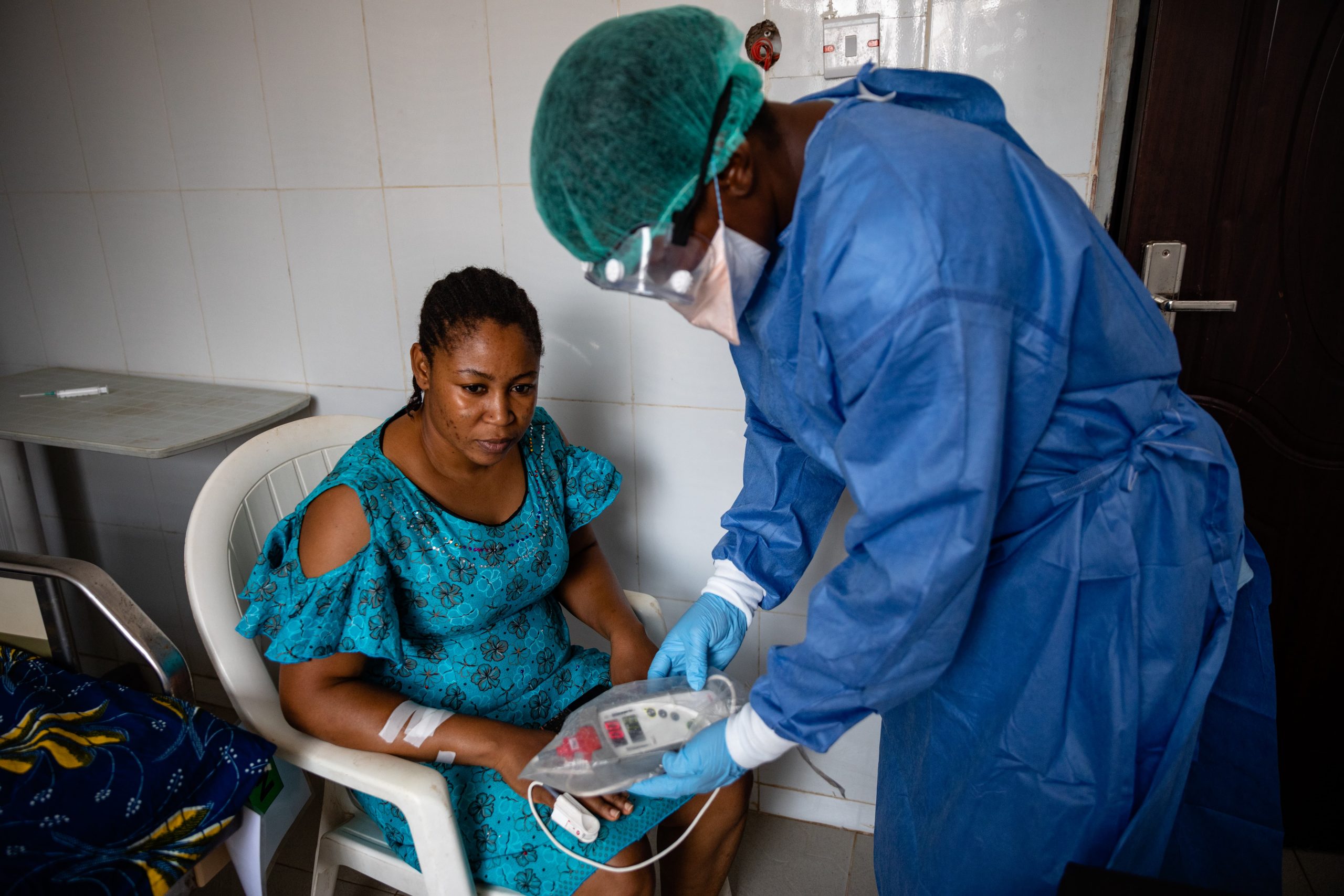
Nigeria’s spending on overseas medical treatment fell by more than 96 per cent in the first half of 2025, according to newly released central bank data, a decline that analysts say reflects the impact of foreign exchange reforms and shifting economic conditions under President Bola Ahmed Tinubu’s administration.
Figures from the Central Bank of Nigeria (CBN), covering the period from January to June, show that Nigerians spent just $0.09m on medical tourism in the first six months of 2025, down from $2.38m during the same period in 2024. The year-on-year contraction of $2.29m represents a decline of 96.2 per cent.
The data reveal that medical tourism spending in early 2024 was heavily skewed by an unusually high outlay of $2.30m in January alone. Expenditure then dropped sharply to near-zero levels for most of the remaining months, with only marginal spending recorded in March, May and June.
By contrast, spending throughout the first half of 2025 remained consistently low. January recorded $0.06m, while February and March saw no recorded spending. Outflows edged up slightly in April at $0.01m, dropped again in May, and rose modestly to $0.02m in June. No single month in 2025 exceeded $0.06m, underlining the scale of the shift.
Economists say the trend points to a significant change in Nigerians’ outbound healthcare spending behaviour. While the January 2024 spike appears exceptional, the absence of any rebound in 2025 suggests deeper structural factors at play.
Analysts point in particular to Nigeria’s foreign exchange reforms, including the liberalisation of the FX market and broader efforts to improve the business and investment climate. These policies, introduced under Tinubu, have reshaped access to foreign currency and reduced opportunities for arbitrage that previously supported large discretionary outflows, including for overseas healthcare.
Read related story: Tinubu assures best medical care for Anthony Joshua after accident
The FX reforms have been reinforced by regulatory changes at the central bank. In January 2025, the CBN governor, Olayemi Cardoso, introduced a new Foreign Exchange Code aimed at strengthening transparency, governance and ethical conduct in the currency market. The code followed the launch of an Electronic Foreign Exchange Matching System in December 2024, designed to improve price discovery and reduce opaque trading practices.
Cardoso has repeatedly criticised Nigeria’s former system of multiple exchange rates, arguing that it benefited a narrow group while undermining confidence in the economy. “The era of multiple exchange rates created privileges for a select few at the expense of most Nigerians,” he said at the launch of the FX Code, warning that past practices had fuelled inflation, currency depreciation and weakened trust in public institutions.
Beyond currency policy, analysts say economic pressure on households may also be curbing overseas medical spending, while greater use of domestic healthcare services could be playing a role. However, they caution that lower outbound spending does not automatically translate into improved healthcare outcomes at home, unless matched by sustained investment in Nigeria’s health system.
The sharp decline in medical tourism expenditure highlights how macroeconomic reforms are beginning to influence individual and institutional financial decisions. For policymakers, the challenge will be ensuring that reduced foreign outflows are accompanied by tangible improvements in domestic healthcare capacity, rather than simply reflecting tighter economic constraints.
For international observers, the data offer a clear example of how currency reform and market restructuring in Africa’s largest economy are reshaping spending patterns — with implications not only for Nigeria, but also for countries that have traditionally received Nigerian medical travellers.
For more details visit www.newdailyprime.news

