


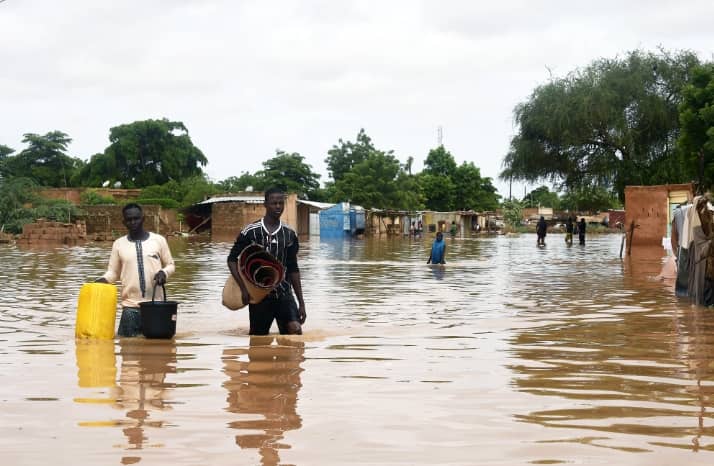
For decades, the people of Tudun Wada in Kaduna South have watched the rains come, bringing with them the same familiar cycle of fear, loss, and displacement.
Each year, as the waters of River Kaduna rise, families are forced to flee their homes, leaving behind belongings, memories, and livelihoods.
Residents are now calling on both state and federal authorities to take long-term action, beyond the temporary relief measures that have become routine.
They want the river dredged, illegal dumpsites cleared, and vulnerable households relocated to safer ground.
Nassim Suleiman, a resident of over 30 years, described the yearly ordeal: “When the water comes, the refuse from the dumpsites enters our houses. The National Emergency Management Agency and others really try with awareness, but the government should help us clear the dumpsites and dredge .”
Fatima Mustapha, a mother of three, said her family no longer asks for blankets or food. “ We want a place where our children can live without fear when it rains. Every year we are evacuated, and every year we return to the same danger.”
Husseina Liman added that floods wash away their possessions, leaving families unable to recover. “We are appealing to the government that they should find a lasting solution to this problem and help us because we are really suffering,” she said.
Authorities have stressed the importance of preparedness. NEMA’s North West Zonal Director, Sani Lokoja, said the agency continues to train communities and coordinate with the Kaduna State Government to reduce disaster risks.
Kaduna Red Cross official Tijani Inuwa praised emergency response efforts in 2025 but echoed residents’ calls for permanent measures.
The scale of Nigeria’s 2025 floods was staggering. Across 27 states, 433,578 people were affected. More than 144,790 were displaced, 241 lives were lost, and 52,509 homes destroyed.
Farmland covering 74,767 hectares was wiped out, leaving many without food or income. Among the affected were children, the elderly, and people with disabilities.
In Kaduna State alone, 24,240 people felt the impact, with 1,237 displaced. Residents of Tudun Wada say these numbers reflect more than statistics, they represent families trapped in a cycle that can no longer be ignored, say The Punch report.
“This problem has lasted over 30 years. The people are used to it, but it should not continue like this,” Suleiman said.
For More Details, Visit New Daily Prime at www.newdailyprime.news

