


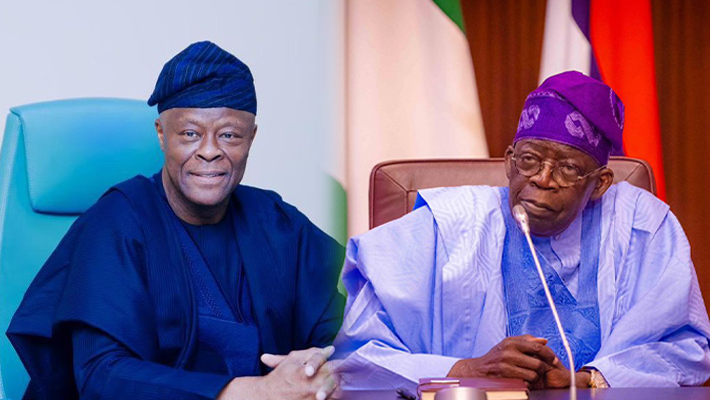
Fresh indications have emerged from the Presidential Villa suggesting that President Bola Ahmed Tinubu is considering a major shake-up within the Ministry of Finance, with Wale Edun, the Minister of Finance and Coordinating Minister of the Economy, at the centre of the unfolding developments.
Multiple sources familiar with high-level deliberations told New Daily Prime that the President has given Edun the option of voluntarily resigning or facing removal, following growing dissatisfaction with the implementation of the 2025 budget and what insiders describe as rigidity in key fiscal policy decisions.
According to a senior official who spoke on condition of anonymity, Edun has since been “running from pillar to post” seeking political intervention, after President Tinubu reportedly made his concerns known directly to him.
Presidential Concerns Date Back to 2024
The President’s unease with Edun’s performance is said to be longstanding, dating back to 2024. At the time, Tinubu reportedly contemplated appointing tax reform advocate Taiwo Oyedele as Minister of State for Finance, in an effort to address perceived gaps in fiscal leadership.
However, following intense lobbying by political influencers close to the President, the plan was altered and Doris Uzoka Anite was appointed Minister of State for Finance instead. Ironically, Uzoka Anite herself had earlier been marked for removal over her performance in the trade and industry portfolio before the tide turned in her favour.
Read related story from New Daily Prime: Tinubu approves cancellation of $1.42bn, N5.57tn NNPC debts to Federation Account
Recent developments indicate that Uzoka Anite has now been entrusted with significant responsibilities previously handled by Edun, including budget execution, contractor payments, and revenue mobilisation—an unmistakable signal of a shift in fiscal authority.
Power Shift Within the Ministry
Sources with intimate knowledge of cabinet proceedings disclosed that Edun has already been divested of his most consequential responsibilities, with Uzoka Anite effectively overseeing the levers of fiscal control.
“This is an unequivocal signal that the President intends to reassert command over economic management while avoiding a public confrontation,” a senior government official said.
The President, insiders noted, remains reluctant to outrightly dismiss Edun, given their long-standing political relationship that dates back to the Lagos State government, when Tinubu served as governor and Edun was a cabinet member.
Edun Seeks Political Intervention
In a bid to salvage his position, Edun is said to have reached out to influential figures within the President’s inner circle. Among those he reportedly hopes will intervene on his behalf is Bisi Akande, a close Tinubu ally who has recently been seen prominently with the President. Whether this strategy will succeed remains uncertain.
Edun’s tenure has been overshadowed by sustained unrest among federal contractors, many of whom suffered financial distress due to delayed payments under the 2024 and 2025 budgets. Lawmakers and civil society organisations have publicly criticised the Ministry of Finance, describing the delays as a breach of fiduciary responsibility.
“The backlog of unpaid contracts is staggering. Enterprises are suffering while public funds remain in limbo,” a civil society advocate said.
Sources revealed that the outstanding payments were eventually settled only after the matter was escalated directly to President Tinubu—an episode said to have caused significant embarrassment within the presidency and intensified pressure on Edun.
Further strain reportedly arose from Edun’s involvement in commercial arrangements that did not receive presidential approval. Combined with rising public debt and persistent cash-flow challenges, the disagreements contributed to the decision to curtail his authority.
While Edun pursued reforms aimed at strengthening fiscal discipline, streamlining the Treasury Single Account, and advancing structural initiatives, insiders say progress was slowed by administrative bottlenecks and operational delays.
Presidency Recalibrates Economic Team
With Uzoka Anite now overseeing core fiscal operations, the presidency is said to be focused on stabilising revenue streams, accelerating contractor payments, and tightening cash management, particularly in coordination with the Nigerian National Petroleum Company and other major revenue-generating agencies.
Observers believe the redistribution of responsibilities signals not just Edun’s diminishing influence, but a broader recalibration of President Tinubu’s economic team at a critical moment for national financial stability.
Efforts to obtain official comments from Edun and the presidency were unsuccessful as of the time of publication.
Edun, a UK-trained economist, previously served as Commissioner for Finance in Lagos State, where he played a key role in reforms that strengthened internally generated revenue and fiscal discipline. His stewardship at the federal level has focused on economic growth, debt sustainability, revenue mobilisation, investor confidence, and social inclusion—areas now firmly under renewed presidential scrutiny.
For more details, visit New Daily Prime at www.newdailyprime.news

