


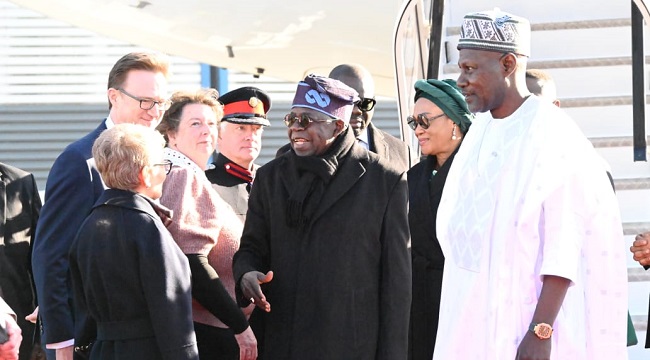
Nigeria’s presidency has defended the outcomes of President Bola Ahmed Tinubu’s recent state visit to the United Kingdom, dismissing a critical analysis by Chatham House as incomplete and lacking depth.
In a strongly worded response attributed to government allies, the critique of Tinubu’s foreign engagements, particularly the March 2026 UK visit—was described as “selective pessimism” that ignores measurable economic progress and tangible diplomatic gains.
Dispute Over Impact of UK Visit
The controversy follows commentary by Dr Leena Koni Hoffmann, which argued that Tinubu’s high-profile diplomacy has delivered little benefit to ordinary Nigerians.
However, the presidency’s supporters insist the claim is inaccurate, pointing to concrete outcomes from the UK visit, including a £746 million export finance agreement to upgrade key infrastructure at Lagos ports.
The deal, backed by UK Export Finance and coordinated through Citibank, is expected to modernise the Lagos Port Complex and Tin Can Island Port, improving trade efficiency and reducing logistics bottlenecks.
Officials argue that such agreements demonstrate that Nigeria’s foreign engagements are not symbolic, but directly tied to economic recovery and competitiveness.
Read related news:
APC chieftain urges Tinubu to appoint Wike as 2027 Campaign Director-General
Lagos APC commends Tinubu UK visit, says it will help Nigeria economy
Economic Indicators Show Improvement
Government sources also highlighted recent assessments by global financial institutions, including the International Monetary Fund (IMF) and the World Bank, which have acknowledged improvements in Nigeria’s macroeconomic stability.
According to these reports:
- Nigeria’s economy grew by 3.87% in 2025, up from 3.38% in 2024
- Foreign exchange reserves rose significantly, with gross reserves reaching over $50 billion by early 2026
- Inflation slowed to 15.06% in February 2026, marking a steady decline
In addition, credit rating agencies have taken a more positive view of Nigeria’s outlook. Moody’s upgraded the country’s rating in 2025, while S&P revised its outlook to positive, citing stronger fiscal conditions and improved investor confidence.
“These are not abstract metrics,” a government source noted. “They reflect a stabilising economy and renewed confidence in Nigeria’s reform path.”
Reforms Acknowledged but Pain Persists
While defending the administration’s policies, officials acknowledged that economic reforms have come with hardship for many Nigerians.
Key measures, including the removal of fuel subsidies and foreign exchange reforms, have increased living costs in the short term. However, authorities argue these steps were necessary to correct long-standing structural imbalances.
“The choice was between continuing a distorted system or implementing difficult but necessary reforms,” one official said.
Despite the government’s position, critics maintain that the benefits of these reforms have yet to reach most Nigerians.
Analysts and advocacy groups argue that while macroeconomic indicators may be improving, the impact on household incomes, employment, and cost of living remains limited.
They also point to data suggesting that a significant number of asylum and economic decisions are reversed on appeal, highlighting broader concerns about governance and policy execution.
Oil Sector Recovery Adds Momentum
There are also signs of recovery in Nigeria’s oil sector, a key driver of government revenue.
Production rebounded to around 1.5 million barrels per day in 2025, supported by regulatory reforms and renewed investor interest. Reports indicate that upstream investment commitments have reached approximately $5.3 billion, signalling renewed confidence in the sector.
The exchange between the presidency and Chatham House reflects a wider debate about Nigeria’s economic direction under the current administration.
Supporters argue that Tinubu’s reforms are beginning to deliver results and position Nigeria for long-term growth. Critics counter that progress remains uneven and that more must be done to translate macroeconomic gains into tangible benefits for citizens.
As Nigeria continues its reform programme, attention is shifting to whether improved economic indicators and international partnerships will translate into real improvements in living standards.
For now, the government maintains that its strategy—combining domestic reforms with active diplomacy—is beginning to yield results.
“The administration is not drifting,” a source said. “It is reforming, recalibrating, and repositioning Nigeria on the global stage.”
With further reforms expected, the coming months will test whether these gains can be sustained—and whether they can deliver the broader economic relief many Nigerians are still waiting for.

