


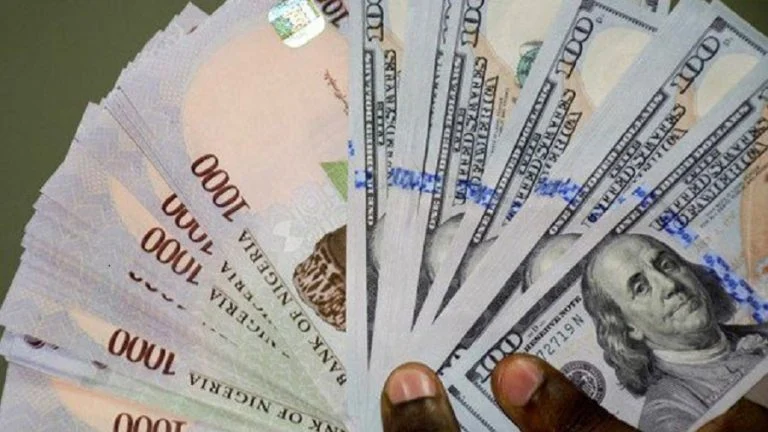
The Nigerian naira recorded a notable recovery in 2025, appreciating by nearly N100 against the United States dollar, while the country’s foreign exchange reserves grew by $4.6 billion, according to official data.
At the close of trading on December 31, 2025, the naira exchanged at N1,435.76 to the dollar, compared with N1,535 at the end of 2024. The improvement represents an annual appreciation of 6.68 per cent, marking a significant turnaround after the currency suffered a sharp 40.9 per cent depreciation in the previous year.
In parallel, Nigeria’s external reserves rose to $45.5 billion as of December 30, 2025, up from $40.9 billion recorded at the end of 2024. The increase of $4.6 billion translates to an 11.05 per cent growth year-on-year, strengthening the country’s buffer against external shocks and boosting investor confidence.
The Central Bank of Nigeria (CBN) attributed the improved performance of the naira and the rise in reserves to a combination of policy, institutional and macroeconomic reforms implemented over the past year. The apex bank also cited relative stability in global crude oil prices, which supported foreign exchange inflows and overall economic growth.
READ ALSO: Festival keeps Naira steady against US Dollar, December 22, 2025
In its 2026 Economic Outlook, the CBN noted that fiscal conditions improved in 2025 as a result of reforms aimed at strengthening public finance management and enhancing transparency in the foreign exchange market. “The fiscal space improved in 2025, owing to policy and institutional reforms, as well as stable crude oil prices fostering growth,” the bank said.
Analysts say the naira’s appreciation, though modest, signals a gradual recovery following a turbulent period marked by exchange rate liberalisation, foreign exchange shortages and inflationary pressures. They argue that the growth in reserves provides the CBN with greater capacity to manage volatility in the foreign exchange market and meet external obligations.
However, experts caution that sustaining the gains will depend on continued reforms, increased oil production, improved non-oil exports and steady capital inflows. Nigeria remains vulnerable to external shocks, including fluctuations in oil prices and global financial tightening, which could put renewed pressure on the currency.
Despite these challenges, the combined improvement in the naira’s value and the rise in foreign reserves in 2025 are being viewed as positive indicators of stabilisation in Africa’s largest economy, offering cautious optimism as the country enters 2026.

