


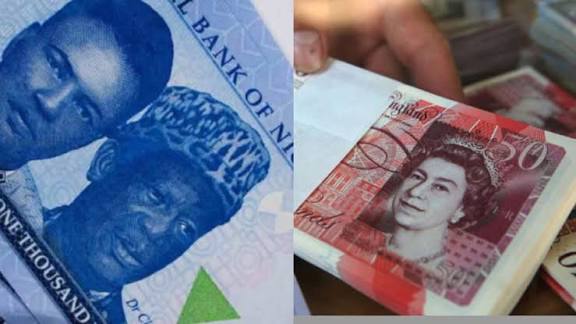
On Saturday, 10 January 2026, the Nigerian naira recorded a modest appreciation against the British pound sterling in both official and parallel (black market) foreign exchange segments, reflecting a slight shift in market dynamics that could signal nascent stability amid ongoing currency pressures.
According to the latest figures published on the NGNToday platform, the official exchange rate closed at N1,908 per £1, while the black market rate settled at N2,010 per £1, marking a mild strengthening from Friday’s respective quotes of N1,914 and N1,970.
The dual pricing structure, a hallmark of Nigeria’s foreign exchange markets, shows a consistent albeit narrowing gap between the formal and informal segments, with the difference at N102 per pound on Saturday.
This gap, though still wide, is smaller than some of the wider disparities seen in recent months and reflects incremental improvement in currency liquidity and market sentiment.
Market analysts associate Saturday’s modest gains with a combination of improved foreign currency inflows, easing pressure in official windows and cautious rebalancing in parallel markets.
Nigeria’s FX ecosystem remains responsive to global commodity prices, diaspora remittances, and macroeconomic indicators that influence demand and supply of major foreign currencies like the pound.
These factors, while still volatile, appear to have provided enough support to arrest sharper depreciation pressures that had loomed in previous sessions.
The official pound‑to‑naira rate at N1,908 is reflective of the formal market’s measured response to demand for hard currency amid regulated liquidity.
Official rates are influenced heavily by central bank foreign reserve management, demand from corporates for documented transactions, and actual inflows from exports and remittances. Unlike the black market, this rate adheres to tighter regulatory oversight and can often move more conservatively in response to macro‑economic shifts and central bank policy signalling.
Meanwhile, the parallel market black‑market pound rate at N2,010 continues to reflect stronger speculative demand and unmet requirements for foreign exchange, particularly for personal travel, tuition payments, importation of goods, and other non‑documented outflows.
Black market rates often serve as a real‑time gauge of liquidity tightness and market confidence, where informal operators price in immediate supply–demand imbalances and risk premiums.
The slight strengthening of the naira against the pound on Saturday also speaks to a broader continuation of cautious stability observed in recent weeks across major currency pairs.
Various FX trackers, including NGNToday and other market data aggregators, have shown that the pound has traded in a range that exhibits both downward pressure from minor gains in naira liquidity and upward pressure from sustained demand for sterling.
For businesses and households, the GBP/NGN movement has tangible implications: costs related to education in the United Kingdom, visa fees, travel expenses, and import contracts denominated in pounds remain sensitive to even marginal shifts in exchange rates.
A stronger naira, even by a few naira per pound, can soften the blow of foreign‑denominated expenses, although volatility continues to be a prevailing theme given macroeconomic uncertainties.
Observers caution that the exchange rate landscape remains susceptible to external shocks, global monetary policy shifts (especially by the Bank of England), and domestic fiscal variables that shape investor confidence. Nevertheless, Saturday’s figures N1,908 official and N2,010 black market, suggest a cautious but noteworthy improvement in the naira’s exchange rate against one of the world’s main reserve currencies as the Nigerian FX market navigates the early weeks of 2026.
For More Details, Visit New Daily Prime at www.newdailyprime.news

