


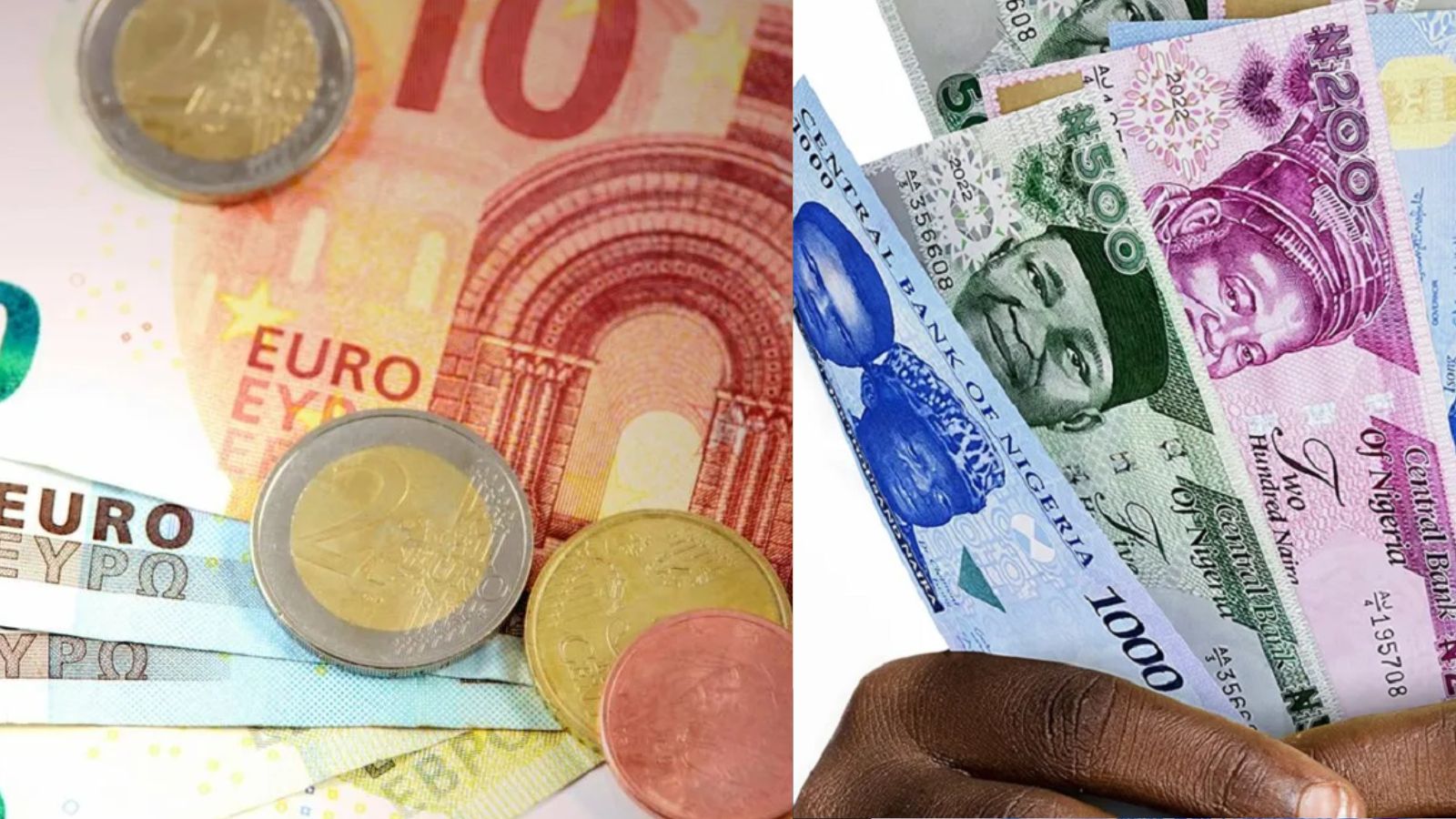
The Nigerian naira closed unchanged against the euro on Sunday, 11 January, reflecting a calm but cautious mood across both official and parallel foreign exchange markets.
Data obtained from the NGNToday platform show that the official euro–naira exchange rate remained at N1,658 per euro, while the black market rate also held steady at N1,710, matching the levels recorded on Saturday, 10 January.
This flat movement highlights a momentary equilibrium in the euro market, where demand pressures and available liquidity appear to have balanced out, preventing any upward or downward price adjustment.
In a market often prone to sharp swings, such stability, though temporary, offers insight into the current phase of FX consolidation.
At the official market level, the static rate of N1,658 per euro reflects the controlled nature of forex pricing, shaped largely by regulated supply through authorised dealers and policy-guided interventions.
Official rates typically respond more slowly to short-term demand shocks, prioritising market orderliness over rapid price discovery. This helps explain why the euro price remained unchanged despite ongoing macroeconomic pressures.
On the other hand, the parallel market rate of N1,710 serves as a real-time indicator of informal demand for the euro.
The lack of movement suggests that euro buyers, such as importers, travellers and tuition payers, did not significantly alter demand levels over the weekend, while sellers also held firm on pricing.
The continued premium over the official rate underscores lingering structural gaps in forex accessibility.
Analysts interpret the unchanged rates as a sign of temporary market balance, rather than a definitive shift in trend. While stability provides short-term predictability for businesses and individuals with euro-denominated obligations, underlying risks tied to global economic conditions, oil revenue flows and domestic inflation remain.
Overall, the euro’s performance at N1,658 officially and N1,710 on the black market points to a quiet trading session, one that reflects pause rather than resolution in Nigeria’s broader foreign exchange story.
For More Details, Visit New Daily Prime at www.newdailyprime.news

