


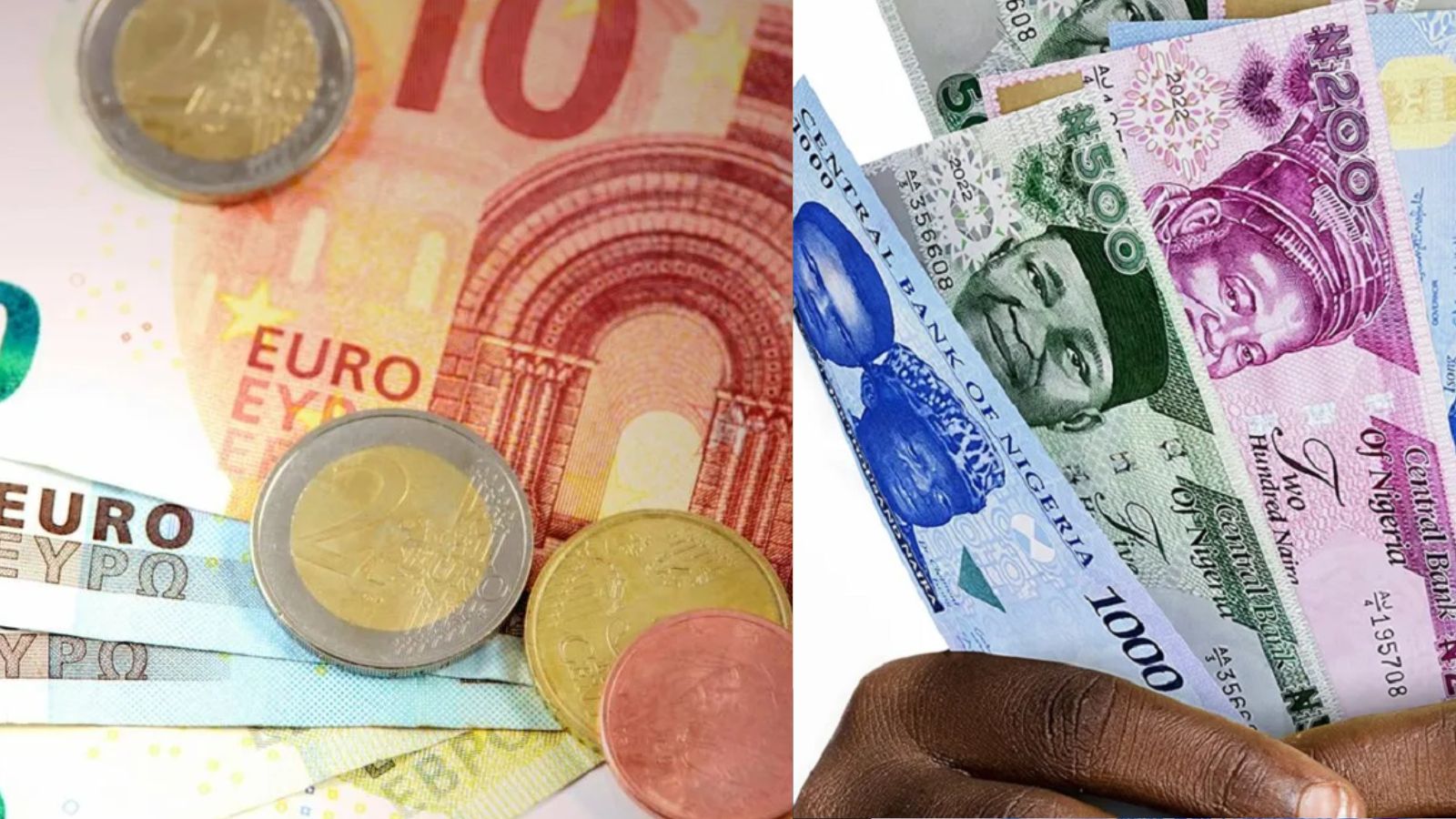
The Nigerian naira demonstrated resilience against the euro on Saturday, 10 January 2026, with the official exchange rate unchanged at N1,658 per €1 and the parallel (black market) rate ticking up slightly to N1,710 per €1.
These figures, drawn from the reputable NGNToday platform, reflect a continuity of subdued volatility in the foreign exchange market, even as broader macroeconomic forces continue to shape currency dynamics.
The official rate of N1,658 remained exactly where it was a day earlier, signalling a degree of stability in formal FX channels. This suggests that supply conditions, including documented remittances, export receipts, and official interventions, were reasonably balanced against demand pressures on Saturday.
Importantly, the absence of significant movement at the official rate also indicates that the Central Bank of Nigeria (CBN) and other regulated market participants are managing liquidity carefully amid ongoing adjustments in monetary policy and external sector flows.
By contrast, the black market rate rose marginally from N1,698 on Friday to N1,710 on Saturday, underscoring slightly stronger demand for euro liquidity in informal market corridors.
The N52 differential between official and black market quotes continues to illustrate the persistent segmentation in Nigeria’s foreign exchange landscape, a structural feature where parallel rates often respond more sensitively to immediate cash demand and speculative trading than their official counterparts.
Market analysts have pointed to several factors sustaining this pattern. On the one hand, documented inflows from diaspora remittances and export realisations provide some cushion at the official level, mitigating abrupt currency swings.
On the other hand, individuals and small businesses seeking physical currency for travel, education, and importation often turn to informal channels when access through official windows is constrained or slow, keeping parallel rates elevated relative to formal benchmarks.
Despite the modest uptick in the black market rate, Saturday’s movement does not presage broad instability but rather reflects microfluctuations consistent with typical weekend trading behaviour.
Historically, FX activity towards the end of the week, and over weekends in particular, tends to show narrower trading bands as institutional players step back and retail demand becomes more visible.
Analysts also note that the euro’s performance against the naira is being influenced by external currency conditions in Europe, including monetary policy signals from the European Central Bank (ECB) and broader investor sentiment around the eurozone economy.
In periods of heightened global risk aversion, or when the euro strengthens against the U.S. dollar, emerging market currencies like the naira can encounter pressure, particularly in informal segments where traders react swiftly to news flows.
For ordinary Nigerians and corporate FX users alike, the current exchange profile means everyday expenditures pegged to the euro, from school fees in EU countries to travel and import costs, remain sensitive to slight shifts in the parallel market.
Even a marginal change of a few naira per euro can have real implications for budgeting foreign‑denominated obligations.
In summary, the N1,658 official and N1,710 black market rates as recorded on Saturday denote a largely steady naira against the euro, with only minor divergence between the two trading segments.
While the official market holds firm, persistent demand in parallel channels continues to sustain a modest premium, a trend that will be closely watched as the Nigerian FX ecosystem progresses through the first quarter of 2026.
For More Details, Visit New Daily Prime at www.newdailyprime.news

