


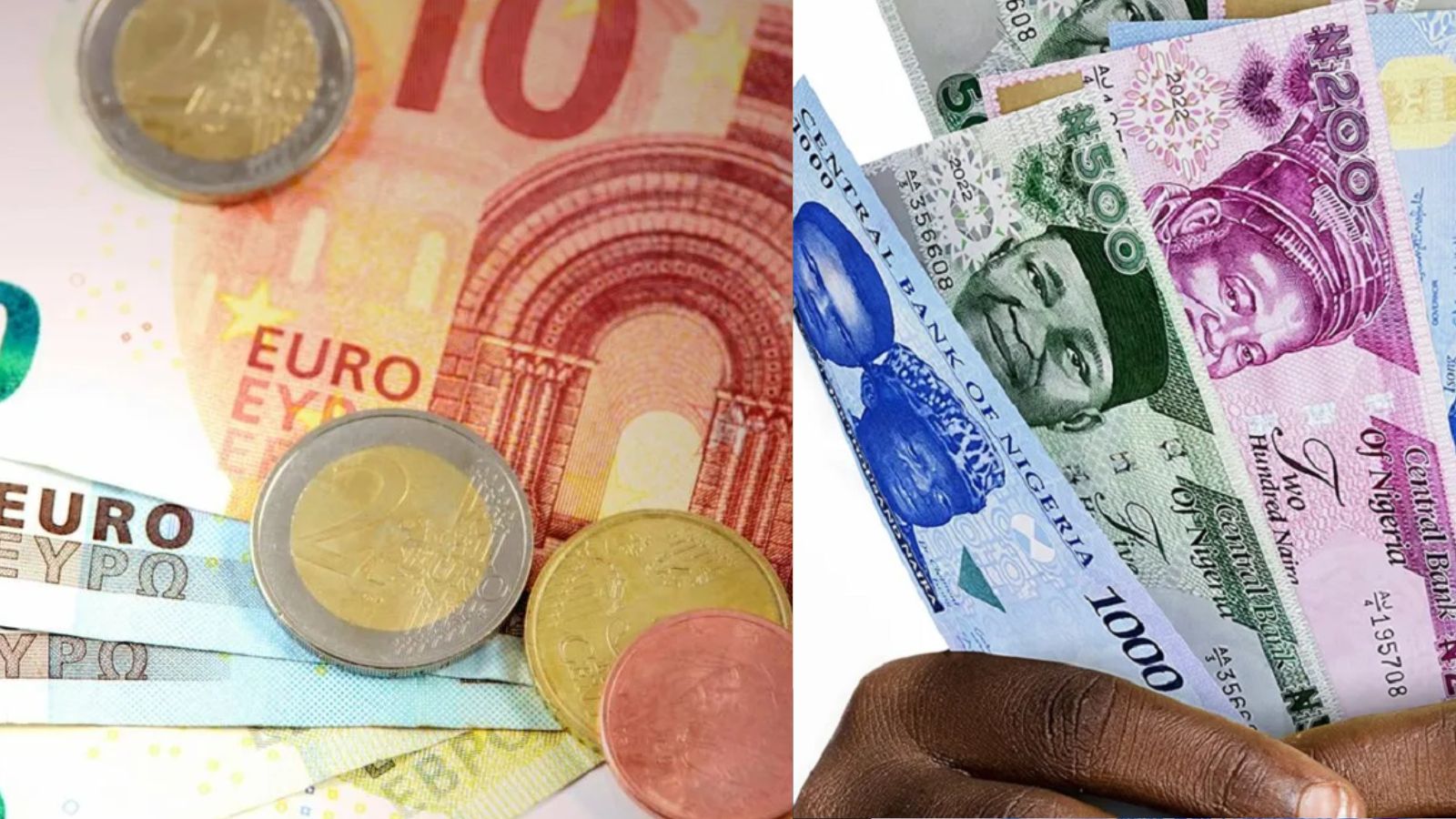
Trading in the foreign exchange market on 7 January, delivered another reminder of the fluid nature of the naira’s relationship with major global currencies, as movements against the euro reflected shifting pressures across both the official and informal markets.
According to data from the NGNToday platform, the euro closed at N1,667 at the official market and N1,715 at the parallel market, following a weaker outing by the naira in the previous session.
The outcome marked a change in direction from 6 January, when the naira had depreciated at both market segments, trading at N1,687 to the euro officially and N1,680 at the black market. Wednesday’s figures therefore point to a recalibration in pricing, shaped by evolving demand patterns and supply dynamics.
At the official market, the naira regained some lost ground, as the euro retreated to N1,667.
The improvement was linked to a more orderly trading environment, where transactions proceeded with less tension than seen earlier in the week. Demand for the euro, typically driven by trade settlements, overseas education expenses and travel-related payments, appeared more evenly matched with available supply, allowing the naira to strengthen.
This development offered a measure of reassurance to businesses and institutions that depend on the official window for euro-denominated transactions. Importers of European goods, as well as organisations with contractual obligations priced in euros, benefited from the reduced exchange rate, which helped ease short-term cost pressures.
In contrast, the parallel market remained volatile. The euro climbed to N1,715 at the black market, underscoring continued strain in the informal segment of the forex market.
The movement highlights the sensitivity of street-level trading to shifts in demand, particularly from individuals and small enterprises that are unable to source foreign exchange through official channels. Even modest changes in buying activity can translate into sharp rate adjustments in this segment.
The divergence between the official and black market rates once again brought attention to the structural gaps within Nigeria’s foreign exchange system.
While the official market has shown signs of relative calm, the parallel market continues to absorb excess demand, often at higher and less predictable rates. This dual-market reality complicates pricing decisions and adds an extra layer of uncertainty for economic actors.
Analysts note that fluctuations in the euro-naira exchange rate are also influenced by external factors, including movements in global currency markets and economic developments within the eurozone.
These global dynamics, combined with domestic supply constraints, contribute to the frequent swings observed in recent weeks.
For consumers, developments in the euro exchange rate have broader implications. Many imported goods, ranging from machinery to pharmaceuticals, are priced in euros. Higher costs at the parallel market can therefore filter through to retail prices, placing additional pressure on household budgets.
Looking ahead, economists stress that sustained improvement in the naira’s performance against the euro will require a more robust and consistent inflow of foreign exchange.
Strengthening export capacity, enhancing remittance flows and maintaining confidence in the forex management framework are seen as key to reducing volatility and narrowing the gap between market segments.
For More Details Visit New Daily Prime at www.newdailyprime.news

