


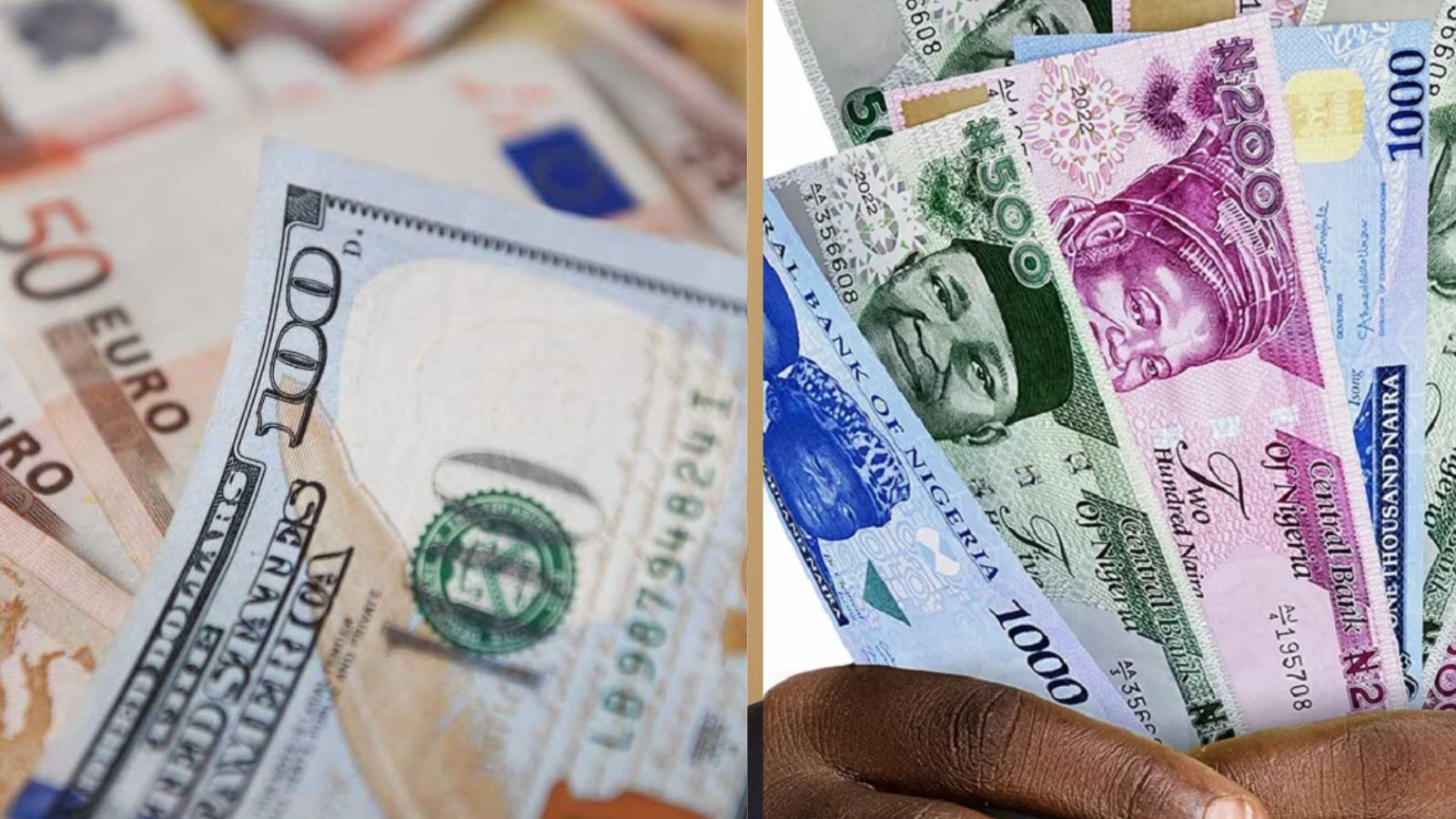
The Nigerian naira recorded mixed performance against the United States dollar on 7 January, as it remained unchanged at the official foreign exchange market while depreciating at the parallel market.
Information obtained from the NGNToday platform indicated that the dollar traded at N1,430 at the official window, the same rate recorded on the previous trading day, 6 January.
In contrast, the black market rate weakened to N1,460, reflecting a decline in the naira’s value compared to the preceding day.
At the official market, trading activities were largely stable, with minimal volatility observed throughout the session.
The steady rate suggests continued regulatory control and managed dollar supply within the Nigerian Foreign Exchange Market (NFEM).
Analysts noted that this stability has been a recurring trend in recent days, providing a measure of predictability for government agencies, financial institutions and large corporate players that source foreign exchange through official channels.
The sustained calm at the official window has been linked to ongoing efforts by monetary authorities to maintain orderliness in the market.
These efforts include structured forex allocation, monitoring of demand and supply dynamics, and policies aimed at improving transparency.
As a result, the naira has been able to hold its ground at N1,430 despite broader economic pressures and global currency fluctuations.
However, the situation was markedly different at the parallel market, where the naira came under renewed pressure.
The depreciation to N1,460 was driven largely by increased demand for dollars from individuals and businesses unable to access foreign exchange officially.
Importers, travellers and small-scale traders were among those contributing to heightened demand in the informal market, leading to the naira’s decline.
The divergence between the official and black market rates continues to reflect underlying structural issues within Nigeria’s foreign exchange framework.
While the gap between both rates has narrowed compared to earlier periods of extreme volatility, it still poses challenges for price stability and economic planning. Businesses that rely heavily on imported inputs often factor in parallel market rates when setting prices, which can contribute to higher costs for consumers.
Economic analysts have pointed out that the relative stability at the official market is not yet sufficient to ease pressure across the entire forex ecosystem. The parallel market often serves as an outlet for unmet demand, and without a significant increase in dollar liquidity, depreciation pressures are likely to persist in that segment.
This dynamic underscores the importance of boosting foreign exchange inflows through diversified exports, improved oil revenue performance and stronger diaspora remittances.
For businesses operating within the formal economy, the unchanged official rate offers short-term relief, particularly for budgeting and contract pricing.
Manufacturers, airlines and firms with foreign obligations benefit from reduced uncertainty when the official rate remains stable. On the other hand, operators in the informal sector remain vulnerable to daily swings in the parallel market, which can erode profit margins and increase operating costs.
The depreciation at the black market also raises concerns about inflationary pressures. A weaker naira in the informal market often translates into higher import costs, which can be passed on to consumers in the form of increased prices for goods and services.
This development comes at a time when households are already grappling with rising living expenses.
Looking ahead, market participants are expected to closely watch policy signals, external reserve levels and global oil price movements for indications of the naira’s future direction.
Any improvement in dollar supply could help ease pressure on the parallel market and promote greater convergence between exchange rates.
As of Wednesday, January 7, the dollar-to-naira exchange rate highlighted a familiar pattern: stability at the official window and weakness at the black market.
With the naira trading at N1,430 officially and N1,460 in the parallel market, the challenge remains achieving a more balanced and sustainable foreign exchange environment in the days ahead.

