


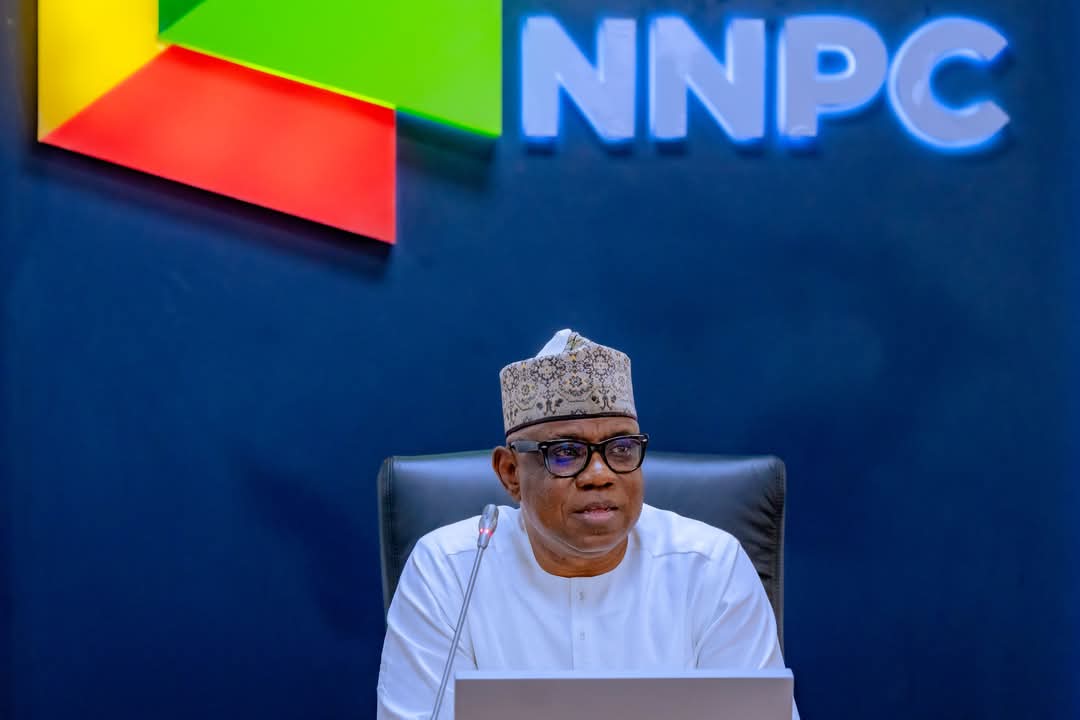
The Group Chief Executive Officer of the Nigerian National Petroleum Company Limited (NNPC), Bayo Ojulari, has described the Dangote Petroleum Refinery as a vital stabilising force in Nigeria’s energy sector, especially as the national oil company grapples with difficulties running its ageing refineries and meeting local fuel demand.
Ojulari made the remarks on Wednesday in Abuja during a fireside chat titled “Securing Nigeria’s Energy Future” at the Nigeria International Energy Summit 2026.
He said the operation of a functional, large-scale local refinery has eased the pressure on NNPC to ensure uninterrupted fuel supply across the country.
According to him, the Dangote Refinery has provided significant relief for Nigeria’s downstream sector, urging Nigerians to acknowledge its contribution irrespective of their personal opinions about its owner. His comments drew applause from participants at the summit.
“Thank God for Dangote Refinery. Thank God. Whether you love Dangote, you hate him, say whatever you want to say, Nigerians should thank God for Dangote,” Ojulari said.
He noted that the commencement of operations at the 650,000 barrels-per-day facility came at a critical moment, when government-owned refineries were still struggling to operate efficiently and at scale.
Beyond its capacity, Ojulari said the refinery’s Nigerian ownership is an added advantage for the country’s energy security.
“Thank God he’s a Nigerian. He’s not someone from another continent or another planet. Despite everything, that gave us an opportunity because we have a refinery that is working,” he said.
While admitting that the refinery has not yet fully met Nigeria’s domestic fuel requirements, the NNPC boss said it has greatly reduced the country’s exposure to supply disruptions.
“Yes, it may not meet our full needs, but it gives us a breathing space. And luckily, we are shareholders in that refinery as well,” he added.
Ojulari’s comments point to a clear departure from years of strained relations between NNPC and the Dangote Group, marked by disputes over crude supply, regulatory approvals, pricing and concerns about market dominance.
Under previous leadership, tensions between both sides often played out publicly, with Dangote accusing government agencies of deliberately stalling the refinery project, while regulators maintained they were enforcing standards and market rules.
Ojulari, however, said the current NNPC management has opted for a cooperative and practical approach instead of confrontation.
“So we said, what’s the hurry? We have a refinery that is working. It’s not owned by NNPC, but it’s a Nigerian refinery, built in Nigeria, working in Nigeria,” he said.
He revealed that NNPC has since held direct talks with Aliko Dangote to establish a collaborative framework consistent with the Petroleum Industry Act.
“Our strategy is to collaborate with the Dangote Refinery and maximise the value delivered to Nigerians. That was our first strategy. We had a meeting with Alhaji Dangote, explained our institutional responsibilities, and we agreed on the pathway towards deeper collaboration while maintaining our role as NNPC,” Ojulari said.

