


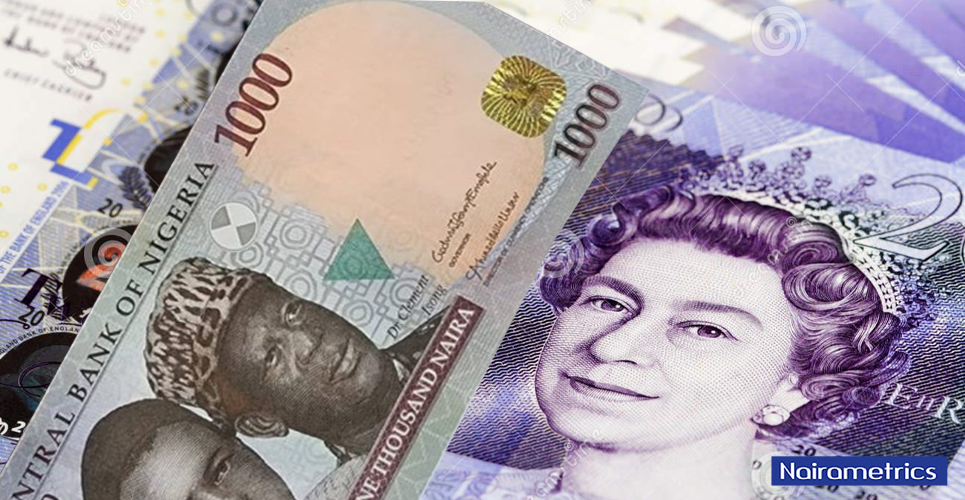
The British pound presented a contrasting picture against the Nigerian naira on Monday, 6 January, as movements at the official and parallel segments of the foreign exchange market diverged sharply.
Following the exchange rate market data obtained from the NGNToday platform reveal that the pound weakened at the official window, exchanging at N1,936, while gaining significant strength in the black market, where it rose to N2,150, compared with rates recorded on 5 January.
The opposing trends reflect the complex dynamics currently shaping Nigeria’s foreign exchange environment, where regulated pricing mechanisms coexist with demand-driven informal trading.
Analysts say the pound’s depreciation at the official market suggests a slight easing in pricing under the Central Bank of Nigeria’s tightly managed allocation framework, even as scarcity-driven pressures intensified outside formal channels.
At the official end of the market, the drop to N1,936 is viewed as a marginal adjustment rather than a dramatic shift.
Currency analysts note that official rates are influenced by approved transaction volumes, prioritisation of key sectors and administrative controls. Reduced demand from authorised buyers or a modest improvement in short-term supply conditions may have contributed to the pound’s softer pricing at this window.
In contrast, the sharp appreciation of the pound in the parallel market underscores persistent foreign currency shortages and heightened demand among individuals and businesses unable to access official forex channels.
Traders attribute the jump to strong buying interest linked to overseas education expenses, travel costs, medical bills and import payments, all of which continue to fuel demand for the British currency.
Dealers in major informal trading hubs report that limited availability of pounds amplified the upward movement, as sellers adjusted prices in response to rising demand. Some also point to speculative activity, with market participants anticipating further tightening of supply and positioning themselves accordingly. These factors combined to push the black market rate well above its previous level.
Economic observers caution that the divergent movements do not indicate stability in the broader foreign exchange market. Instead, they highlight ongoing segmentation, where official pricing remains insulated from immediate market pressures while the parallel market reacts swiftly to shifts in sentiment and liquidity. This disconnect, analysts warn, continues to complicate pricing decisions and financial planning for businesses.
The mixed performance of the pound also mirrors deeper structural challenges within the Nigerian economy. Heavy reliance on imports, limited non-oil export earnings and inconsistent foreign exchange inflows continue to place sustained pressure on the naira. While global factors such as interest rate expectations and currency movements in international markets play a role, domestic supply constraints remain the dominant driver of volatility.
For businesses and households, the contrasting rates carry significant implications. Importers and individuals sourcing pounds through the black market face sharply higher costs, which are often passed on to consumers in the form of increased prices for goods and services. Meanwhile, the lower official rate offers limited relief, given restricted access and stringent approval processes.
The Central Bank of Nigeria has reiterated its commitment to foreign exchange reforms aimed at improving liquidity, enhancing transparency and restoring confidence in the market. Analysts argue that long-term stability will depend on sustained policy consistency, stronger export diversification, increased foreign investment and higher diaspora remittance inflows.
For More Details, Visit New Daily Prime at www.newdailyprime.news

