


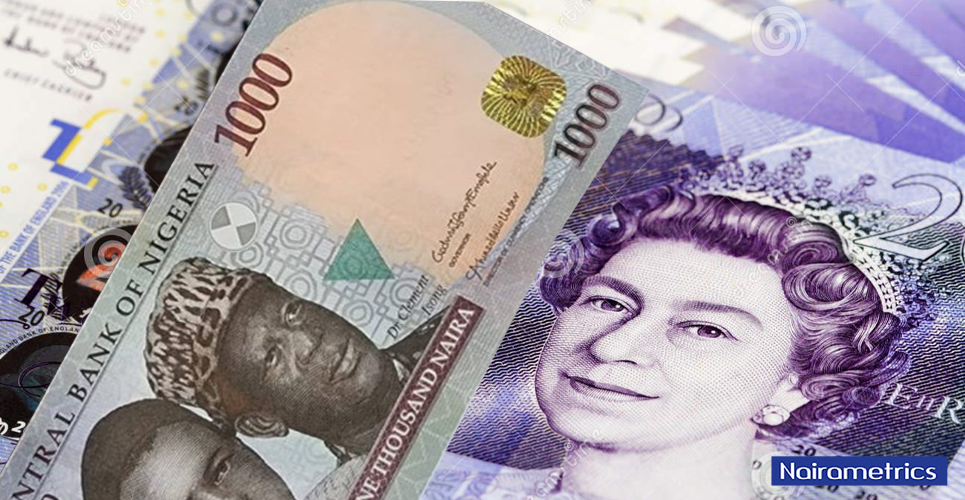
On 4 January, the Nigerian naira experienced continued pressure against the British pound, with significant gaps persisting between official and parallel market rates. Data obtained from the NGNToday platform show that the pound exchanged at N1,925 at the official market, while in the black market it traded at N1,995, reflecting a N70 differential that underscores ongoing foreign exchange pressures in the country.
Analysts attribute the widening gap to a combination of strong demand in the informal market and limited supply through official channels.
Businesses and individuals who rely on foreign currency for imports, tuition payments, medical travel, and other offshore obligations often turn to the black market when official sources cannot meet their needs, driving rates higher.
At the official market, the pound’s rate of N1,925 represents relative stability compared to previous sessions, supported by Central Bank of Nigeria (CBN) interventions and targeted allocation of foreign exchange to priority sectors such as healthcare, manufacturing, and energy.
However, non-priority sectors face constrained access, forcing a substantial portion of foreign exchange demand into the parallel market, where prices continue to climb.
The black market rate of N1,995 highlights continued speculative activities and hoarding by currency traders amid uncertainty over future supply and policy direction. Seasonal factors, including post-holiday import demands and the early-year outflow for tuition and travel, also contribute to the upward pressure on the pound.
Traders note that this rate premium reflects both scarcity and market psychology, as participants anticipate potential tightening of official forex channels.
Economic experts argue that the naira’s performance against the pound mirrors broader structural challenges in Nigeria’s economy.
Heavy reliance on imports, limited non-oil export revenue, and fluctuating foreign inflows continue to create pressure on the local currency. While rising global commodity prices provide some relief to the country’s external reserves, operational bottlenecks and inconsistent supply limit the impact on forex stability.
The CBN has reiterated its commitment to reforms aimed at unifying the exchange rate and enhancing transparency. Measures to increase the availability of foreign currencies through authorised channels have been introduced, but analysts caution that sustainable stability requires consistent policy implementation, export diversification, and stronger inflows from remittances and foreign direct investment.
For businesses and households, the gap between the official and black market rates continues to influence pricing decisions, inflation expectations, and financial planning. Import-dependent sectors are particularly affected, as higher costs of sourcing pounds from the black market are often passed on to consumers.
As of 4 January, NGNToday reports place the British pound at N1,925 officially and N1,995 on the black market, reinforcing a cautious market sentiment and highlighting the persistent challenges facing the naira at the start of the year. Observers will continue to monitor CBN interventions and global developments for cues on currency stability in the weeks ahead.
For More Details, Visit New Daily Prime at www.newdailyprime.news

