


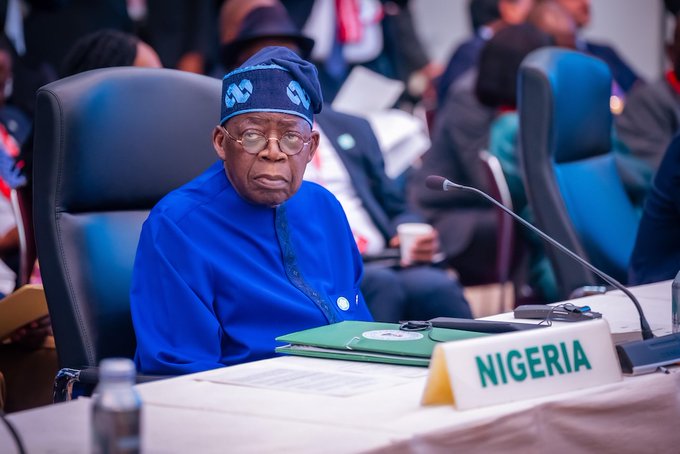
President Bola Ahmed Tinubu has inaugurated an 11-member committee aimed at tackling long-standing problems in Nigeria’s electricity sector and improving the management of the national power grid.
The committee was established to oversee the smooth creation of the Grid Asset Management Company Limited (GAMCO), a new government-owned company designed to optimise electricity generation and transmission.
The decision followed approval by the Federal Executive Council during its meeting earlier in the week.
The Chief of Staff to the President, Femi Gbajabiamila, inaugurated the committee on behalf of President Tinubu at the Presidential Villa in Abuja on Friday.
He said the establishment of GAMCO represents one of the most significant reforms introduced by the current administration to address Nigeria’s persistent electricity challenges.
“The proposed establishment of GAMCO is one of the revolutionary steps taken by the president in the power sector,” Gbajabiamila said.
“We are here to inaugurate the committee that will ensure the company delivers its mandate to optimise power generation and strengthen the country’s grid and transmission system.”
Nigeria has struggled for decades with unstable electricity supply due to weak transmission infrastructure, stranded generation capacity and regulatory bottlenecks.
Government officials say GAMCO is intended to provide a rapid solution to these problems by improving grid management and unlocking unused power capacity.
Read related news:
Tinubu salutes military, promises stronger support
Tinubu govt unveils $552m HOPE-EDU fund to revamp basic education
20 years on: Tinubu’s cabinet that dominated Nigeria’s leadership
The newly formed committee has been tasked with conducting a detailed review of existing laws, policies and regulatory frameworks governing Nigeria’s electricity industry.
Members will examine how the Electricity Reform Laws affect the ownership, management and oversight of power sector assets.
They will also assess the legal and financial structure of the Niger Delta Power Holding Company and the National Integrated Power Project, particularly assets that GAMCO plans to use in its pilot phase.
These include the Omotosho, Olorunshogo and Ihovbor power plants.
The committee will also examine how GAMCO’s responsibilities will align with the regulatory powers of the Nigerian Electricity Regulatory Commission, as well as analyse the financial and market implications of the initiative.
The Chief of Staff to the President will serve as chairman of the committee. Other members include the Attorney-General of the Federation and ministers responsible for power, works, finance, communications, science and aviation, alongside the chairman of the Nigeria Revenue Service and energy expert Yemi Oke.
The permanent secretary of the Cabinet Affairs Office, John Chidiebere Ezeamama, will serve as secretary.
GAMCO will be fully owned by the federal government as a commercial enterprise, with shares held by the Ministry of Finance Incorporated.
The company’s first project will focus on improving electricity transmission along the Benin-Lagos corridor, one of the most critical power supply routes in Nigeria.
This corridor supplies electricity to Lagos and Ogun states, which host the country’s largest concentration of industries and businesses.
During the pilot phase, GAMCO will work to increase power output from three National Integrated Power Project plants – Omotosho, Olorunshogo and Ihovbor.
Combined, the plants have an installed capacity of more than 1,700 megawatts.
Officials say the new company aims to recover at least 1,600 megawatts of currently stranded power within the next 18 to 24 months.
Plans also include constructing a new high-capacity 330-kilovolt double-circuit transmission line along the Benin-Lagos corridor to strengthen electricity delivery.
Government officials say improving electricity reliability is essential for boosting industrial productivity, attracting investment and supporting economic growth.
If the pilot programme proves successful, the model could be expanded to other parts of the country as part of a long-term strategy to stabilise and expand Nigeria’s national power grid.

