


Hundreds of members of Nigeria’s opposition Peoples Democratic Party have defected to the ruling All Progressives Congress (APC) in Imo State, in a move that could reshape the political landscape ahead of the next general election.
The defectors, led by businessman Mike Ikoku, formally joined the APC during a ceremony held at the Government House in Owerri on March 6, 2026.
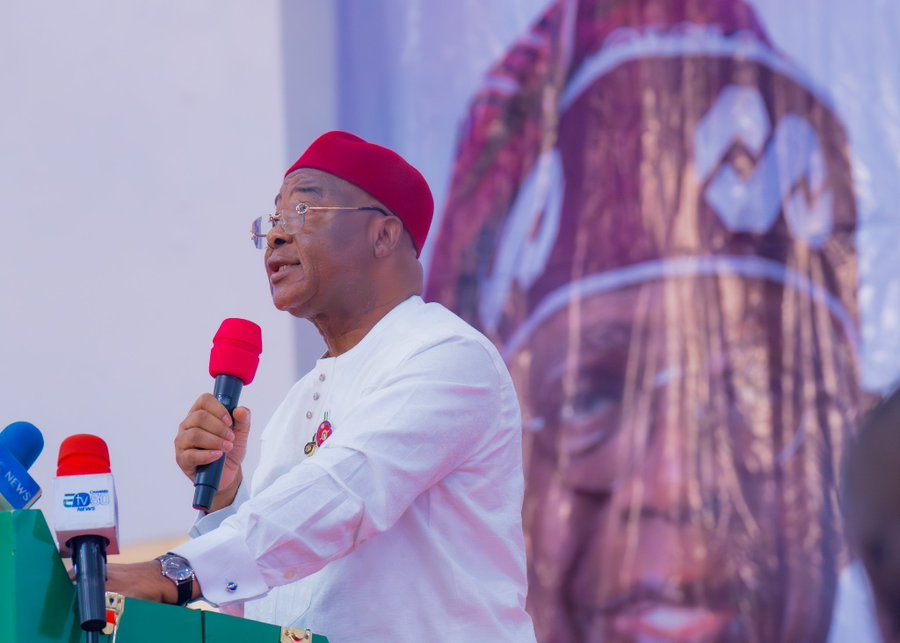
They were welcomed by Hope Uzodimma, who described the development as a strong endorsement of his administration’s policies and leadership.
Speaking during the event, Governor Uzodimma said the growing support for the ruling party reflected the progress made in the state over the past few years.
“This movement shows that people believe in the direction we are taking,” the governor said. “It is a testament to the work we are doing to develop Imo State.”
Uzodimma pointed to ongoing infrastructure projects, including road construction and improvements in healthcare services, as evidence of his administration’s commitment to development.
Mike Ikoku, a prominent entrepreneur and community leader, said he and his supporters decided to leave the Peoples Democratic Party after losing confidence in the party’s leadership.
He accused the PDP of stagnation and said joining the All Progressives Congress offered a better platform for political and economic progress.
Ikoku also pledged to mobilise grassroots support for the APC ahead of the 2027 elections.
The defection is the latest in a series of political realignments in Imo State since Uzodimma assumed office in 2020 following a landmark Supreme Court ruling.
Once considered a stronghold of the PDP, the state has gradually shifted toward the APC, with several politicians switching allegiance in recent years.
Political analysts say the latest defections reflect broader trends in Nigerian politics, where politicians frequently change parties in pursuit of influence and access to power.
Some observers believe the growing strength of the APC in Imo is also linked to federal political dynamics, as the party controls the national government under President Bola Ahmed Tinubu.
Critics, however, have questioned the motives behind the defections.
Opposition figures accuse the ruling party of using political patronage to attract new members, suggesting that promises of appointments or government contracts may play a role.
The Imo chapter of the PDP dismissed the defections as opportunistic and insisted the party would remain a major political force in the state.
Some residents welcome the defection development, hoping it will bring more government attention and development projects to the state.
Others fear that the growing dominance of a single party could weaken political competition and reduce accountability.
Although, security concerns remain a major issue in the region, with incidents of kidnapping and armed attacks continuing to worry residents.
Governor Uzodimma has pledged to strengthen security measures and maintain stability across the state.
As Nigeria moves closer to the 2027 elections, the latest wave of defections suggests the political battle lines are already being drawn.
Whether the shift will translate into lasting electoral support remains uncertain, but it has clearly reinforced the APC’s growing foothold in Imo State and could influence the broader political balance in Nigeria’s southeast.

