


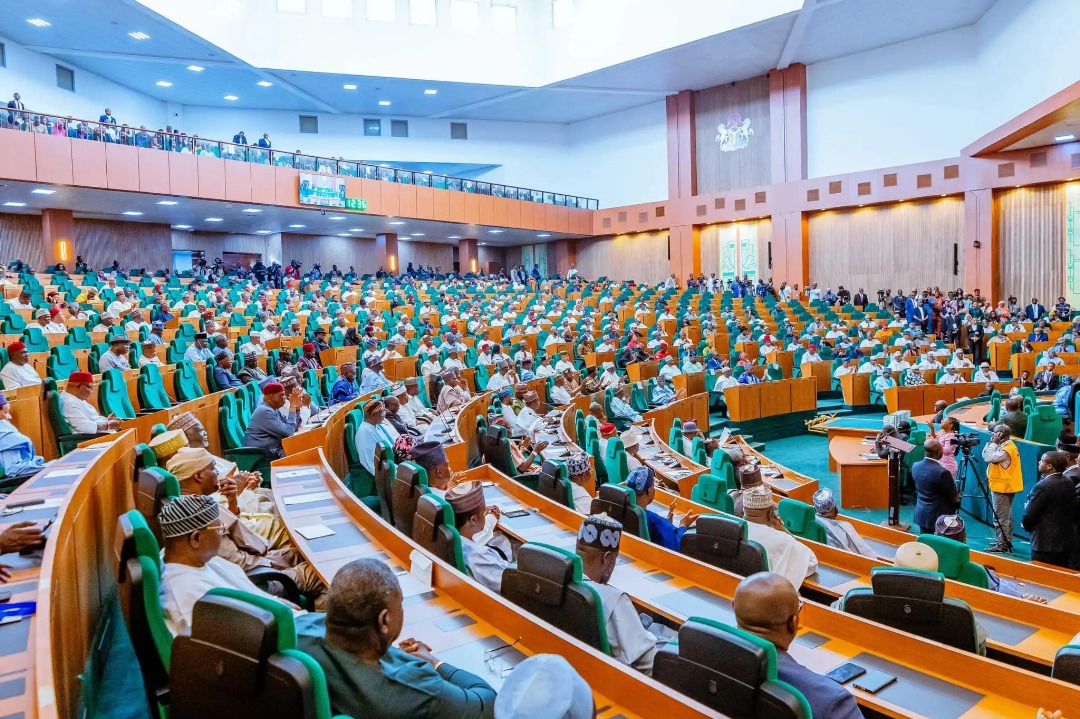
Proceedings in the House of Representatives descended into disorder on Tuesday following sharp disagreements over a motion seeking to rescind the chamber’s earlier passage of the Electoral Act Amendment Bill.
The tension began when Chairman of the House Committee on Rules and Business, Francis Waive, introduced a motion urging the green chamber to reverse its approval of the bill, which had been passed on December 23, 2025.
When Speaker Tajudeen Abbas subjected the motion to a voice vote, the “nays” appeared louder than the “ayes”. However, Abbas ruled in favour of the “ayes”, declaring the motion carried.
The decision immediately sparked uproar, with several lawmakers protesting and shouting in objection to the ruling.
Amid the commotion, the speaker proposed moving into an executive session, but that suggestion was also rejected by many members. Despite the resistance, Abbas directed the House to proceed into a closed-door session.
Background to the Dispute
The controversy stems from the version of the Electoral Act amendment earlier adopted by the House, which included a provision mandating the real-time electronic transmission of election results to the Independent National Electoral Commission’s (INEC) Result Viewing Portal (IReV).
The clause approved by the House stipulates that the “presiding officer shall electronically transmit the results from each polling unit to the IReV portal in real time, and such transmission shall be done after the prescribed form EC8A has been signed and stamped by the presiding officer and/or countersigned by the candidates or polling unit agents, where available at the polling unit”.
Earlier this month, the Senate passed its own version of the amendment bill but rejected the real-time electronic transmission provision, triggering protests and calls for lawmakers to reconsider their stance.
However, on Tuesday, the upper chamber revisited the matter, rescinded its earlier decision, and approved electronic transmission of results to IReV — with an added safeguard that manual collation would serve as a backup in the event of technological failure.
Owing to discrepancies between the versions passed by both chambers, the Senate and the House constituted a conference committee to harmonise the bill.
Beyond the issue of electronic transmission, other areas of divergence remain in the proposed legislation. Civil society organisations have since urged the National Assembly to retain the House’s version of the clause on result transmission as part of efforts to strengthen electoral transparency.
