


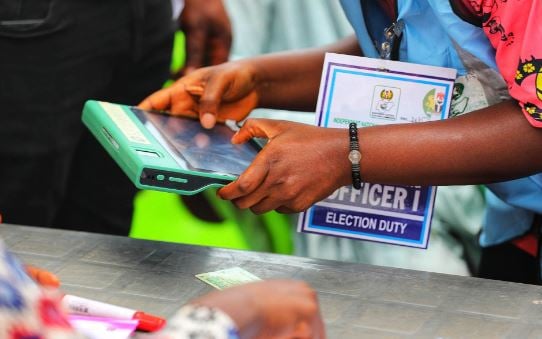
Lawmakers on the Joint Conference Committee of the National Assembly are set to meet on Monday to resolve differences between the Senate and House of Representatives versions of the Electoral Amendment Bill before forwarding a unified draft to President Bola Tinubu for assent.
The committee, drawn from both chambers, has been given one week to iron out disputed provisions—chief among them the issue of electronic transmission of election results. The move follows the passage of differing versions of the bill by the Senate and the House, particul.arly regarding the use of technology in collating and transmitting results.
The amendment effort comes in the aftermath of controversies surrounding the 2023 general election, especially the failure of the Independent National Electoral Commission to upload presidential results in real time to its Result Viewing Portal (IReV). Since then, civil society organisations, opposition parties and several lawmakers have pushed for clearer legal backing for electronic transmission ahead of the 2027 polls.
A source within the National Assembly confirmed that the harmonisation exercise would begin Monday. “It is taking place on Monday,” the source said in a WhatsApp message.
Senator Seriake Dickson, who represents Bayelsa West, also indicated that Monday was likely, though he is not a member of the committee. “I don’t know the actual date since I am not a member of the Conference Committee. But we are hoping it may take place next Monday,” he said.
Earlier, Dickson had urged the panel to adopt entirely the House’s version of the bill, cautioning that weakening the electronic transmission clause could diminish public trust in the electoral system. His comments followed the Senate’s reversal of an earlier stance, restoring electronic transmission to IReV but allowing manual collation as a backup in case of technical failure.
Senate President Godswill Akpabio has expressed optimism that the harmonised bill will reach the President before the end of the month, raising expectations that the reforms could be concluded well ahead of preparations for 2027.
Another lawmaker, Senator Simon Lalong, reportedly confirmed February 16, 2026, as the tentative meeting date. Meanwhile, House spokesman Akin Rotimi noted that members from both chambers were already holding consultations. Committee members Sada Soli and Iduma Igariwey also suggested the meeting would “likely” take place Monday, though not formally confirmed.
The House version of the bill mandates real-time electronic transmission of results from each polling unit to IReV simultaneously with physical collation. By contrast, the Senate’s draft allows transmission only after Form EC8A has been duly signed and stamped, with manual collation serving as the primary fallback if electronic upload fails.
Beyond transmission, the House proposed additional changes. It amended Section 31 to require candidates withdrawing from elections to submit a sworn affidavit alongside their notice. It also reduced the timeline for election tribunals to deliver judgments from 180 days to 150 days.
Senate clarifies position on IReV
Speaking on television, Senator Adeniyi Adegbonmire dismissed claims that real-time transmission equates to electronic voting.
According to him, IReV is not an e-voting system but merely a platform for publishing results already counted manually at polling units.
“People need to understand what real-time means. Real-time transmission can only happen if INEC adopts an e-voting system. For now, INEC does not have the capability for e-voting. Maybe in two or three years, we can adopt e-voting. But as of today, INEC has not put an e-voting system in place,” he said.
He added, “If we change ‘transmit’ to ‘upload’ in the Electoral Bill, 2026, will it change anything? The answer is ‘No.’”
Adegbonmire stressed that the Senate never opposed the use of IReV, arguing that it functions solely as a publication portal. “IReV is not an e-voting platform as some people think. This is the misinformation some people are peddling,” he said.
He further explained that manual completion of Form EC8A remains a prerequisite before any upload can occur. “When you have not complied with the proper filing of Form EC8A, you cannot transfer, transmit or upload it. That is what people must understand,” he stated.
He warned that unrealistic expectations around upload timelines could fuel suspicion and unnecessary disputes, particularly given logistical challenges in remote areas.

