


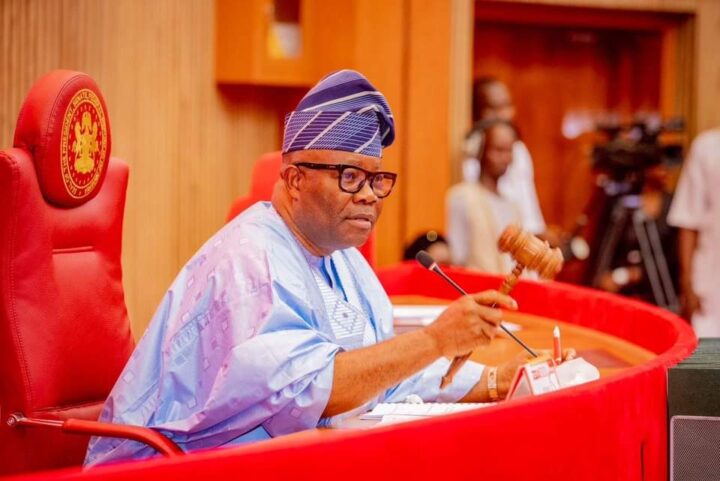
The Senate is set to hold an emergency plenary session on today as public anger intensifies over its recent amendment to the Electoral Act, particularly the removal of the clause requiring real-time electronic transmission of election results.
The special sitting comes barely days after the passage of the Electoral Act Amendment Bill, 2026, and follows mounting pressure from civil society groups, opposition politicians, labour unions, professional associations, regional stakeholders, and a growing youth-led movement that has staged protests at the National Assembly complex.
Senate President Godswill Akpabio is expected to preside over the session, which will be attended by 105 senators currently serving in the chamber.
The Senate has seen its membership reduced in recent months. Senators Okechukwu Ezea (Enugu) and Godiya Akwashiki (Nasarawa) both died within the last six months, while Senator Jimoh Ibrahim recently vacated his seat after being named an ambassador-designate by President Bola Tinubu. These developments cut the number of serving senators from 109 to 106.
The emergency sitting was announced on Sunday in a statement signed by the Clerk of the Senate, Emmanuel Odo.
“The President of the Senate, Godswill Akpabio, has directed the reconvening of plenary for an emergency sitting on Tuesday, February 10, 2026,” the statement said, adding that proceedings would begin at 12 noon.
The decision to reconvene follows widespread condemnation after the Senate passed the Electoral Act 2022 (Repeal and Re-enactment) Amendment Bill, 2026, expunging the term “real-time” from sections addressing electronic transmission of election results.
Findings revealed that several senators, particularly members of the Harmonisation Committee, came under intense pressure after their phone numbers were circulated on social media.
This reportedly led to an influx of angry calls, threats, and verbal attacks from members of the public accusing them of undermining democratic processes. Some lawmakers were said to have switched off their phones to avoid further harassment.
“The reactions were unpredictable. Many were laying curses and asking them, ‘how do you sleep at night after this action?’” a National Assembly source disclosed.
Although Senate leaders have repeatedly insisted that electronic transmission of results was not entirely removed, public skepticism has persisted. Critics argue that deleting the phrase “real-time” opens the door to post-election manipulation.
As tensions escalated, the Nigeria Labour Congress warned that it could mobilise nationwide protests and consider election boycotts if the Senate failed to clearly endorse mandatory electronic transmission of results.
The NLC accused the lawmakers of creating confusion and eroding trust in the electoral system through inconsistent explanations.
At the same time, a coalition of political activists operating under the banner of the Movement for Credible Elections organised a mass protest in Abuja on Monday, dubbed “Occupy NASS,” further escalating pressure on the legislature.

