



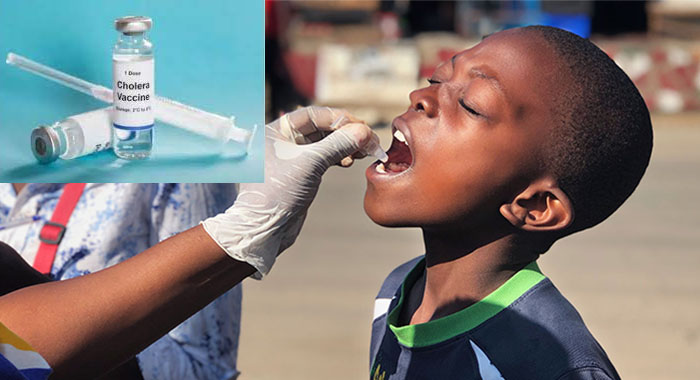
For the first time in over three years, global health agencies have restarted preventive cholera vaccination campaigns, after a significant boost in vaccine supply.
The World Health Organization (WHO), United Nations Children’s Fund (UNICEF), and Gavi, the Vaccine Alliance, announced the move on Wednesday through a shared document, signalling a major step in the fight against the deadly waterborne disease.
Mozambique is leading the comeback, launching the first preventive campaign since 2022, when global shortages forced authorities to halt vaccinations.
The country’s efforts come amid ongoing cholera outbreaks and the aftermath of floods that affected more than 700,000 people, damaging water systems and raising the risk of disease spread.
WHO Director-General Dr Tedros Ghebreyesus said the pause in preventive campaigns had trapped the world in a cycle of reacting to outbreaks instead of stopping them.
“We are now in a stronger position to break that cycle,” he said, praising EUBiologics, currently the only manufacturer producing cholera vaccines at scale, and urging more companies to step into the space.
A total of 20 million doses of oral cholera vaccine (OCV) are being rolled out globally, with Mozambique receiving 3.6 million doses, the Democratic Republic of Congo 6.1 million, and Bangladesh scheduled to receive 10.3 million.
Gavi CEO Dr Sania Nishtar highlighted the importance of global cooperation. “The multi-year surge in cholera cases and resulting unprecedented demand for vaccines were stark reminders that sustainable, accessible vaccine supply is a global public good. Gavi’s donors, whose support enables us to finance the global OCV stockpile and life-saving outbreak and preventive campaigns,” she said.
UNICEF Executive Director Catherine Russell added that vaccination alone is not enough. “Resuming preventive cholera vaccination will protect children and help stop this highly contagious disease in its tracks,” she said.
Cholera continues to take a heavy toll worldwide, with over 600,000 cases and nearly 7,600 deaths reported last year. The disease, spread through contaminated food and water, thrives in places lacking clean water and proper sanitation, often hitting conflict-affected and impoverished areas hardest.
The renewed vaccination drive marks a milestone in the global fight against cholera. While vaccines provide short- and long-term protection, experts stress that lasting success depends on sustained investment in water and sanitation infrastructure, alongside disease surveillance and rapid treatment.
For More Details, Visit New Daily Prime at www.newdailyprime.news

