


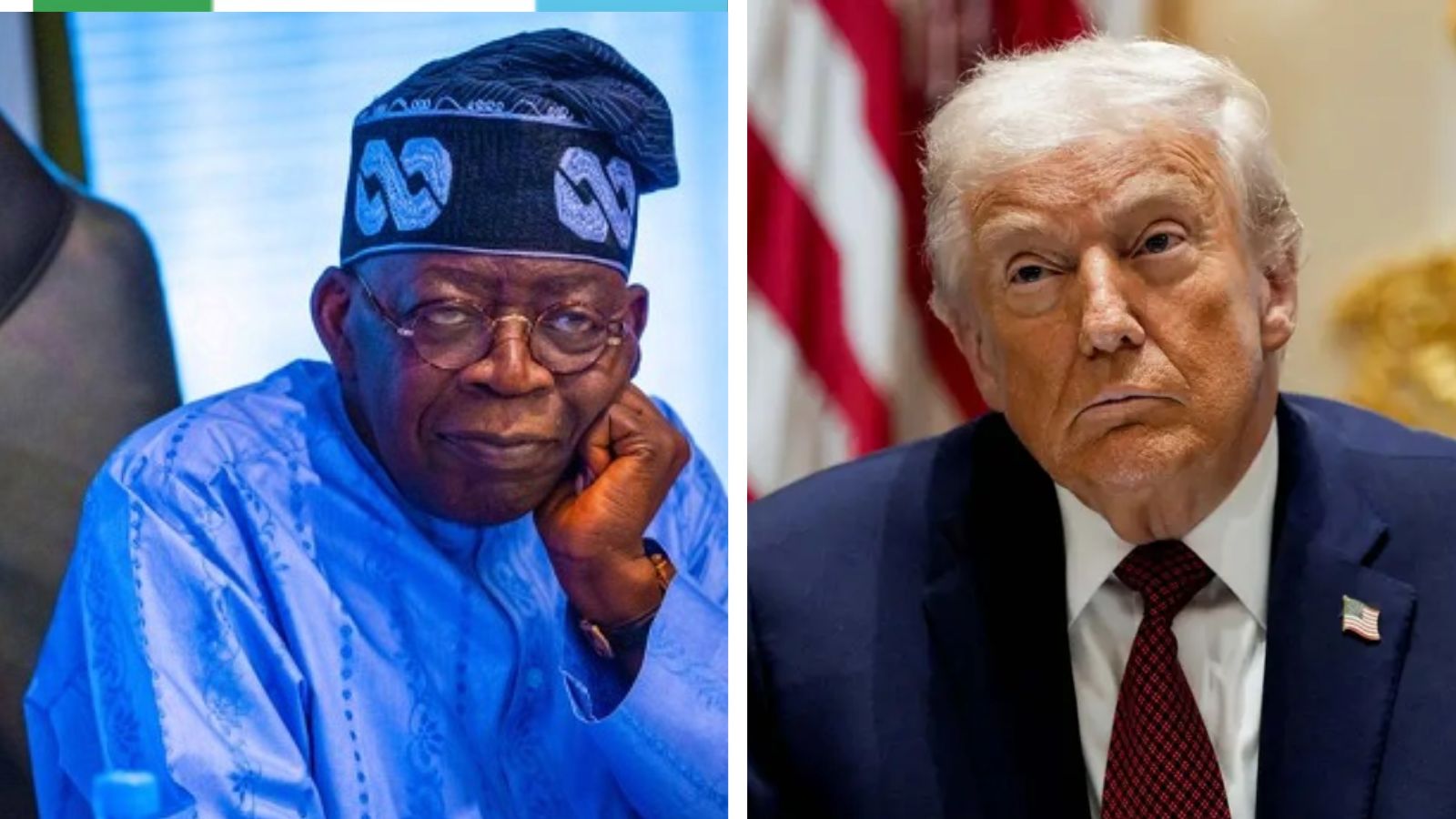
The United States has deployed a small team of troops to Nigeria, marking the first official American military presence on the ground since US airstrikes targeted terrorist positions on Christmas Day 2025.
The deployment follows airstrikes ordered by US President Donald Trump in December 2025 against what he described as “Islamic State targets” operating in Nigeria. Trump had earlier warned that further US military action could follow if security conditions deteriorated.
According to a report by Reuters, the troop deployment is the result of an agreement between the Federal Government and Washington to deepen cooperation in tackling rising terrorist threats across West Africa.
Read related news from New Daily Prime:
Trump sends delegation to Nigeria on Christian protection, counterterrorism, others
Sen. Oluremi Tinubu launches Dream Centre to inspire young girls
Trump vows to sue Trevor Noah after Epstein joke at Grammys
Reuters also reported that the US had been conducting surveillance flights over Nigeria from neighbouring Ghana since at least late November 2025, providing intelligence support ahead of the December airstrikes.
Speaking at a press briefing on Tuesday, the head of the United States Africa Command (AFRICOM), General Dagvin R. M. Anderson, confirmed the presence of American personnel in Nigeria.
“That has led to increased collaboration between our nations, including a small US team that brings some unique capabilities from the United States,” Anderson said.
He did not disclose the size or specific role of the team but said it would support Nigeria’s counterterrorism efforts.
Nigeria’s Defence Minister, Christopher Musa, also confirmed the presence of the US team but declined to give further details.
Security sources cited by Reuters said the American personnel are likely involved in intelligence gathering and in assisting Nigerian forces to target extremist groups such as Boko Haram and the Islamic State West Africa Province (ISWAP).
Nigeria has faced mounting pressure from Washington over its handling of insecurity, particularly after President Trump accused the Nigerian government of failing to protect Christians in parts of the northwest — an allegation the Federal Government has strongly rejected.
Abuja has repeatedly stressed that its military operations target all armed groups attacking civilians, regardless of religion.
Meanwhile, senior US officials say Washington has stepped up support for Nigeria’s armed forces by increasing deliveries of military equipment and intensifying intelligence sharing as part of a broader strategy to counter Islamic State-linked insurgents across Africa.
Lieutenant-General John Brennan, Deputy Commander of AFRICOM, disclosed in an interview that the US has adopted a more assertive posture toward extremist groups and is working closely with Nigerian military partners to dismantle militant networks.
In recent months, Brennan said, the US has accelerated the supply of military materiel and expanded intelligence support to Nigerian forces, with the aim of providing partners “with equipment and capabilities with fewer restrictions”.
The December 2025 airstrikes marked a rare instance of direct US military action on Nigerian soil and underscored the deepening security partnership between both countries.
Last week, Abuja also hosted the inauguration of a US–Nigeria Joint Working Group, established to coordinate intelligence sharing, operational planning and counter-terrorism activities. Officials from both sides said the initiative is intended to strengthen Nigeria’s capacity to confront extremist cells, including ISWAP and other militant factions.
Nigerian authorities have welcomed the increased cooperation but cautioned that the fight against armed groups remains a work in progress. Analysts note that while enhanced intelligence and military support could boost air and ground operations, long-term peace will depend on broader efforts to strengthen governance, reduce poverty and improve local security infrastructure.

