


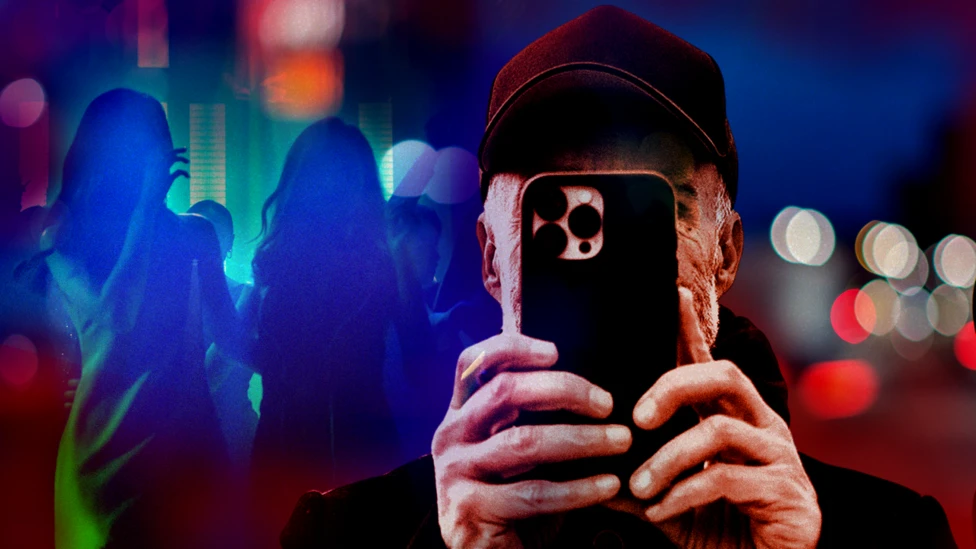
Men are secretly filming women on nights out and making money from the footage by uploading it to social media platforms, a BBC investigation has revealed.
The videos, often labelled as “walking tours” or “nightlife content”, are posted on YouTube, TikTok, Facebook and Instagram. They largely focus on women wearing dresses and skirts, many filmed from behind or at low angles that sometimes expose intimate parts of their bodies.
The BBC tracked down nearly 50 women who appeared in such videos and found that most had no idea they had been filmed. Many described feelings of fear, anger and humiliation after discovering the footage online.
One 21-year-old woman said she was filmed from a low angle that showed up her skirt without her consent. She told the BBC the experience had left her feeling paranoid and afraid to leave her home.
Read related news from New Daily Prime:
Trump sues BBC for $10bn over alleged January 6 speech edits
BBC faces leadership crisis after Trump speech edit controversy
Reform UK pulls out of BBC documentary amid dispute over edited Trump speech
The investigation identified more than 65 online channels producing this type of content, with videos collectively viewed more than three billion times over the past three years. Footage was filmed in major cities across the world, including London, Oslo, Miami and Bangkok, with Manchester emerging as one of the most popular locations.
BBC journalists went undercover in Manchester and filmed men covertly recording women during nights out. They identified several prolific operators linked to at least 12 online accounts, including a local taxi driver and two men who had travelled from Sweden to film in the UK.
In one case, the BBC identified a Swedish-based man, Florjan Reka, as the operator behind one of the most viewed channels of its kind. His accounts have attracted nearly 200 million views on YouTube and hundreds of thousands of followers across other platforms. He has registered his channel as a business in Sweden, describing his activities as “influencer marketing and advertising”.
During a busy Halloween weekend, BBC reporters observed Reka and his brother filming women at waist height while pretending to look at their phones. New videos filmed in Manchester appeared online days later, matching the angles and locations observed by reporters.
The investigation also uncovered a local taxi driver who denied any wrongdoing, insisting his content did not target women or focus on intimate body parts. Police have not charged any of the men identified, citing limitations in existing legislation.
While filming in public spaces is generally legal in the UK, legal experts say the content operates in a “grey area” and could breach harassment or voyeurism laws, especially where filming is repeated and targeted or used for profit.
Professor Annabelle Gawer, director of the Centre of Digital Economy at the University of Surrey, said the industry could be generating millions of pounds. A single video with one million views, she said, could earn up to £5,000.
Following the BBC’s findings, YouTube deactivated two accounts linked to Reka, while TikTok removed four channels. Some videos remain online across Meta-owned platforms, including Facebook and Instagram.
For the women affected, the removals offer little comfort.
“He still has the video of me on his phone or computer,” one woman said. “What’s to stop him from sharing it again?”
The investigation has reignited calls for tougher laws to protect women from covert filming and online exploitation, as campaigners warn that current legislation has failed to keep pace with digital abuse.

