


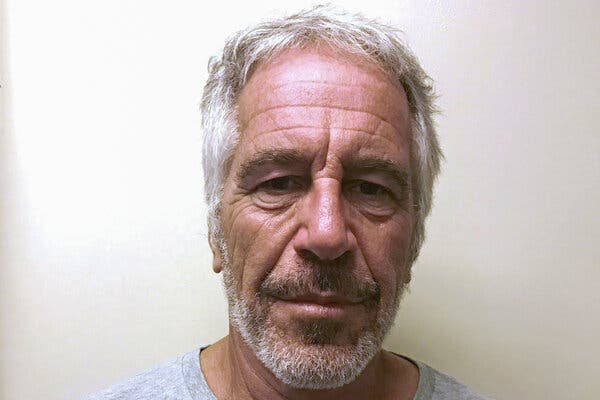
The US justice department has released more than three million pages of documents linked to its investigation into the disgraced financier and convicted sex offender Jeffrey Epstein, in what officials say represents the bulk of the long-awaited “Epstein files”.
Speaking at a tense press conference on Friday, the deputy attorney general, Todd Blanche, said the disclosure included more than 2,000 videos and 180,000 images, many of which will be heavily redacted. He said the material was released in an effort to comply with the Epstein Files Transparency Act, signed into law by Donald Trump last year.
Blanche said the department had identified more than six million pages as potentially relevant, drawn from emails, interview summaries, images, videos and other records generated during multiple investigations and prosecutions. Roughly 3.5 million pages were released after review.
The files include large quantities of commercial pornography and images seized from Epstein’s electronic devices. About 200,000 pages were withheld or redacted due to legal privileges, including attorney-client confidentiality and work-product protections, according to a letter sent to Congress.
The document release has revealed previously unknown financial ties and social connections between Epstein and prominent figures in the US and UK.
Among the disclosures is an email exchange from 2012 between Epstein and Elon Musk. In response to a question about how many people would be travelling by helicopter to Epstein’s private island, Musk replied: “What day/night will be the wildest party on our island?”
Emails also show that Howard Lutnick, now Trump’s commerce secretary, planned a visit to Epstein’s island in December 2012 with his wife and children for a lunch gathering. This appears to contradict Lutnick’s claim last year that he and his wife had cut off all contact with Epstein around 2005 because they were “revolted” by him.
A day after the planned visit, Epstein’s assistant forwarded Lutnick a message from Epstein that read: “Nice seeing you.”
The documents further reveal that Epstein transferred thousands of pounds to Reinaldo Avila da Silva, the husband of former British ambassador and Labour peer Peter Mandelson, beginning in September 2009. The payments started just two months after Epstein’s release from prison for soliciting prostitution from a minor.
The transfers included £10,000 for osteopathy school fees and anatomical models, followed by monthly payments of $2,000. In one email, Mandelson instructed Epstein to structure the arrangement as a loan “to avoid a gift-tax filing”.
Other emails show that Andrew Mountbatten-Windsor, better known as Prince Andrew, attended a private dinner at Epstein’s New York home in December 2010. The dinner took place during the same visit that Prince Andrew later claimed was intended to sever ties with Epstein.
The guest list for the dinner, organised by publicist Peggy Siegal, reportedly included Woody Allen and George Stephanopoulos.
A group of Epstein survivors condemned the justice department for what they described as a failure to protect victims. In a statement, they said the release exposed survivors’ names while redacting those of alleged perpetrators.
“This latest release is being sold as transparency, but what it actually does is expose survivors,” the statement said. “Once again, survivors’ identifying information is made public while the men who abused us remain hidden.”
Trump pledged during the 2024 election campaign to release the Epstein files. After returning to office, however, he spent months downplaying their significance and criticising Republicans who pressed for their disclosure.
According to CNN analyst Harry Enten, the issue became Trump’s weakest politically. While 87 per cent of Republicans approved of his overall job performance in a September NPR/PBS News/Marist poll, only 45 per cent approved of his handling of the Epstein files.
Under growing pressure from both parties, Trump reversed course in November, signing the Epstein Files Transparency Act while dismissing the controversy as a “Democrat hoax”.
In a letter to Congress, the justice department said the released documents span two decades and include material from the Florida and New York cases against Epstein, the prosecution of Ghislaine Maxwell, investigations into Epstein’s death, and multiple FBI inquiries.
Blanche said that withheld materials included personal and medical records, depictions of death, physical abuse and injury, and any material involving child sexual abuse that could jeopardise ongoing federal investigations.
The department will submit a report to the House and Senate judiciary committees detailing all categories of records released and withheld. Members of Congress will be allowed to view unredacted materials under confidentiality agreements.
Democratic congressman Ro Khanna, a co-author of the act, said the extent of the redactions raised concerns. He said he would closely review whether key documents, including FBI victim interview reports and prosecution memoranda from the 2007 Florida investigation, had been disclosed.
When asked whether the release contained new names, Blanche said he had nothing to share.
He also said the documents reinforced Trump’s longstanding claim that he had no criminal or inappropriate relationship with Epstein. Blanche told Fox News Digital that Epstein never alleged any wrongdoing by Trump, even in communications where he sought to disparage him.
At the press conference, Blanche rejected suggestions that the justice department had worked to shield the president.
“There’s a mantra out there that the Department of Justice exists to protect Donald J Trump,” he said. “That’s not true. We are always concerned about the victims.”
The release follows weeks of delay. In a letter dated 5 January, the department admitted that only 12,285 documents, totalling about 125,000 pages, had been published by a December deadline set by the act.
Earlier releases under the legislation detailed widespread failures by law enforcement to stop Epstein’s abuse and included graphic testimony about how victims were recruited.
One previously disclosed grand jury account described how Maxwell allegedly asked a victim to recruit other girls, telling her they “have to look young at least”. The victim refused, saying she did not want anyone else to suffer the same experience.

