


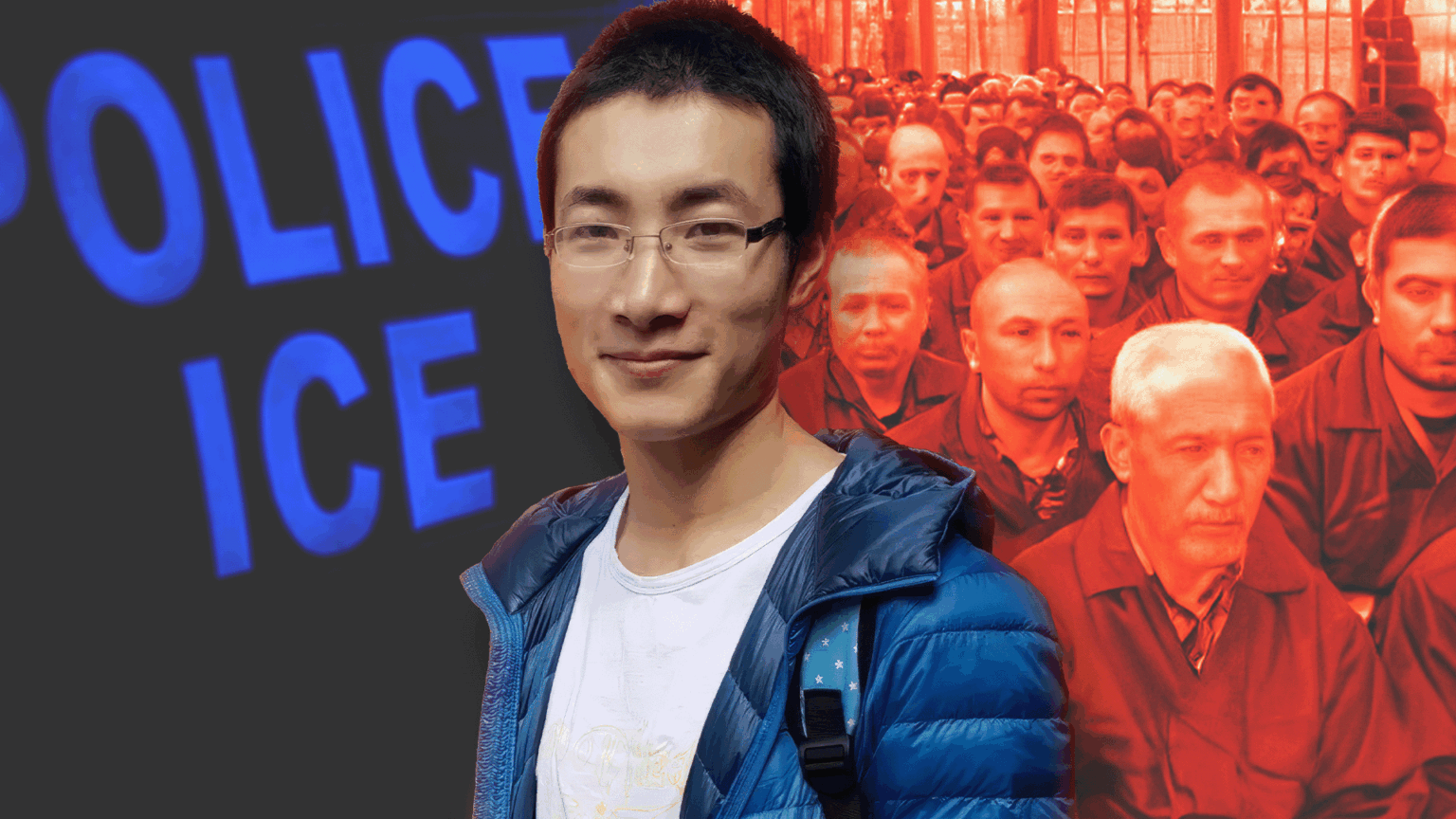
A US immigration judge has granted asylum to a Chinese national who exposed alleged human rights abuses against Uyghurs, ruling that he had a “well-founded fear” of persecution if returned to China.
Guan Heng entered the United States illegally in 2021 and later applied for asylum. He has been in immigration detention since August last year after being arrested during a large-scale enforcement operation linked to the Trump administration’s mass deportation drive.
The Department of Homeland Security (DHS) had initially sought to deport Guan to Uganda. That plan was abandoned in December following public outcry and scrutiny from members of Congress.
The decision represents a rare successful asylum claim since Donald Trump returned to office. Federal data compiled by the non-profit Mobile Pathways shows that asylum approval rates fell to 10% in 2025, down from an average of 28% between 2010 and 2024.
Despite the ruling, Guan was not immediately released. A lawyer for the DHS said the department was reserving the right to appeal, a process that can take up to 30 days. Judge Charles Ouslander urged the department to act swiftly, noting that Guan has already been detained for about five months.
In 2020, Guan secretly filmed detention facilities in China’s Xinjiang region. Activists say the footage adds to evidence of widespread abuses, where up to one million people from ethnic minorities, particularly Uyghurs, are believed to have been detained.
During a hearing on Wednesday in Napanoch, New York, Guan was asked whether he filmed and released the footage to strengthen an asylum claim. He denied this, saying his motivation was to expose injustice.
“I sympathised with the Uyghurs who were persecuted,” Guan told the court through a translator, appearing by video link from Broome County correctional facility.
Guan said he knew he would need to leave China to publish the footage safely. He travelled first to Hong Kong, then to Ecuador, where Chinese citizens can enter without a visa, before moving on to the Bahamas. He released much of the footage on YouTube before travelling by boat to Florida in October 2021.
He told the judge he was unsure whether he would survive the sea journey and wanted to ensure the footage was made public. After the videos were released, Chinese police questioned his father on three separate occasions, Guan said.
The Chinese government denies allegations of human rights abuses in Xinjiang. It says the facilities operate as vocational training centres designed to counter extremism and provide employment skills.
In his closing statement, Guan’s lawyer, Chen Chuangchuang, said the case was a “textbook example” of the purpose of asylum laws and argued that the US had both a moral and legal obligation to protect his client.
Judge Ouslander said the court found Guan to be a credible witness and that he had met the legal threshold for asylum. He added that the Chinese authorities’ interest in Guan and his family reinforced the risk of retaliation if he were sent back.

