


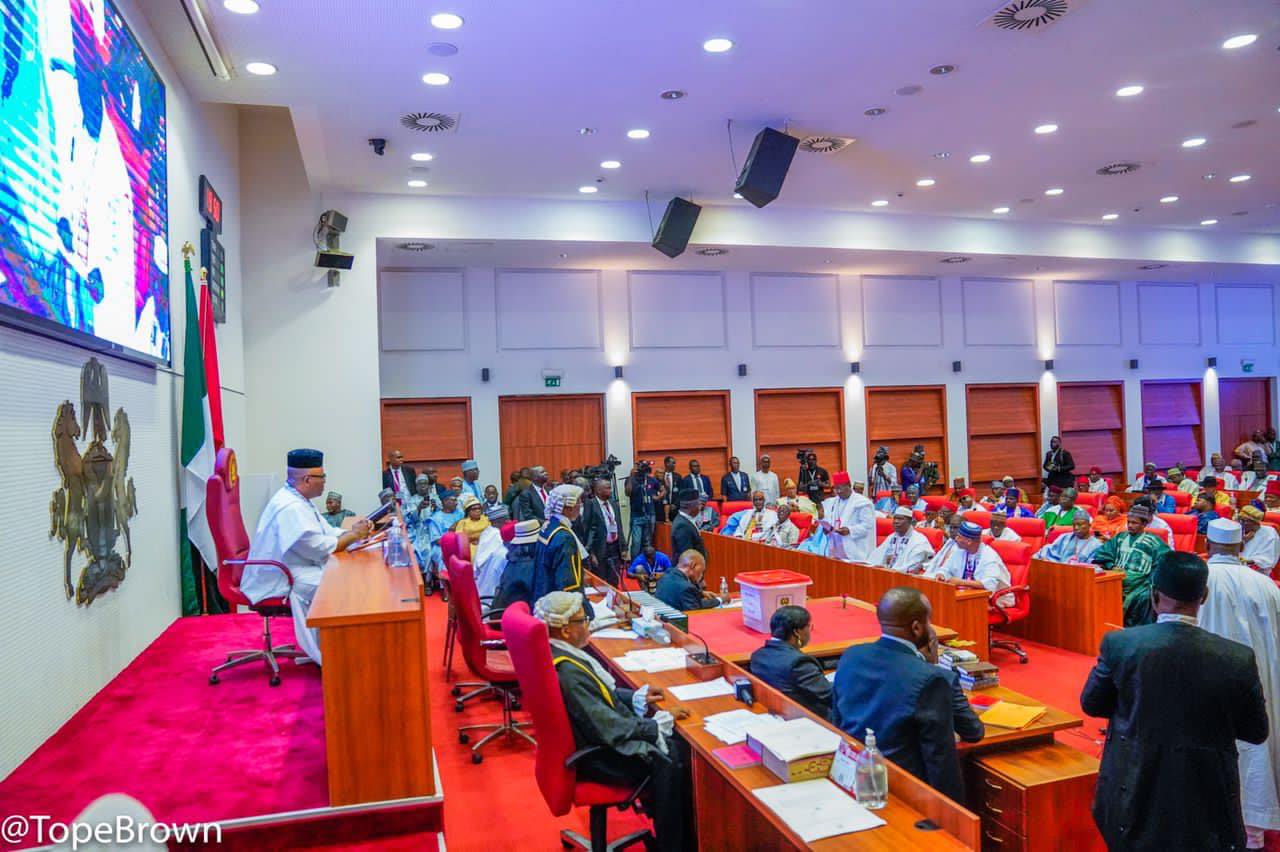
The Senate on Wednesday deferred consideration of the report on the Electoral Act, 2022 (Repeal and Enactment) Bill, 2026, opting for further scrutiny of the proposed amendments before reaching a final decision. Lawmakers resolved to step down debate on the report to allow senators more time to study the bill in detail, with consideration expected to resume on Thursday.
The decision followed deliberations during plenary on the report of the Senate Committee on Electoral Matters, which was presented in the absence of the committee’s chairman, Senator Simon Lalong. The absence of the committee head, combined with the far-reaching nature of the proposed reforms, contributed to calls for caution among senators.
In addition to postponing debate, the upper chamber agreed to reconvene in an executive session to allow for closed-door discussions on sensitive provisions of the bill. Senators said the private session would provide an opportunity for frank engagement on issues considered critical to the country’s electoral framework, reflecting concerns about the implications of the proposed changes ahead of future elections.
Although the House of Representatives has already passed the bill, the Senate insisted on a more deliberate, measured review process. Several lawmakers stressed that electoral legislation carries long-term consequences and must be carefully examined to avoid unintended outcomes.
Senate President Godswill Akpabio emphasised the need for caution, particularly as the country approaches another election cycle. He warned that rushing the process could result in legal disputes that might undermine public confidence in the electoral system.
“This is a very important bill, especially as it is election time. We must take our time to ensure justice is done to all, so that we do not end up at the tribunal,” Akpabio said during plenary.
According to the Senate Committee on Electoral Matters’ report, a clause-by-clause analysis of the bill indicates that its enactment would provide Nigerians with a lasting legacy of electoral integrity. The committee noted that the proposed amendments are designed to enhance transparency, strengthen public trust in the electoral process, and improve the overall credibility of elections.
The committee further stated that the bill seeks to expand voter participation, safeguard the electoral process against malpractice, and reinforce the institutional capacity of the Independent National Electoral Commission (INEC). It argued that these reforms are necessary to address emerging challenges in election administration and to align Nigeria’s electoral framework with democratic best practices.
Consequently, the committee recommended that the Senate consider and pass the Electoral Act (Repeal and Enactment) Bill, 2025, as amended. However, senators agreed that additional time was needed to thoroughly examine the provisions and engage in broader consultations before taking a final vote.
The deferment highlights the Senate’s cautious approach to electoral reforms, underscoring the importance lawmakers place on ensuring that any changes to the Electoral Act are inclusive, balanced, and withstand legal and political scrutiny.

