


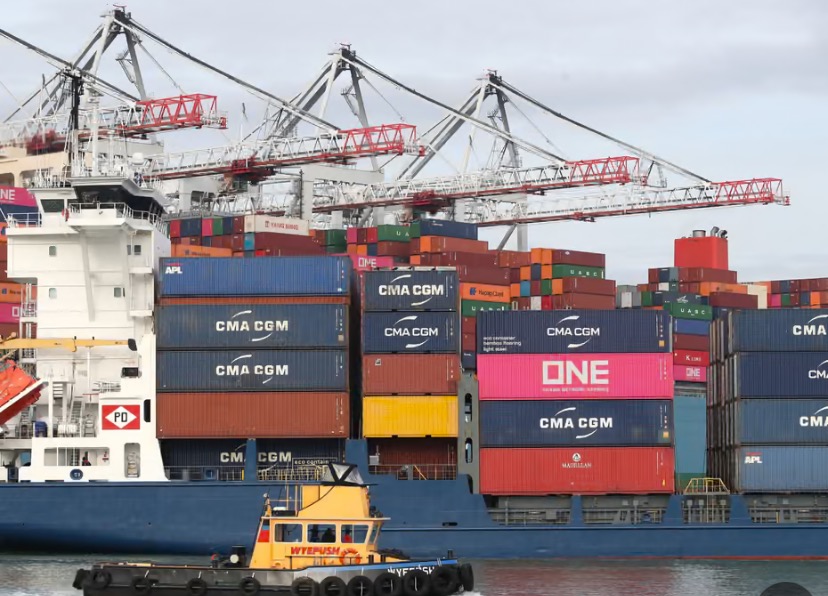
Nigeria’s exports to African countries rose to N4.82 trillion in the first half of 2025, representing a 14 per cent increase from N4.21 trillion recorded in the same period of 2024, according to official data.
Figures from the National Bureau of Statistics (NBS), reviewed by Ecofin Agency, show that the growth was largely driven by stronger trade ties with neighbouring countries, as West Africa absorbed more than 62 per cent of Nigeria’s total exports to the continent.
Exports to the Economic Community of West African States (ECOWAS) stood at N2.995 trillion, marking a 16 per cent year-on-year increase. The bloc remained Nigeria’s single largest African market, reflecting deepening regional integration and sustained demand for Nigerian products.
Read related news report from New Daily Prime:
Japa crisis: Nigeria has only 40,000 doctors for 220 million people
Trump official promises security support for Nigeria Police
Nigerian Nurse loses licence in Australia over sleeping on duty
Fuel products dominated trade within the sub-region, with ECOWAS countries purchasing fuel worth nearly N298 billion during the period. Analysts say this underscores Nigeria’s continued role as an energy supplier to West Africa, even as discussions on refining capacity and energy transition gain momentum.
The export performance aligns with recent economic reforms introduced by the Federal Government, including foreign exchange liberalisation, customs process digitisation, and measures to ease cross-border trade. The reforms are aimed at improving competitiveness, reducing trade bottlenecks, and strengthening Nigeria’s position within regional and continental value chains.
Commenting on the trend, Bashir Adewale Adeniyi, Comptroller-General of the Nigeria Customs Service, said the figures confirm Nigeria’s growing influence in intra-African trade.
Quoted by Bloomberg, Adeniyi noted that the data highlight Nigeria’s role “as a hub for intra-continental trade and value chains,” adding that the performance is “a clear signal of strengthening regional trade momentum.”
However, despite the growth in exports to Africa, the continent accounted for only about 10 per cent of Nigeria’s total exports in the first half of 2025. Total exports during the period were estimated at N43.3 trillion.
Africa ranked as Nigeria’s fourth-largest export destination, behind Europe with exports valued at N17.3 trillion, Asia at N14.1 trillion, and the Americas at N6.9 trillion. The figures highlight the gap between Nigeria’s regional trade potential and its current export distribution.
Economists say the data present both progress and opportunity. While regional exports are expanding, they argue that policies linked to the African Continental Free Trade Area (AfCFTA), improved port efficiency, and reduced logistics costs could help Nigeria increase Africa’s share of its total exports.
They also note that recent government efforts to attract investment into the energy sector, strengthen customs enforcement, and improve trade facilitation are beginning to reflect in export numbers, particularly within West Africa.
As Nigeria continues to implement wide-ranging economic reforms, analysts believe sustained policy consistency and infrastructure improvements will be critical in consolidating the country’s leadership in regional trade and expanding its footprint across African markets beyond fuel exports.

