


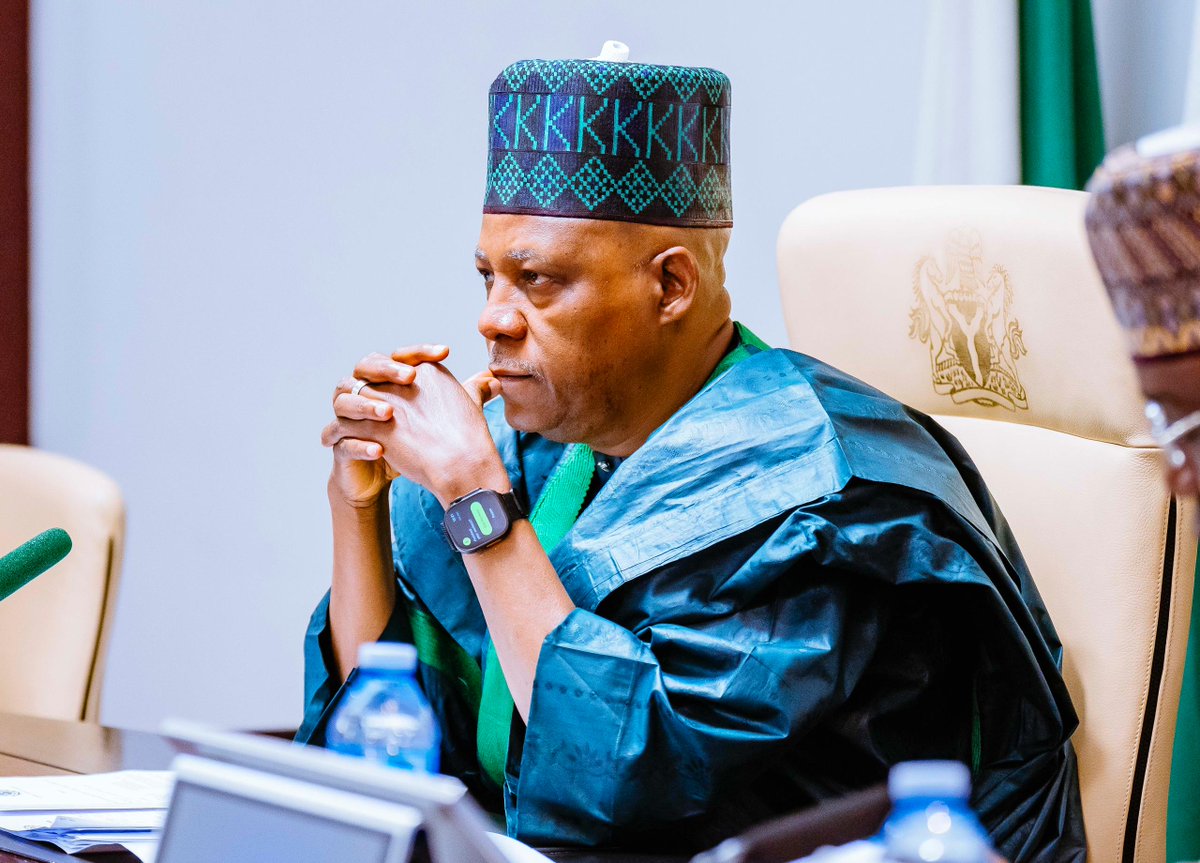
Amid international pressure on Nigeria over allegations that Christians are being persecuted and killed by Boko Haram, the All Progressives Congress (APC) is grappling with deepening internal divisions over whether Vice President Kashim Shettima should remain on President Bola Ahmed Tinubu’s ticket ahead of the 2027 presidential election, exposing early fault lines within the ruling party.
The debate moved into the open after comments by the Minister of Art, Culture and Creative Economy, Hannatu Musawa, who warned that dropping Shettima could seriously weaken the APC’s chances of retaining power. Musawa argued that removing the northern Muslim vice-president would risk alienating key voters in the North and upset the delicate Muslim–Muslim ticket that helped secure Tinubu’s victory in 2023.
Her remarks followed controversy at an APC zonal meeting in Maiduguri, Borno State, where a banner bearing President Tinubu’s image conspicuously excluded Shettima. The omission triggered outrage among party members, particularly in the North-East, where Shettima is seen as a political heavyweight and symbol of regional inclusion.
Read related news from New Daily Prime:
Shettima declares food security a ‘national security priority’
Replacing Shettima would be political suicide for Tinubu, APC chieftain
Shettima commissions ‘Nigeria House’ at 2026 WEF
Many northern APC stakeholders have since rallied around the vice-president, insisting that his continued presence on the ticket is vital for regional balance, party unity and voter mobilisation. They argue that Shettima commands loyalty across large parts of the Muslim north and that sidelining him could fracture the party’s base.
However, other voices within the APC are quietly pushing a different argument. They believe the party should consider a new ticket combination in 2027 to broaden its appeal, particularly in the South and parts of the Middle Belt where the Muslim–Muslim ticket faced resistance in 2023. Some party insiders say adopting a Christian running mate could help counter accusations of religious imbalance and reassure both domestic critics and the international community.
Political analysts say the debate reflects growing anxiety within the APC as it approaches another election cycle while governing amid economic and security challenges. Since taking office in 2023, the Tinubu administration has faced rising inflation, currency instability, subsidy reforms and persistent insecurity. Critics within and outside the party argue that retaining the same ticket could remind voters of these hardships.
Supporters of the status quo, however, maintain that Tinubu remains the party’s strongest asset. Senator Uche Ekwunife, a prominent APC figure, recently described the president as the “most formidable candidate” for 2027, citing his political experience and leadership credentials. Shettima’s backers also insist the vice-president has performed his duties with competence and loyalty.
Adding another layer to the controversy are claims circulating in political circles that dropping Shettima could be part of a broader strategy to make the APC’s 2027 ticket more acceptable internationally. Proponents of this view argue that concerns about religious balance and allegations of Christian persecution in Nigeria have attracted global attention, and that avoiding another Muslim–Muslim ticket could soften external scrutiny. These claims, however, remain speculative and have not been officially acknowledged by the presidency or the party leadership.
So far, the APC leadership has avoided taking a public position. National Chairman Nentawe Yilwatda and other senior officials have maintained silence, fuelling speculation that intense negotiations are ongoing behind closed doors. Observers believe the party will attempt to manage the disagreement quietly to prevent a public rift that could embolden opposition parties.
With rival parties already sharpening attacks on the APC over governance and the economy, any visible division could weaken the ruling party’s image. For now, the Shettima debate stands as the clearest signal yet that the road to 2027 may be turbulent, testing the APC’s ability to balance political strategy, regional interests and party unity.

