


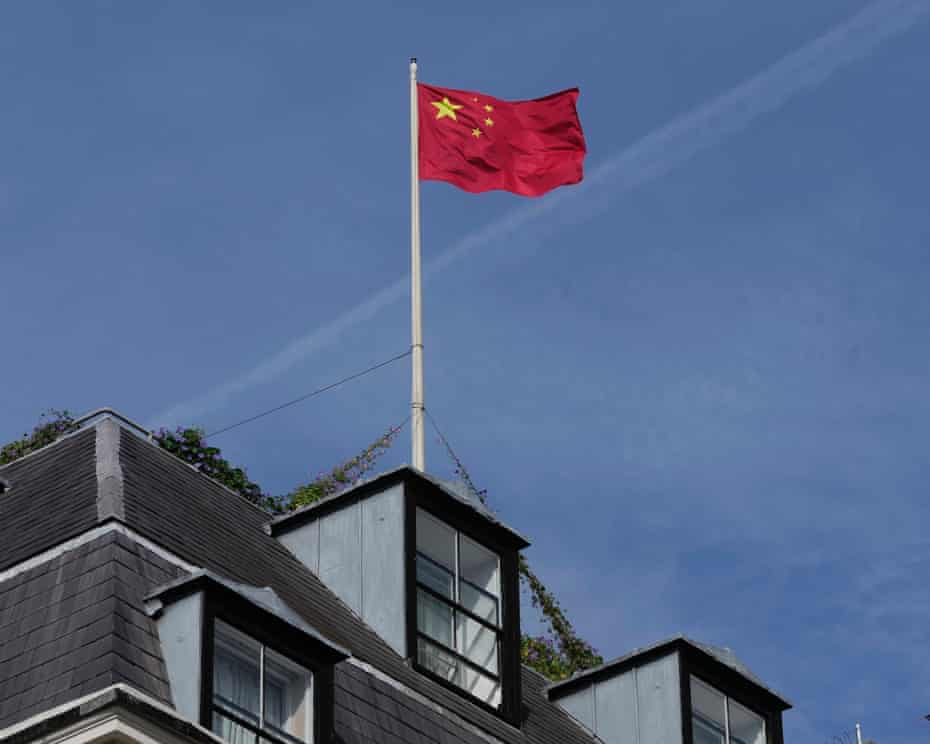
Chinese tourism to Japan almost halved in December as a diplomatic row between Beijing and Tokyo deepened over the security of Taiwan.
Japan’s transport ministry said arrivals from mainland China fell by about 45 per cent compared with the same month a year earlier, dropping to roughly 330,000 visitors.
The decline came despite Japan continuing to attract record numbers of overseas travellers. A total of 42.7 million foreign visitors arrived last year, comfortably surpassing the previous high of nearly 37 million set in 2024.
The fall in Chinese arrivals gathered pace towards the end of last year after Japan’s prime minister, Sanae Takaichi, suggested Tokyo could become militarily involved if China attempted to invade Taiwan.
China has not ruled out the use of force to bring Taiwan under its control, describing the move as “reunification”. Taiwan is a self-governing democracy that Beijing considers a breakaway province.
Takaichi, a conservative known for her hawkish views, said a crisis in the Taiwan Strait could lead to the deployment of Japan’s self-defence forces if it posed an “existential threat” to the country.
Her remarks sparked a strong reaction from Beijing, which urged its citizens not to travel to Japan, citing safety concerns. The comments were made only weeks after Takaichi met Chinese president Xi Jinping at the Apec summit in South Korea, where both sides pledged to pursue “constructive and stable” relations.
China later advised young people against studying in Japan, while several cultural exchanges were cancelled. The release of Japanese films in China was also postponed indefinitely.
In response, Japan warned its estimated 100,000 citizens living in China to take additional safety precautions. The government also reminded expatriates to respect local customs and exercise caution in their interactions.
Prolonged tensions over Taiwan are seen as a risk to Japan’s tourism industry. The country has long been a favoured destination for Chinese travellers, helped by the weak yen and strong interest in Japanese food, fashion and pop culture.
China remains Japan’s largest source of inbound tourism. Almost 7.5 million Chinese visitors arrived in the first nine months of 2025, accounting for about a quarter of all foreign tourists, according to official figures. They spent an estimated $3.7bn in the third quarter alone.
Data from the Japan National Tourism Organisation shows that Chinese tourists spent, on average, 22 per cent more than other visitors last year.
Japan’s transport minister, Yasushi Kaneko, played down the December decline, pointing to the overall strength of the tourism sector.
“While the number of Chinese tourists in December decreased, we attracted sufficient visitors from other countries and regions to offset that,” he said. “We hope Chinese visitors will return as soon as possible.”
The debate over how Japan should respond to a potential conflict between China and Taiwan has intensified since Russia’s invasion of Ukraine. It has also been fuelled by uncertainty over whether the United States, under President Donald Trump, would come to Taiwan’s defence.
Japan has increased security measures around its outlying islands in response to Chinese military activity near Taiwan. The island lies about 100 kilometres from Yonaguni, Japan’s westernmost island, and close to the uninhabited Senkaku Islands in the East China Sea.
The Senkaku Islands are administered by Japan but claimed by China, where they are known as the Diaoyu.

